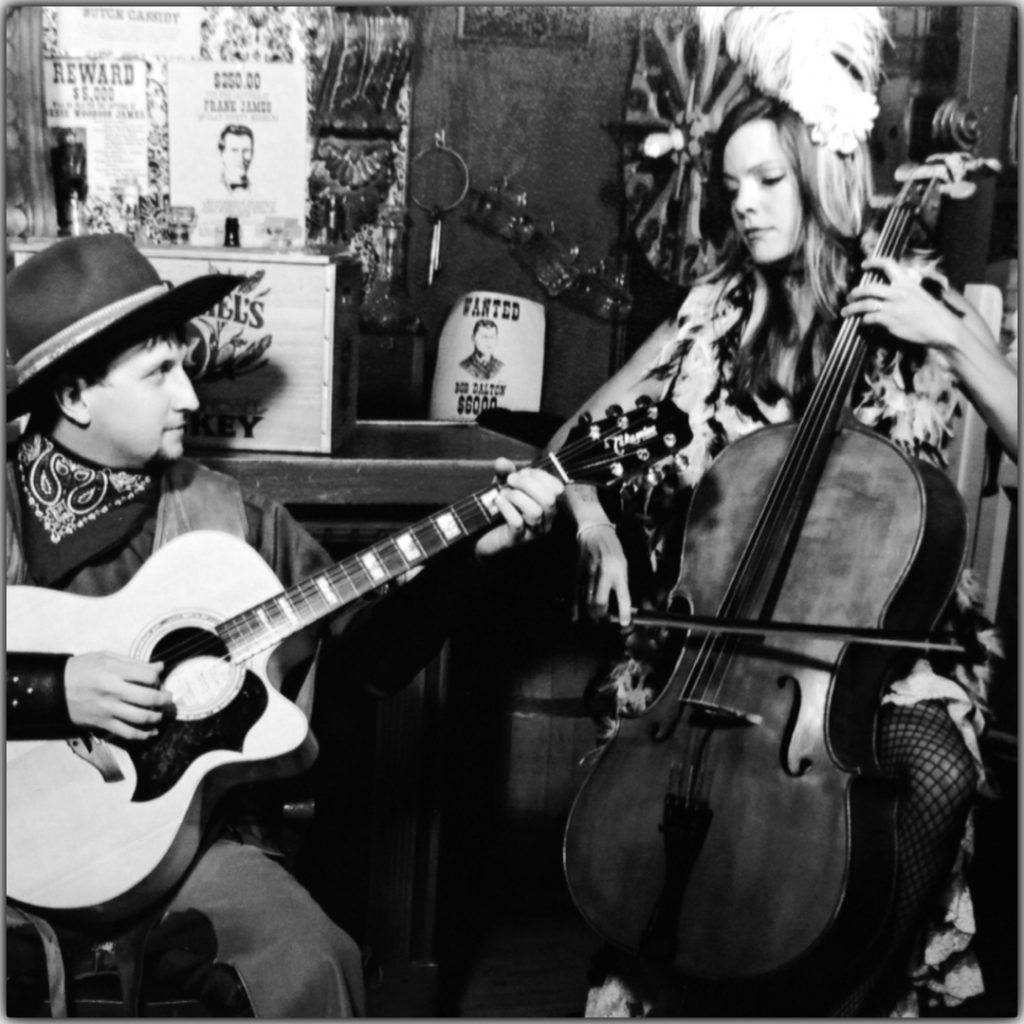
Lost+Found Coffee Company @ 248 South Green Street, Tupelo,MS. inside Relics in Downtown Tupelo. Open Monday through Saturday from 10:00am till 6:00pm.
With most any restaurant or coffee house, it’s a balance between atmosphere, menu, and know how. For a coffee shop, Lost & Found has it going on!
You could spend the better part of a day just strolling through both floors of the antique building looking at all the treasures. When your ready for a coffee break, the knowledgeable baristas can help you choose the perfect pick me up!
They have everything from a classic cup of joe to the creamiest creation you could imagine! From pour overs to cold brews. From lattes, mochas, to cappuccino’s, Lost & Found Coffee Company has got ya covered!
So the next time you want to hunt for lost treasures, or find the perfect cup of coffee, Lost & Found Coffee Company has got ya covered! See y’all there!
Visit my blog for events, contests, new restaurants, LOCAL Favorites, and their FAMOUS foods!
Help us grow our community @ Eating Out With Jeff Jones * visit our page * Click community * Invite friends * Like and share this post
Message me If you would like to have your restaurant, menu, and favorite foods featured in my blog. Over 18,000 local Foodies would love to see what you have to offer!
Do you thrive on the unexpected? Are you waiting for the next fire to crop up?
Have you ever noticed that you can plan something so intricately and you are still going to catch the glitches when life throws you a curve ball? It is one of the beauties of life that we can never prepare for. The unexpected. The only difference is our response to the unexpected. Do we have a knee jerk reaction that finds us swerving to gain back control of our life? Or do we instead just go with the flow and decide to embrace the scenic route life decided to take us on? Our response to life can cause us more stress or we can just enjoy it for what it is in that moment of time. I used to thrive on the unexpected. It was part of my career for many years. The never knowing what “fire” was going to sprout up that day and how I was going to need to put it out. Even this week as we launched our newest book in my publishing company. I thought I had it all planned out only to run into major “hiccups” within 72 hours of the launch. I could either stress out or take it in stride.
Slow and Steady
As my dad retired I watched him take a different approach to life than I had ever seen him take before. I mean, all you have to do is climb up in the cab of his king ranch Ford pick-up and see he is a changed man. He drives slower than anyone should even be allowed to drive out on the roads these days. He knows how to drive, so don’t go yelling at him next time you are stuck behind him. Trust me, my mom does enough yelling for all of us at him about that! He just takes life these days. His sentiments are that he lived in the fast lane his whole life. Rushing to be on time to work, rushing to come home to his family, the constant busy we get entangled with as adults…now, he doesn’t have to be busy and he is going to enjoy that. Truth is, I can’t even be mad at him for that. Now that I am an adult out here rushing from one thing to the next, I totally could use some driving twenty miles per hour in my life some days. Took me getting to nearly forty to even be able to say that though.
The lesson in his wisdom can be heard by all. Some things we lose it over won’t even amount to anything five years from now, yet we gave them so much energy in the moment. All the things we think are so important that we must do and do now. Most will not really matter years from now, yet we poured our soul into them. What would change if we took the time to just enjoy life? To just flow with things as they happened? When hit with something we didn’t expect, we embraced it instead of fighting it? What would happen? I dare say we might have more peace? I probably would be a lot calmer. I probably wouldn’t lose my temper near as much. I probably wouldn’t have anxiety or stress on the daily. I would probably take time to enjoy life more. I certainly wouldn’t yell at the slow driver in front of me.
What about you? Next time you get behind someone driving slowly…take back the name calling and curse words. Maybe take back all of the assumptions that they don’t know how to drive. Maybe use it as a reminder to take a moment, roll down your window, soak in the sunshine. I can promise you that wherever the heck you are going, you will still get there. Maybe that person figured out life and you can use their wisdom too. If they are driving a blue king ranch Ford truck, I can assure you that he is just enjoying his day and he would want you to enjoy yours too. Matter of fact, I wish I had listened to his wisdom a lot more in my earlier days instead of waiting until now.
Here is a plain, searchable text version (most other versions we found were Images or PDF files) of City Of Tupelo Executive Order 20-018. Effective Monday June 29th at 6:00 PM
The following Local Executive Order further amends and supplements all previous Local Executive Orders and its Emergency Proclamation and Resolution adopted by the City of Tupelo, Mississippi, pertaining to COVID-19. All provisions of previous local orders and proclamations shall remain in full force and effect.
LOCAL EXECUTIVE ORDER 20-018
The White House and CDC guidelines state the criteria for reopening up America should be based on data driven conditions within each region or state before proceeding to the next phased opening. Data should be based on symptoms, cases, and hospitals. Based on cases alone, there must be a downward trajectory of documented cases within a 14-day period or a downward trajectory of positive tests as a percent of total tests within a 14-day period. There has been no such downward trajectory in the documented cases in Lee County since May 18, 2020.
Hospital numbers are not always readily available to policymakers; however, from information that has been maintained and communicated to the City of Tupelo, the Northeast Mississippi Medical Center is near or at their capacity for treating COVID-19 inpatients over the past two weeks without reopening additional areas for treating COVID-19 patients. The City of Tupelo is experiencing an increase in the number of cases of COVID-19. The case count 45 days prior to the date of this executive order was 77 cases. That number increased within 15 days to 107, and today, the number is 429 cases. The City of Tupelo is experiencing increases of 11.7 cases a day. This is not in conformity with the guidelines provided of a downward trajectory of positive tests. By any metric available, the City of Tupelo may not continue to the next phase of reopening.
Governor Tate Reeves in his Executive Order No. 1492(1)(i)(1) authorizes the City of Tupelo to implement more restrictive measures than currently in place for other Mississippians to facilitate preventative measures against COVID-19 thereby creating the downward trajectory necessary for reopening.
That the Tupelo Economic Recovery Task Force and North Mississippi Medical Center have formally requested that the City of Tupelo adopt a face covering policy.
In an effort to support the Northeast Mississippi Health System in their response to COVID-19 and to strive to keep the City of Tupelo’s economy remaining open for business, effective at 6:00 a.m. on Monday, June 29, 2020, all persons who are present within the jurisdiction of the City of Tupelo shall wear a clean face covering any time they are, or will be, in contact with other people in indoor public or business spaces where it is not possible to maintain social distance. While wearing the face covering, it is essential to still maintain social distance being the best defense against the spread of COVID-19. The intent of this executive order is to encourage voluntary compliance with the requirements established herein by the businesses and persons within the jurisdiction of the City of Tupelo.
It is recommended that all indoor public or business spaces require persons to wear a face covering for entry. Upon entry, social distancing and activities shall follow guidelines of the City of Tupelo and the Governor’s executive orders pertaining to particular businesses and business activity.
Persons shall properly wear face coverings ensuring the face covering covers the mouth and nose,
1. Signage should be posted by entrances to businesses stating the face covering requirement for entry. (Available for download at www.tupeloms.gov).
2. A patron located inside an indoor public or business space without a face covering will be asked to leave by the business owners if the patron is unwilling to come into compliance with wearing a face covering
3. Face coverings are not required for:
a. People whose religious beliefs prevent them from wearing a face covering. b. Those who cannot wear a face covering due to a medical or behavioral condition. c. Restaurant patrons while dining. d. Private, individual offices or offices with fewer than ten (10) employees. e. Other settings where it is not practical or feasible to wear a face covering, including when obtaining or rendering goods or services, such as receipt of dental services or swimming. f. Banks, gyms, or spaces with physical barrier partitions which prohibit contact between the customer(s) and employee. g. Small offices where the public does not interact with the employer. h. Children under twelve (12). i. That upon the formulation of an articulable safety plan which meets the goals of this
Executive Order businesses may seek an exemption by email at covid@tupeloms.gov
FACE COVERINGS DO NOT HAVE TO BE MEDICAL MASKS OR N95 MASKS. A BANDANA, SCARF, T–SHIRT, HOME–MADE MASKS, ETC. MAY BE USED. THEY MUST PROPERLY COVER BOTH A PERSON‘S MOUTH AND NOSE.
Those businesses that are subject to regulatory oversight of a separate state or federal agency shall follow the guidelines of said agency or regulating body if there is a conflict with this Executive Order.
Additional information can be found at www.tupeloms.gov COVID-19 information landing page.
Pursuant to Miss. Code Anno. 833-15-17(d)(1972 as amended), this Local Executive Order shall remain in full effect under these terms until reviewed, approved or disapproved at the first regular meeting following such Local Executive Order or at a special meeting legally called for such a review.
The City of Tupelo reserves its authority to respond to local conditions as necessary to protect the health, safety, and welfare of its citizens.
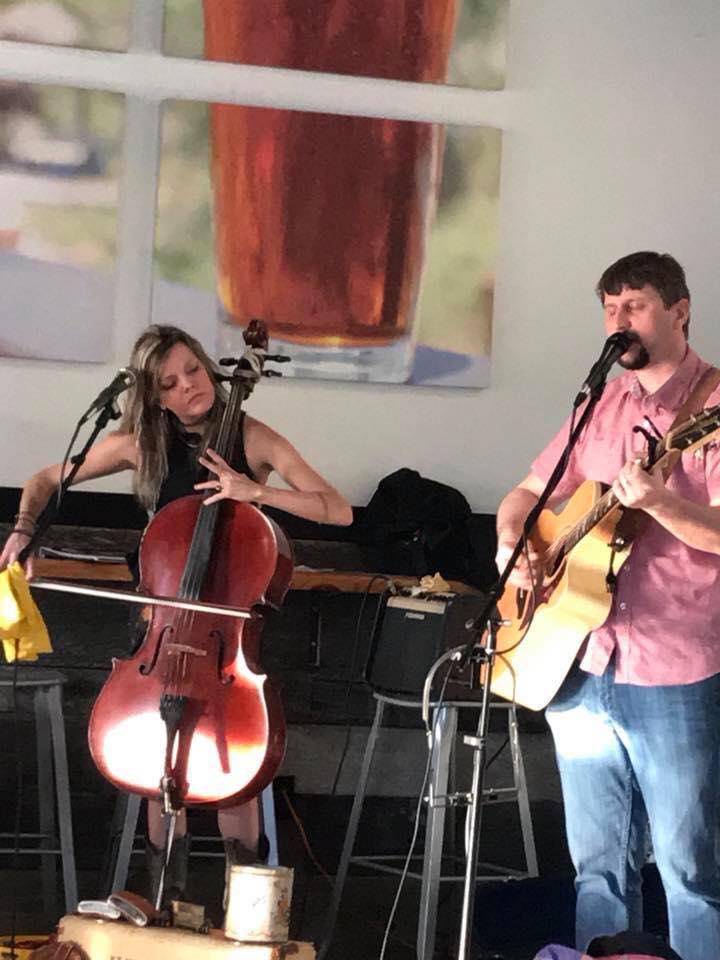
Honeyboy and Boots are a husband and wife, guitar and cello, duo with a unique style that is all their own. Their sound embodies Americana, traditional folk, alt country, and blues with harmonies and a hint of classical notes.
Drew Blackwell, a true Southerner raised in the heart of the black prairie in Mississippi. First picked up the guitar at fourteen, he was greatly influenced by his Uncle Doug who taught him old country standards and folk classics. Later on in high school, he was mentored and inspired to write (and feel) the blues by Alabama blues artist Willie King. (Willie King is credited for bringing together the band The Old Memphis Kings.)
Drew has placed 3rd in the 2019 Mississippi Songwriter of the Year contest with his song “Waiting on A Friend” and made it to the semi finalist round on the 2019 International Songwriting Competition with his song “Accidental Hipster.”
Honeyboy (Drew) can also be found belting out those blues notes as the lead vocalist for the Old Memphis Kings and begins everyday with a hot cup of black coffee!
Courtney Blackwell (Kinzer) grew up in Washington State and comes from a talented musical family. She began playing cello at the age of three taking lessons from the cello bass professor Bill Wharton at the University of Idaho. Her mother was most influential in her progression of technique, tone quality, and ear training. Since traveling around much of the South, she has enjoyed focusing on the variety of ways the cello is used in ensembles. When she plays, you will feel those groovy bass lines making way to soaring leads create an emotional and magical connection between you and her music.
Courtney enjoys working in the studio, collaborating with artists and continuing to challenge the way cello is expressed.
They have opened for such acts as Verlon Thompson, The Josh Abbott Band, Cary Hudson (of Blue Mountain), and Rising Appalachia.
Honeyboy And Boots have performed at a variety of venues and festivals throughout the southeast, including the 2015 Pilgrimage Fest in Franklin, TN; Musicians Corner in Nashville; the Mississippi Songwriters Festival (2015-2018); and the Black Warrior Songwriting Fest in Tuscaloosa, AL (2018-2019). They also came in 2nd place at the 2015 Gulf Coast Songwriters Shootout in Orange Beach, FL.
They have two albums, Mississippi Duo and Waiting On a Song, which are available on their website, iTunes, Amazon, and CD Baby.
The duo also just released their fourth recording: a seven-song EP called Picture On The Wall, which was recorded with Anthony Crawford (Williesugar Capps, Sugarcane Jane, Neil Young). It is now available on Spotify, Itunes, Google Music, and CD Baby.
Who or what would you say has been the greatest influence on your music?
My Uncle Doug, because he began to teach me guitar and introduced me to a lot of great older country music.
Favorite song you’ve composed or performed and why?
“We Played On” because it’s about our family reunions, where we would sit around and play guitar and share songs.
If you could meet any artist, living or dead, which would you choose and why?
Probably Willie Nelson. He’s my all time favorite.
Most embarrassing thing ever to happen at a gig?
A guy fell on top of me while I was performing. I was sitting down. He busted a big hole in my guitar.
What was the most significant thing to happen to you in the course of your music?
Getting to perform at Musicians Corner in downtown Nashville. Probably the biggest crowd we’ve ever been in front of.
If music were not part of your life, what else would you prefer to be doing?
I don’t know, maybe fishing or golf.
Is there another band or artist(s) you’d like to recommend to our readers who you feel deserves attention?
Our friends, Sugarcane Jane. They are a husband/wife duo from the Gulf Shores area. Great people and great artist.
Tasia Fortune, a 29-year-old mother of four, was killed after a dispute over drugs and her body hung from a tree, a Jackson police detective testified Friday during a preliminary hearing for one of the men charged with murder in her death.
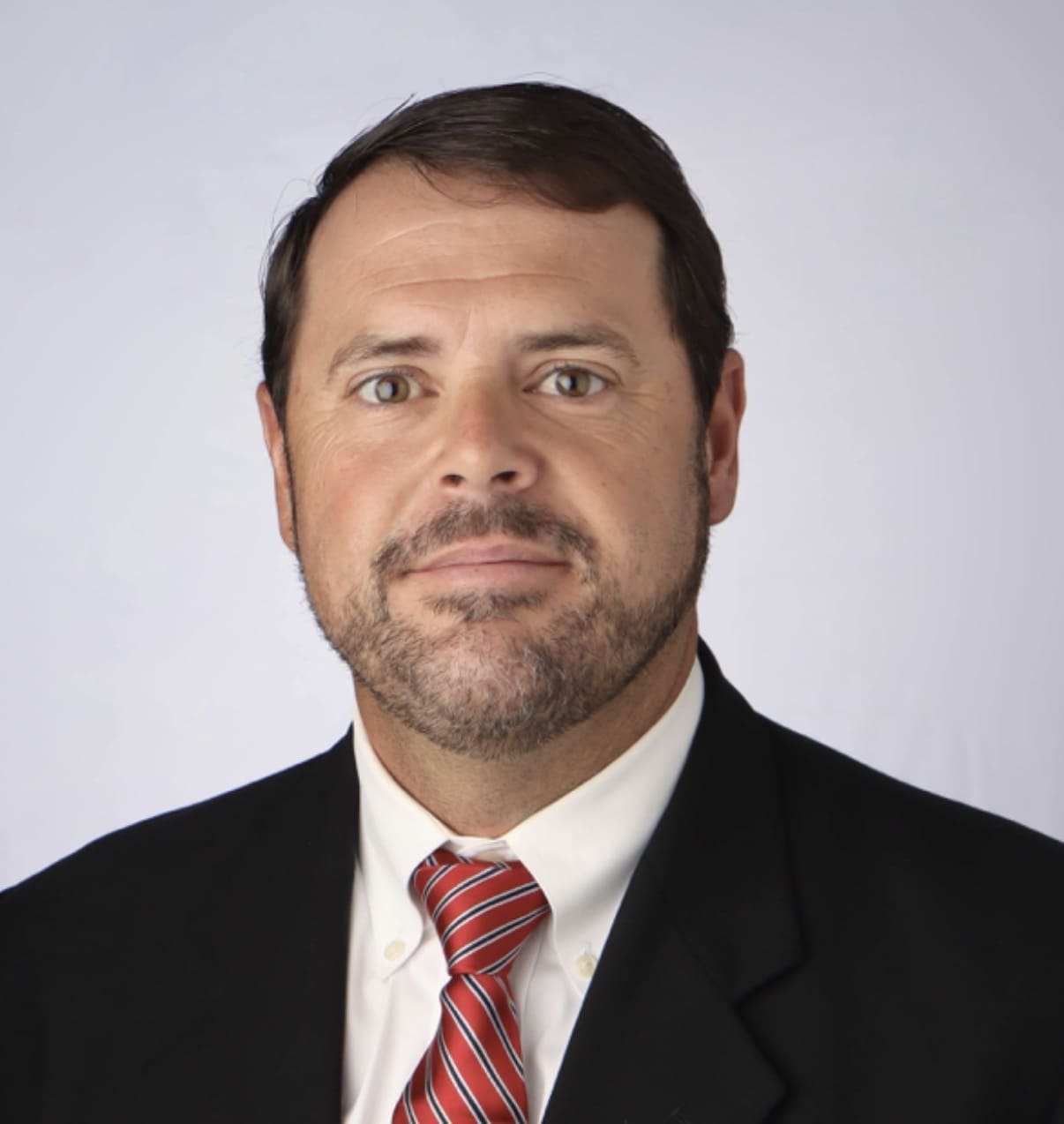
Jackson Police Department Detective Samuel Dukes said the defendant, Jarques Ratliff, 51, was one of a group of people involved in the death of the woman, who was found hanging from a tree in west Jackson.
Earlier this week, police arrested another man, Earnest Lloyd Jr., 25, and also charged him with murder in Fortune’s death. Authorities said they were looking for at least one more suspect.
Dukes told the court that Fortune’s hanging was staged after an argument over drugs, saying she was likely killed in a different location then brought outside a vacant home in the 500 block of Road Remambrance, where her body was found Aug. 3.
The detective said Ratliff and Fortune knew each other.
Dukes said that Fortune fought hard for her life.
Fortune’s death became a national headline because the manner she was found in invoked memories of Mississippi’s history of racial terror lynchings.
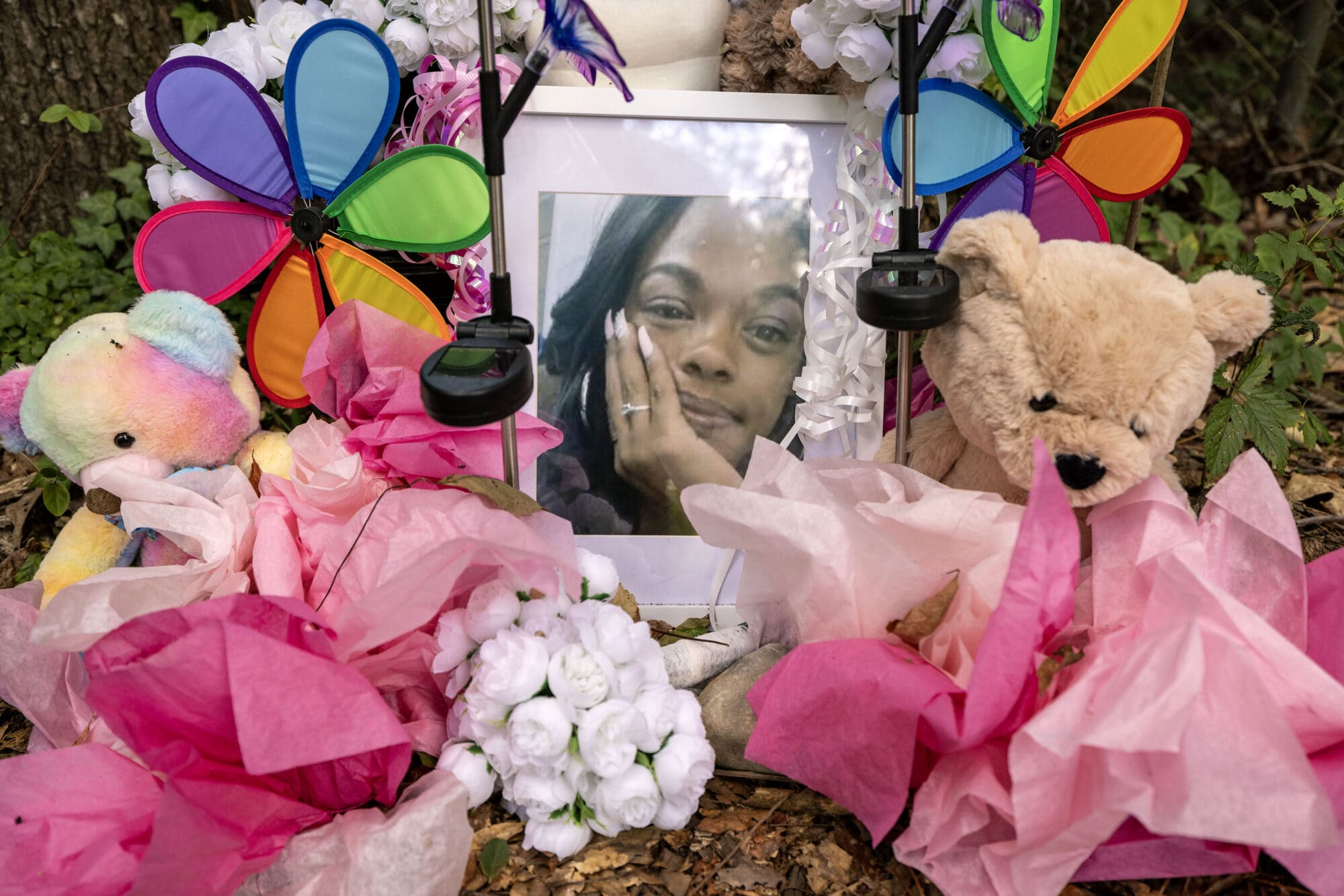
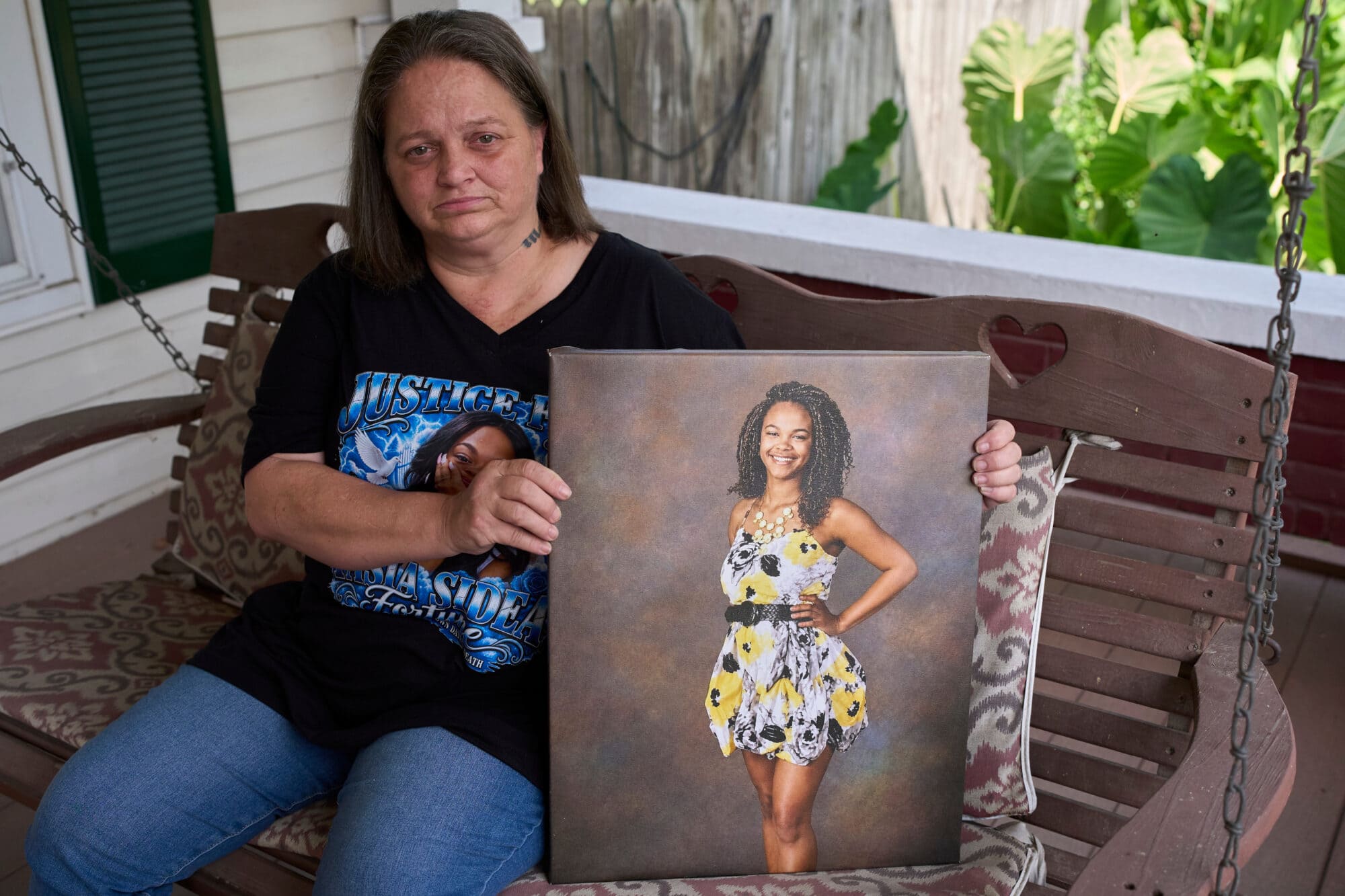
Christy Spivey poses with a portrait of her late daughter Tasia Fortune, Tuesday, Sept. 8, 2026, in Marion, Ky. Credit: AP Photo/George Walker IV
Ratliff was arrested and charged with murder for Fortune’s death on Sept. 11. He is being held in custody without bond. Earnest Lloyd, Jr., who was arrested on Sept. 22, was also denied bond during his initial appearance on Sept. 23. Like Fortune, both men are Black.
JPD is working with U.S. Marshals Service to find one suspect, and police Chief RaShall Brackney said that more arrests are on the way.
Dukes said investigators spoke to Ratliff twice before he was arrested, soon after the state medical examiner ruled the death a homicide.
Fortune’s mother, Christy Spivey attended Ratliff’s hearing with her husband.
“I felt kind of sad for him. I don’t know why,” Spivey said outside the courthouse during a break in Friday’s proceedings. She wore a black shirt bearing an image of her daughter that said, “Justice for Tasia Fortune.”
Members of Ratliff’s family also attended. Lashuna Jones, Ratliff’s stepdaughter, insisted that he was innocent.
“I feel like he was at the wrong place at the wrong time,” Jones said.
When court returned from its break, Judge Lilli Evans Bass said the hearing would remain in recess until Wednesday afternoon.
Outside of court, Ratliff’s attorney, Toney Baldwin said, “My client said he is not involved, and that is absolutely what I believe.”
As Mississippi public school districts update attendance policies under a new state law, some parents, educators and health care providers are questioning how the changes will affect students who miss school because of illness.
Senate Bill 2103, which took effect July 1, requires public school districts to adopt locally tailored attendance policies by Nov. 1 as part of a statewide effort to reduce chronic absenteeism.
The law generally allows students five excused absences per semester. For illness or injury, medical documentation is required after a student’s third illness-related absence. Superintendents or their designees can approve additional excused absences for extenuating circumstances, including prolonged illness supported by medical documentation.
Constance Barnes-Woods, a pediatrician at Beanstalk Pediatrics, said the requirements should account for students with chronic illnesses.
“We support every effort to have children in the classroom, but we also like to see some flexibility with those children who have chronic illnesses,” Barnes-Woods said.
Constance Barnes-Woods
She pointed to sickle cell disease as one example, saying children can experience unpredictable complications and sometimes require extended hospital stays.
“We see patients with sickle cell anemia. It’s lifelong,” Barnes-Woods said. “They cannot predict, unfortunately, when they’re going to get sick.”
Shayla Haynes, a mother and educator in Monticello, said she supports efforts to address absenteeism.
“Speaking as a teacher, it’s good that they do have that plan in place because there are some students that just don’t come to school, and not because it’s their fault, because their parents just won’t send them,” Haynes said.
But Haynes said illness presents a different concern. Her son has asthma and allergies that do not always require medical treatment.
“If he has like an allergy or asthma flare-up, I don’t take him to the doctor. I just keep him at home because I know what it is,” Haynes said.
Requiring documentation after repeated illnesses could mean additional medical visits.
“I could take him to the doctor, but it’ll be a blank trip because I know what it is,” Haynes said.
Barnes-Woods said children with minor illnesses do not necessarily need medical treatment. A child with mild cold symptoms who is otherwise eating, drinking and behaving normally may be able to recover at home, she said.
She said the documentation requirement could also encourage some families to seek care they otherwise would not.
“To an extent I see it as positive because some parents would just self-treat at home,” Barnes-Woods said. “But if they know that a doctor’s excuse is required, that does prompt them to come and seek medical attention to ensure accurate diagnosis.”
For other families, obtaining documentation can present financial and logistical challenges. Depending on insurance, families may face copays, while uninsured patients may have to pay out of pocket. Parents may also struggle to find same-day appointments, arrange transportation or leave work.
“I have parents that are afraid of losing their jobs when they come multiple times for sick children,” Barnes-Woods said.
Barnes-Woods said parents have told her they have missed children’s routine medical appointments because they could not miss school or work or lacked transportation.
Her clinic has had days this school year when 40% to 50% of scheduled patients did not show up for appointments, she said. The rate varies significantly from day to day, and Barnes-Woods said concerns about missing school may be one factor.
Barnes-Woods said she would like districts to use the law’s flexibility for students with documented chronic conditions.
“I would suggest that children with chronic illnesses like asthma, sick cell disease and some other diseases be exempt from that policy,” she said.
The changes come as Mississippi continues to struggle with chronic absenteeism.
The Mississippi Department of Education reported 27.6% of public school students were chronically absent during the 2024-25 school year, up from 24.4% the previous year. MDE defines chronic absenteeism as missing at least 10% of enrolled school days for any reason, including excused and unexcused absences and suspensions.
Chronic absenteeism declined among elementary and middle school students during the 2024-25 school year but increased among high school students from 30% to 39%, according to MDE.
The new requirements establish earlier interventions intended to address absences before they become more serious.
After three cumulative absences, whether excused or unexcused, schools must contact the student’s parent or guardian, document the communication and begin school-based interventions. Five cumulative unlawful absences trigger a referral to a school attendance officer, with additional referrals required as unlawful absences accumulate.
Bryan Marshall, associate state superintendent, said schools will need different approaches depending on the students they serve.
“The effectiveness of the strategy is going to depend on the age of the child,” Marshall said. “What works in a high school is not going to work in elementary, so to say there’s a blanket intervention, there’s not, and there’s no magic bullet for attendance.”
Bryan Marshall, associate state superintendent
If school-based interventions do not work, districts can turn to outside services.
“Once the interventions are put in place, if those are not working, then we have to get a third-party intervention with some sort of family counseling or whatever the district chooses in their area,” Marshall said.
The law also raises the portion of the instructional day a student must attend to be counted present for the full day from 63% to 66%.
April Crozier, a special education teacher in Hattiesburg, said implementation will vary across the state.
“It’s going to just depend on from district to district,” Crozier said.
She said she received information about the changes as a parent but believes some families may not yet understand the requirements.
“There’s still a lot of parents out there that really don’t know or understand that there even is a new policy because they probably haven’t even looked at it,” Crozier said.
The law also calls for one school attendance officer for every 4,000 compulsory-school-age children. Marshall said MDE is working to add personnel needed to implement the changes.
As districts work toward the Nov. 1 deadline, Barnes-Woods said health care providers could help school officials develop policies that account for students’ medical needs.
“We can maybe meet and talk about the schools’ expectations and then what my goals are for my patients and educate themselves,” Barnes-Woods said.ees can also approve additional excused absences for extenuating circumstances, including prolonged illness supported by medical documentation.
Two former Capitol Police officers faced cross-examination Friday regarding their contention that they were forced to shoot a Jackson man in self-defense after he tried to run them over.
Friday marked the third day of testimony in the manslaughter trial of Michael Rhinewalt and Steven Frederick Jr., who served on the crime suppression Flex Unit of the Capitol Police.
Jurors’ deliberations are expected to begin Monday after they hear the judge’s instructions and the lawyers’ closing statements.
Friday also marked the fourth anniversary of the day, Sept. 25, 2022, when the officers fired into the Jeep Grand Cherokee of 25-year-old Jaylen Lewis and killed him.
Defense lawyers hadn’t planned to call the officers as witnesses because the prosecution had already introduced recorded statements of the pair explaining to investigators why they shot Lewis. Putting the officers on the witness stand meant they could be cross-examined.
But defense lawyers changed their strategy Friday after Hinds County Circuit Judge Faye Peterson said she would instruct the jury to consider these statements as “self-serving” hearsay because no cross-examination under oath took place.
As a result of that ruling, Frederick and Rhinewalt decided to take the witness stand.
Rhinewalt testified that they stopped the Cherokee that matched the general description of a car suspected in auto burglaries.
When Lewis backed up his Cherokee and rammed into another law enforcement car behind him, he and Frederick drew their guns, Rhinewalt said.
Both of them called out for Lewis to show his hands, he said, and he called out to Frederick, “Watch his hands. I think he has a gun.”
When Lewis pulled forward, he said he and Frederick screamed for him to stop, and so did his female passenger.
Rhinewalt said he made eye contact with Lewis. “It’s like he looks up, takes a deep breath and says, ‘F— you’ and gasses it.”
Nothing blocked Lewis from going to the left, Rhinewalt said, but “he turned his vehicle toward us, trying to run us over.”
He feared for his life, he said. “I thought of my wife and kids. I didn’t want to do what he made me do.”
He fired two shots into the front windshield, including the fatal shot to Lewis’ head, and a third shot hit the frame between the front windshield and side window.
He said he actually put his hand on the hood of Lewis’ car when he fired the third shot and that the car lifted him off the ground.
The impact of the car prompted him to roll on the ground, he said.
Special Assistant Attorney General Luke Williamson asked Rhinewalt if his testimony that he told Frederick about Lewis having a gun was in his original recorded statement to investigators.
Rhinewalt said no.
Williamson asked him about his statement that the car lifted him up. “That’s not in the recording, is it?”
Rhinewalt said no.
Williamson asked him about his statement about rolling on the ground.
“Actually I was struck,” he said. “I lost my balance from coming off the hood.”
“That’s not in the recording?” Williamson said.
“No, it’s not,” Rhinewalt replied.
Frederick testified that when he parked his Capitol Police car at a 45-degree angle in front of Lewis’ Cherokee, he blocked off the right-hand turn but left the area open to the left for Lewis to escape.
He said he got out of his car and began shouting, “Capitol Police. Capitol Police. Turn your car off. Put your hands out.”
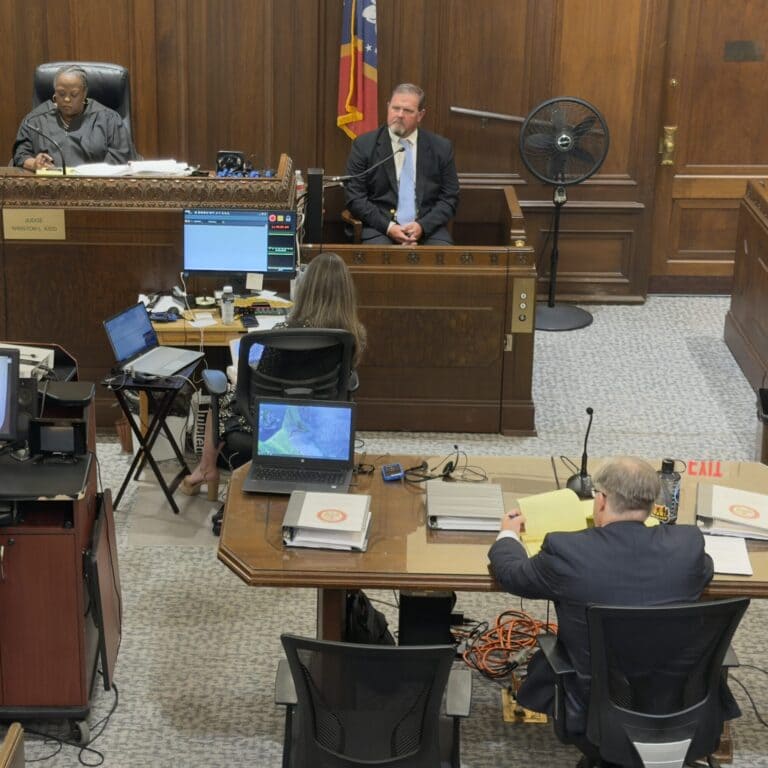
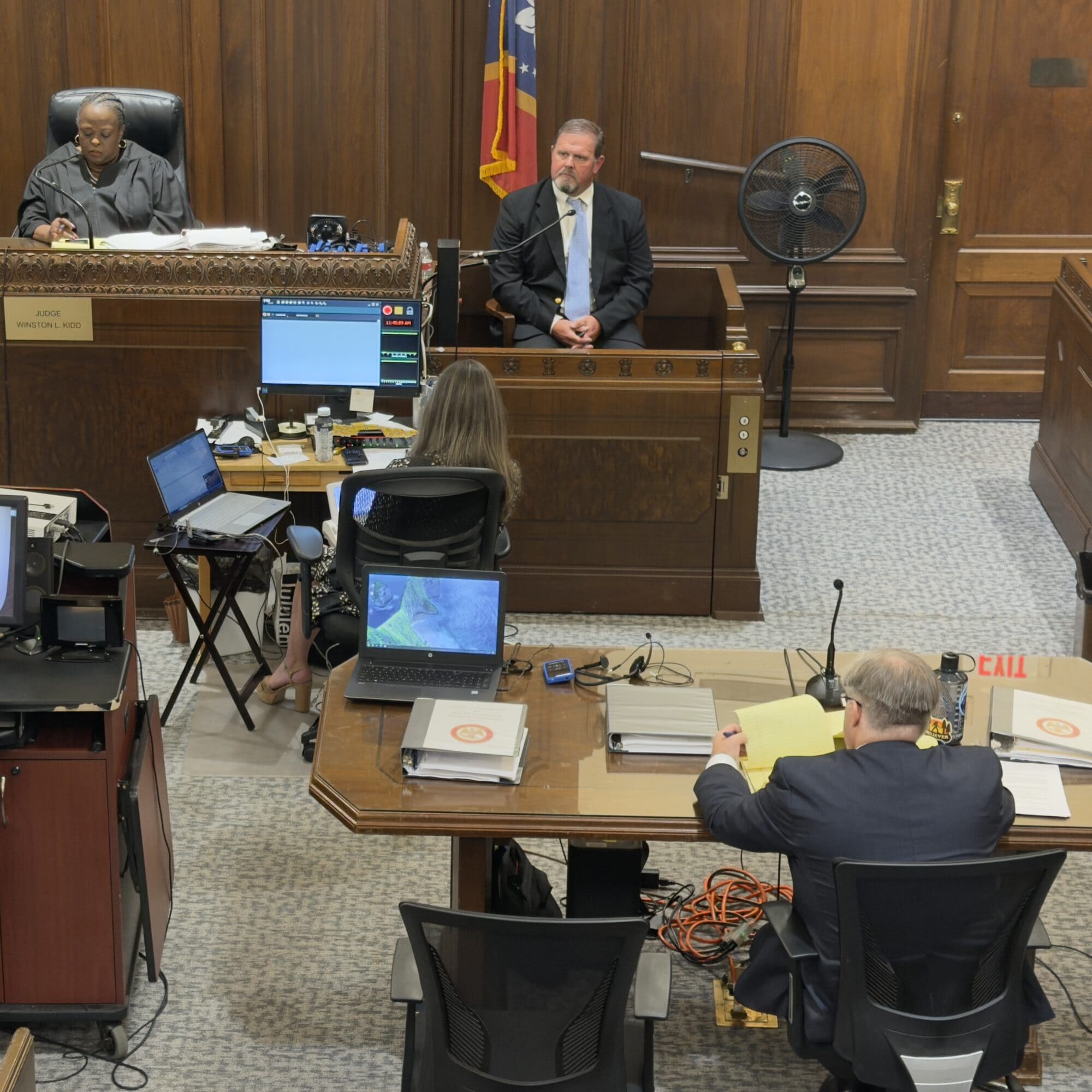
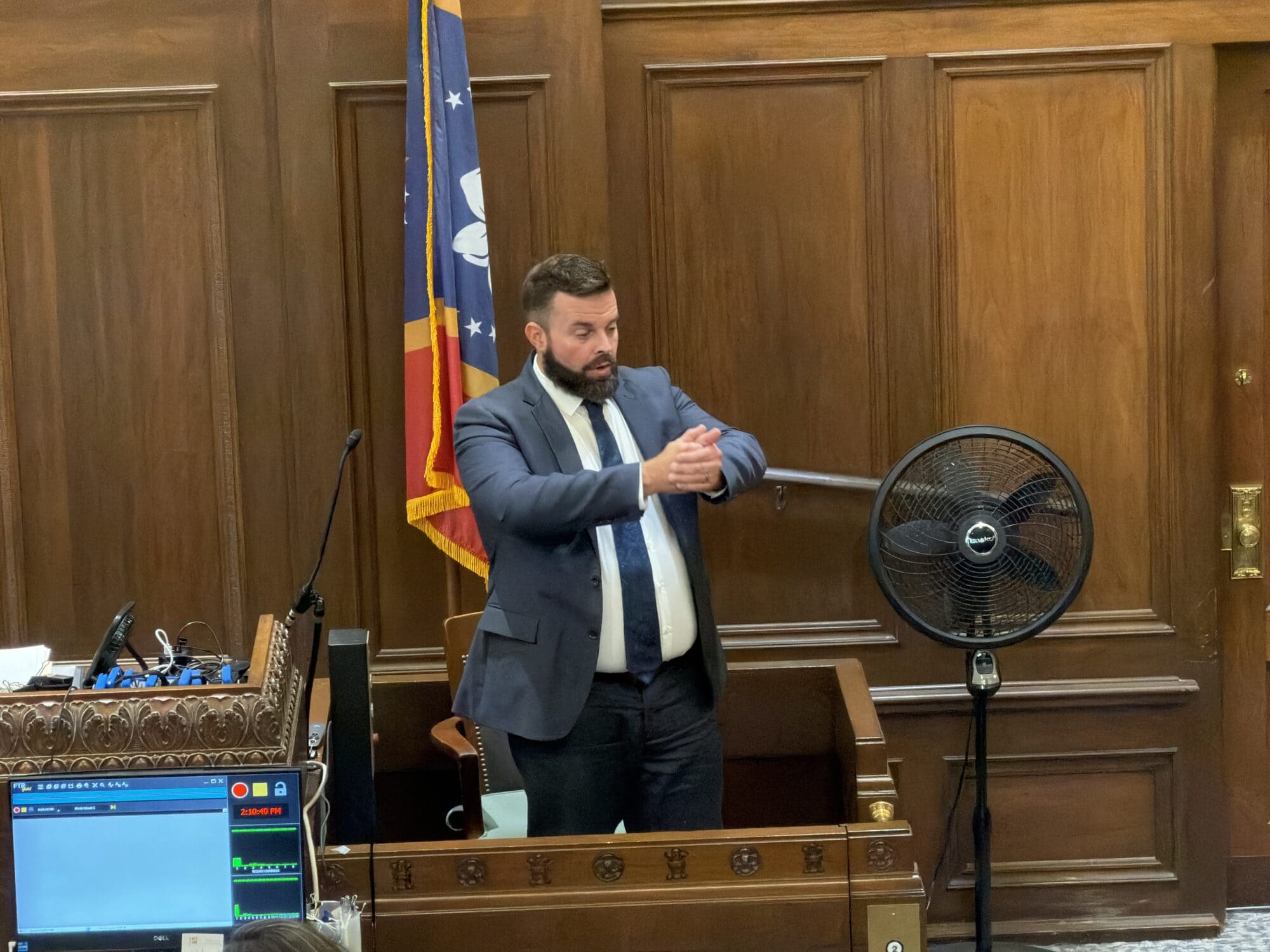
Former Capitol Police Officer Steven Frederick Jr. demonstrates to Hinds County jurors in his manslaughter trial Friday, Sept. 25, 2026, how he pulled his pistol after Jaylen Lewis rammed his Jeep Grand Cherokee into the police car behind him. Credit: Jerry Mitchell/Mississippi Today
After Lewis backed his Cherokee into the police car behind him, Frederick said he pulled out his weapon. He said Lewis then began to drive toward Rhinewalt at a good rate of speed.
He compared the sound of the 707-horsepower engine to a NASCAR engine. “I was scared,” he said. “I had a 2-year-old son.”
Frederick said he fired twice into the side window of the car.
Williamson asked him about the vest he wore that night.
Frederick said it was a vest his Army friend gave to him.
Asked what the patch on the vest, “No Quarter,” meant, Frederick replied that he didn’t know.
Merriam-Webster dictionary says no quarter means “no pity or mercy — used to say that an enemy, opponent, etc., is treated in a very harsh way.”
In military terms, “no quarter” means that enemy soldiers will be killed instead of being taken prisoner.
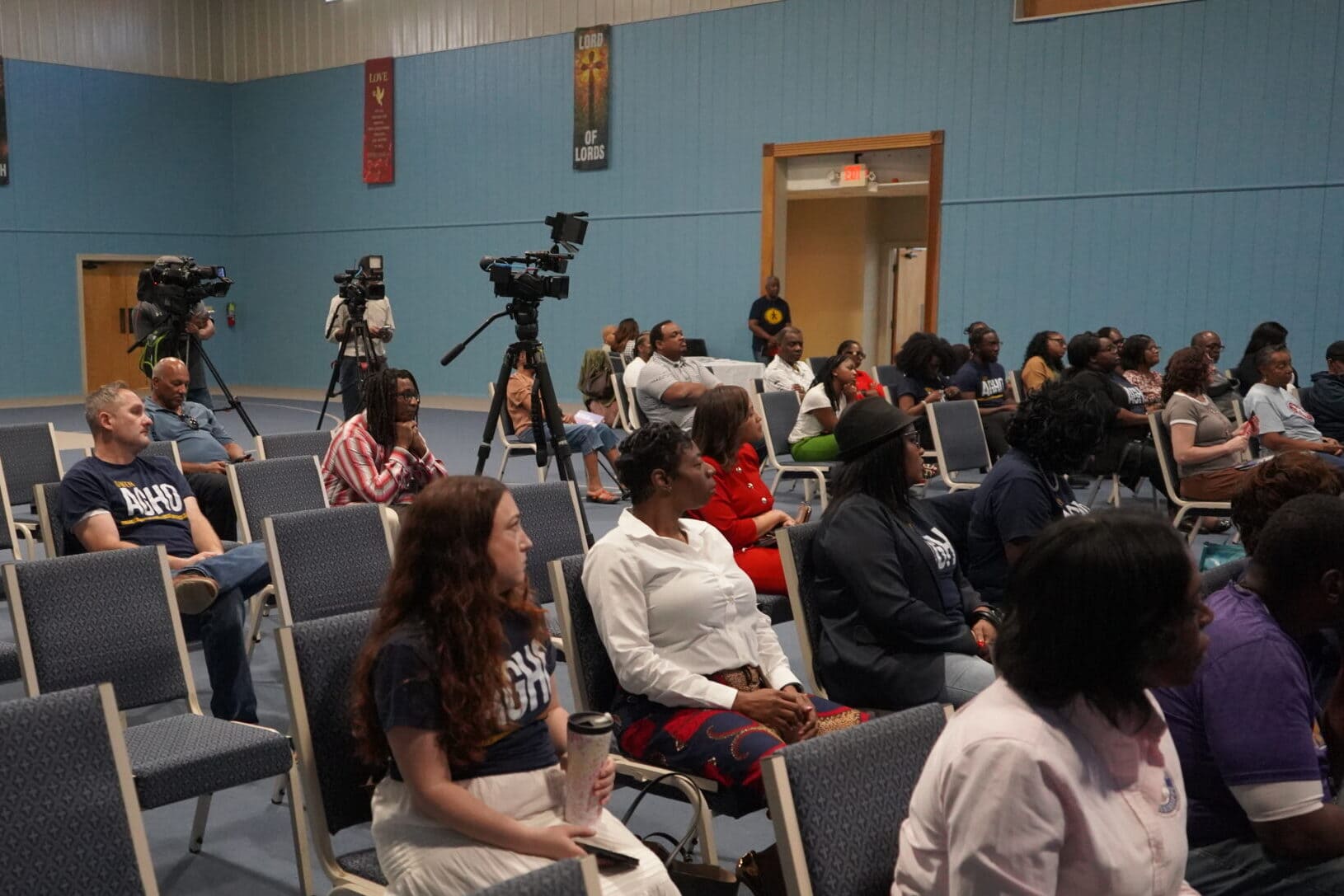
RAYMOND – Five candidates vying to become Hinds County district attorney pondered questions about corruption, managing public money, jail crowding and persistent case backlogs at their first forum ahead of a Nov. 3 special election.
One question raised at Thursday’s forum summed up the enormous tasks that lie ahead to restore trust in the office after former DA Jody Owens pleaded guilty to a federal conspiracy charge earlier this summer and resigned.
Asked to describe a situation in which they had to navigate “significant operational challenges,” each candidate pledged to run an office free of mismanagement and dysfunction and to rid the county’s justice system of problems that have persisted for decades.
Some candidates trumpeted their experience working in the Hinds DA’s office, while others took pains to emphasize their outsider status.
“I haven’t really had an opportunity to be in dysfunctional organizations,” said Marvin Sanders, a defense attorney who worked under former DA Eleanor Faye Peterson in the early 2000s. “I avoided those situations.”
In response to a later question, Sanders assured the audience he would not commit crimes as district attorney.
“You don’t have to worry about me doing something like that, ‘cause I like my freedom,” Sanders said.
As a member of the Mississippi Attorney General’s Office in 2016, he took part in the failed prosecution of former Hinds DA Robert Schuler Smith, who was accused of conspiring to hinder a criminal prosecution.
Jody Owens Credit: Richard Lake/Mississippi Today
Owens faces up to five years in prison after pleading guilty to conspiracy to commit bribery. He awaits sentencing in November. A son of a prominent family from Terry in southern Hinds County, Owens had been caught up in a wide-ranging FBI probe that also ensnared former Jackson Mayor Chokwe Antar Lumumba and City Council Member Aaron Banks, who also await sentencing.
The nearly two-hour forum hosted by the Hinds County Democratic Executive Committee in a church auditorium provided sparse details about how each candidate would handle the nonpartisan post, if elected.
Gwen Agho, a current Hinds prosecutor, said the office was in disarray when she joined in 2016. In one example, Agho said the office wasn’t tracking whether prosecutors reached out to victims, so she created her own spreadsheet to hold herself accountable.
Agho touted this practice as contributing to the happiness of victims whose cases she’s prosecuted. She also described problems she has witnessed in the county’s grand jury process and claimed the office lacks a functioning victim’s advocate.
“There can be a streak of laziness in some people,” she said.
Some of the candidates floated solutions that past DAs have tried.
Agho and Greta Mack Harris, an attorney practicing in Madison and Rankin counties, advocated for returning to a caseload management system known as vertical prosecutions, which requires one prosecutor to oversee a case across each stage of the process, from grand jury to trial and sentencing.
Noting the persistent crowding at the Hinds County Detention Center, Mack Harris, a former Hinds assistant district attorney, said she wanted to create panels that would move cases more swiftly. She did not elaborate on how the panels would work.
“There is absolutely no excuse for the level of pretrial detainees in Raymond,” she said, referring to the jail, which is currently over capacity. “There’s absolutely no excuse for that grand jury system to be as complicated and disorganized as Mrs. Agho alluded to.”
Less alarmed was Wendy Wilson White, a Hinds prosecutor who currently handles probable cause hearings for defendants who aren’t indicted. She pushed back against suggestions from other candidates that the DA’s office was indicting defendants without receiving investigative files from local law enforcement. She blamed the current backlog on multiple actors within the justice system, such as law enforcement.
“The DA’s office has no real control over the speed of investigations,” she said.
Multiple candidates promised to establish stronger accounting over the office’s self-generated funds, which are subject to patchwork accountability from other government agencies.
Mack Harris, an attorney who previously ran unsuccessfully for Hinds County youth court judge, said she would hire an independent auditor to review the audit requested by interim DA Brad McCullouch, who was appointed by Gov. Tate Reeves to replace Owens. State law bars McCullouch from the special election ballot because he is not a Hinds County resident.
A fifth candidate, Darla Palmer, left the forum after opening remarks, saying she was double-booked.
“Nobody is talking about violent crime,” Palmer said before departing. She is running for the post for a third time after losing to Owens in 2019 and 2023.
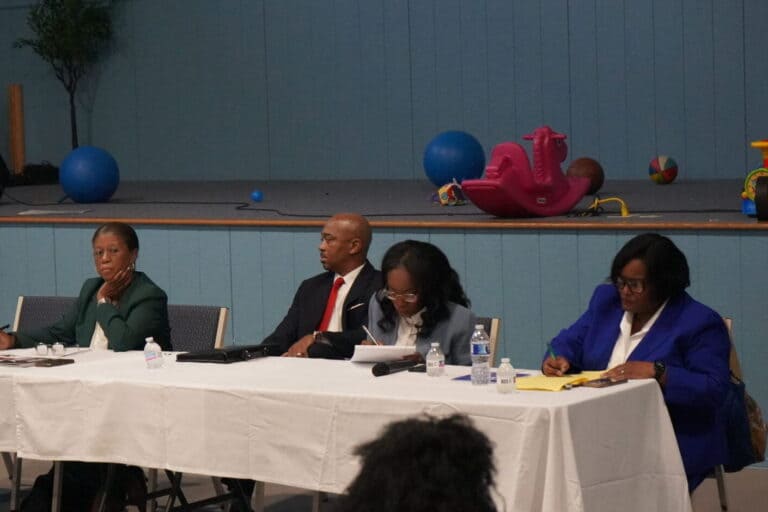
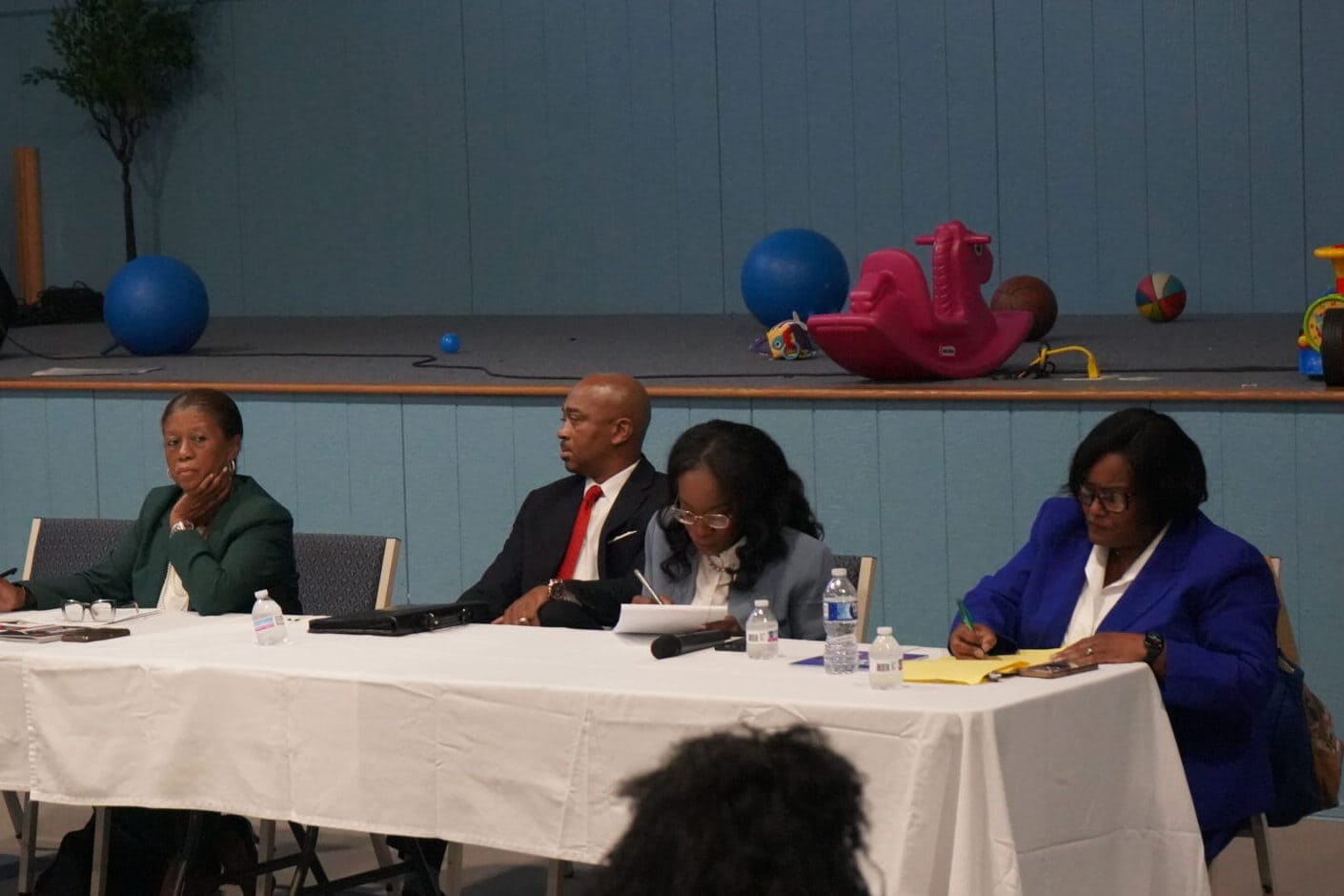
Voters and supporters listen to candidates for the Hinds County District Attorney special election discuss the issues during a forum held Sept. 24, 2026, in a church auditorium in Raymond. Credit: Molly Minta/Mississippi Today
The forum, attended by a few dozen potential voters, left some like Doug Williams dissatisfied. The self-employed Jackson resident who works in real estate asked the candidates what they would do to improve the reputation of the Hinds DA’s office, which he contended does not garner the same respect as prosecutorial operations in Rankin and Madison counties.
Mack Harris said that Hinds needs to have higher standards. Sanders said such comparisons are unfair because Hinds County prosecutors handle more criminal cases than neighboring counties. Agho said she would put more pressure on prosecutors to be productive. Wilson White spoke about the no-snitch culture in Jackson in which witnesses do not want to cooperate with prosecutors.
“It’s going to take all of us to take a stand and fish out these criminals and let them know that we mean business,” she said.
Williams, 54, said he plans to attend another forum to ask more questions. This Monday, local political organizations including Women for Progress of MS and the League of Women Voters will host a forum at the Mississippi Public Broadcasting Auditorium at 5 p.m.
___________
CORRECTION, Sept. 25, 2026: A forum sponsored by the League of Women Voters and other local groups is scheduled for Monday.
In a new report, Sierra Club takes aim at electric utilities across the United States for their slow transition to clean energy sources. The analysis included less than flattering grades for the state’s two investor-owned power companies, Entergy Mississippi and Mississippi Power.
The marks — an “F” for Entergy and a “C” for Mississippi Power — came in the latest edition of the national environmental advocacy nonprofit’s “The Dirty Truth Report,” released Wednesday.
The report graded the country’s utilities using three criteria: the retiring of coal plants by 2030, not adding new gas-powered production and building clean energy sources to replace fossil fuel loads by 2035. For the second year in a row, the nonprofit gave the country’s utilities as a whole an “F.”
“As artificial intelligence data centers drive demand for energy, utility companies are rushing to expensive and dangerous fossil fuels, leading to soaring electricity prices and worsening air pollution,” said Sierra Club Chief Program Officer Holly Bender.
The nonprofit highlighted the large amount of planned new gas generation this year, which was more than in any of the previous five years.
The report gave Entergy a failing grade largely because it plans to add nearly 3,500 megawatts of gas-powered energy to its system by 2035. The utility is growing its power capacity, in part, to meet the needs of Amazon data centers across central Mississippi. It’s unclear, though, how much those plans were fueled by Amazon’s arrival because of limited oversight over the companies’ agreement.
Sierra Club gave the utility a poor grade despite its plans to retire all of its coal units by 2030 and Entergy’s recent investments in renewable sources, which includes a 100-megawatt solar power plant that came online in 2022.
The utility is building three new, 754-megawatt gas plants: one in Greenville, set to be ready in 2028, which will replace an existing plant and is designed to use hydrogen in the future; another plant in Ridgeland, expected to be in service in 2029; and one in Vicksburg, which will open in 2028.
Entergy said in a response to the Sierra Club report that it aims to achieve net-zero emissions by 2050.
“We continue to invest in renewable power and storage projects, with approximately 3 gigawatts either already approved or pending regulatory review,” the company said Thursday in a statement to Mississippi Today. “Driven by strong economic growth and rising customer demand, we are developing new baseload generation capacity to power these exciting opportunities while continuing to make meaningful progress toward a net‑zero future. Changes to available tax credits for carbon‑free resources are also shaping how we optimize our clean energy investments.”
Mississippi Power, which received an “F” in last year’s edition, improved to a “C” this year. It plans to retire all of its coal power units by 2030 and is planning for 548 megawatts of new gas production by 2035.
The utility received the best grade of any subsidiary of Southern Company. The report panned the energy giant for extending the lives of its coal units. Last year, Mississippi Power received approval from the state to push back the retirement of its coal units at Plant Victor J. Daniel in Jackson County. But the utility later proposed to convert the units to gas in 2029, the Sierra Club report said.
The report, though, gave the company a “0%” in its plans to replace fossil fuel generation and load growth with clean energy. The company’s power supply has included roughly 160 megawatts of solar power for nearly the last decade.
In a Thursday statement, Mississippi Power pointed to those projects as well as its low rates, 22% below the national average.
“The company continues to reliably meet our customers’ ever-evolving energy needs and is in a strong position to ensure adequate capacity and the ability to serve our customers as the state experiences robust economic growth,” the utility said.
The company also mentioned the potential benefits from a solar power battery storage project in Walnut Grove, which it called “one of the nation’s most advanced green microgrids.”
“Lessons learned from the project are helping inform how renewable energy and battery storage may be integrated into our system in the future,” Mississippi Power said.
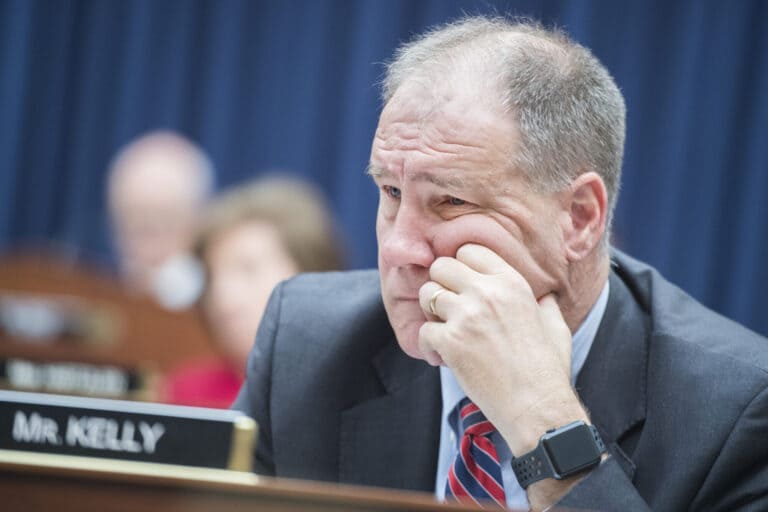
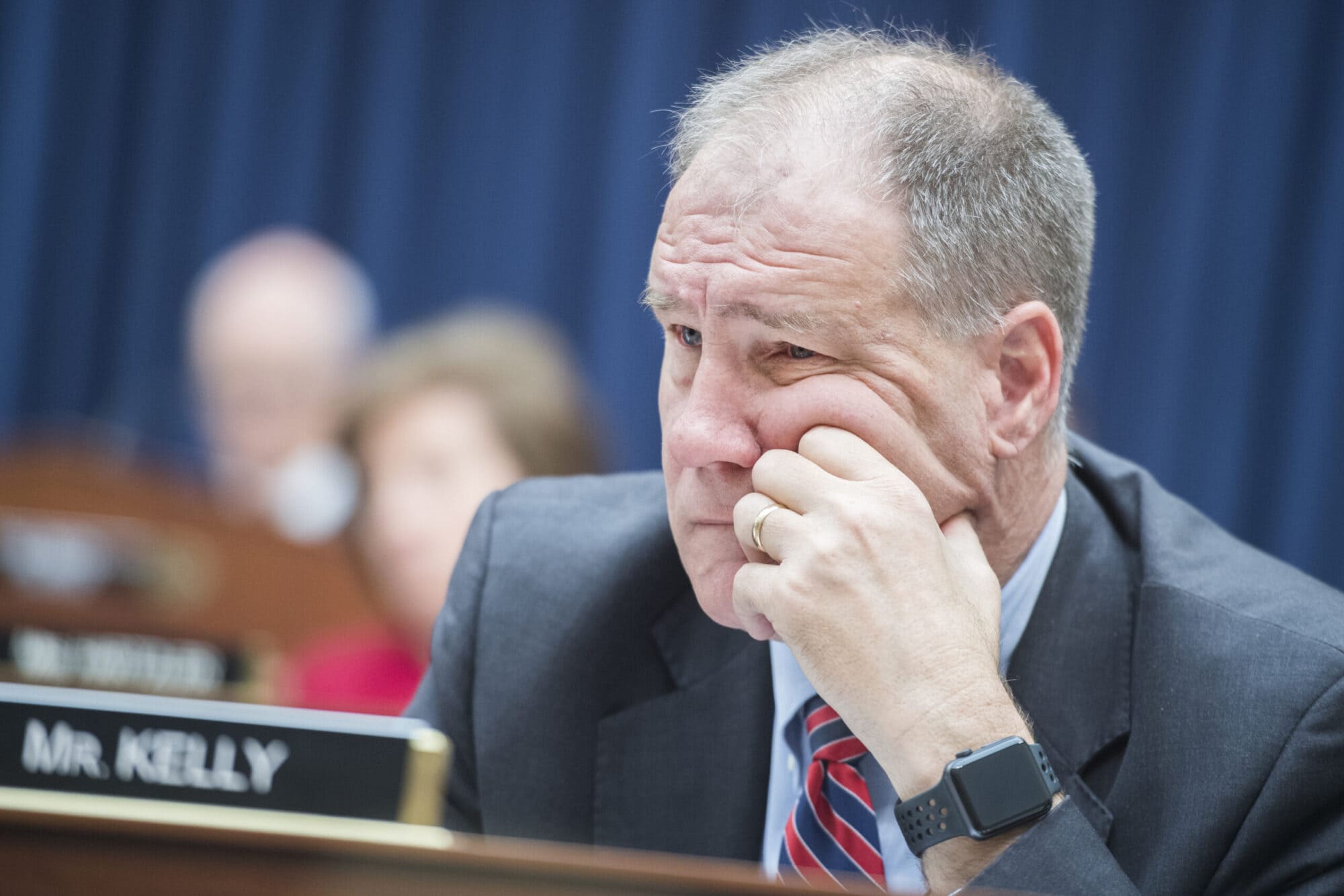
U.S. Rep. Trent Kelly, a Republican representing Mississippi’s 1st Congressional District in north Mississippi, hopes to become the highest-ranking GOP member on the House Armed Services Committee next year.
Kelly, currently running for a seventh term, said in a statement to Mississippi Today that he’s focused on winning reelection in November. But if the district votes to send him back to Washington, he will run to be top Republican of the committee that has jurisdiction over the nation’s military.
“I have a long history of working on national defense strategy, and I believe I can make a meaningful difference for our men and women in uniform and for the defense of our great nation,” Kelly said.
The current top Republican on the committee is U.S. Rep. Mike Rogers from Alabama. The Republican Conference’s internal rules limit members to a maximum of three years as the most senior person on a committee, but they can seek a waiver to be exempt from that rule.
Republican committee chairs in the U.S. House are chosen through a process with the Republican Steering Committee and a vote by the full party conference.
Kelly is a former district attorney in northeast Mississippi and a 39-year Mississippi Army National Guard veteran who retired in 2025 as a major general. He serves on the House Armed Services Committee and is chairman of the Seapower Subcommittee.
Other GOP members running for the top spot are Rep. Rob Wittman of Virginia and Rep. Ronny Jackson of Texas, according to Punchbowl News.
Kelly is running for reelection against Democratic nominee Cliff Johnson and Libertarian candidate Johnny Baucom, and the general election is Nov. 3.
Mississippi Today Ideas is a platform for thoughtful ideas to be shared about our state’s past, present and future. Opinions expressed in guest essays are the author’s own and do not necessarily represent those of Mississippi Today. You canread more about the section here.
I have watched two men killed with nitrogen. Both still haunt me.
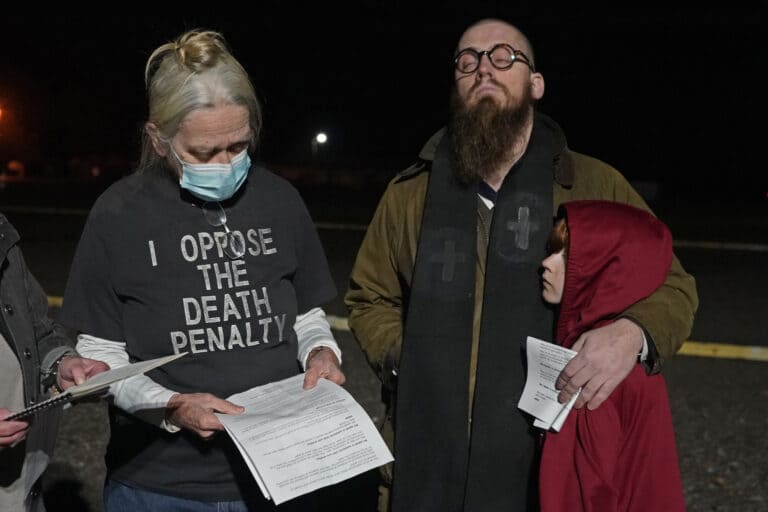
In late 2023, Kenneth Smith asked me to be his spiritual adviser. We spent weeks together before Alabama filled his lungs with nitrogen gas. Like any priest and parishioner, we prayed and read Scripture together. We talked about what was coming.
I was wrong about everything. The horror of forced suffocation went far beyond anything that I could have imagined.
When the nitrogen gas began to flow, all of the espoused theories of humaneness ended. Kenny’s muscles wildly seized. His chest heaved with great force. I still do not know how a strapped body could actually move a steel gurney. His head slapped the inside of the mask over and over. Everything was moving everywhere all at once.
We were told he would be unconscious in seconds. Yet his veins kept rising against the skin. Saliva, mucus and other fluids kept pooling. His eyes looked like they might explode. I took off my glasses. I sobbed. I had never felt further from God.
That was January 2024. It was the first execution by nitrogen hypoxia in the history of the world.
In Mississippi, the method had already been legal for seven years.
Upon the enactment of House Bill 638, nitrogen went in as a contingency method in 2017. If a court struck lethal injection or it became unavailable, the state first would move to gas, then to the chair and then to the firing squad.
The bill answered lawsuits over the state’s lethal injection drugs. Though nobody on earth had watched a nitrogen execution, Mississippi wrote the method into law anyway.
Then, Mississippi took the conditions out.
In 2022, House Bill 1479 rewrote Section 99-19-51. The statute now leaves the method of execution to the discretion of the Corrections commissioner, the deputy commissioner for Finance and Administration and the deputy commissioner for institutions of the Mississippi Department of Corrections.
The options include nitrogen hypoxia, electrocution, firing squad or lethal injection. Though the law names injection the preferred method as a matter of state policy, preference does not mean requirement.
Nitrogen is no longer Mississippi’s fallback. Nitrogen is one of Mississippi’s four choices.
Nothing has to fail first. No court has to rule. No supply has to run short. Three officials decide. The law gives the condemned man seven days of written notice to learn what they picked. That is the whole procedure. Seven days to find out which apparatus the state selected to kill you.
The Legislature made that decision in 2022. It made it two years before anyone alive had seen what nitrogen does. Nobody in the Legislature had seen what I have.
None of this is abstract. Mississippi is killing again.
Richard Jordan was executed at Parchman on June 25, 2025. He was 79 and had spent nearly 50 years on death row. The state used a three-drug protocol beginning with midazolam. Jordan was the lead plaintiff in a federal challenge arguing that midazolam leaves a man awake for the burning and the suffocation that follow. Mississippi killed him with the drug he was suing over.
Death Row at Unit 29, Mississippi State Penitentiary at Parchman. Credit: Mississippi Department of Corrections
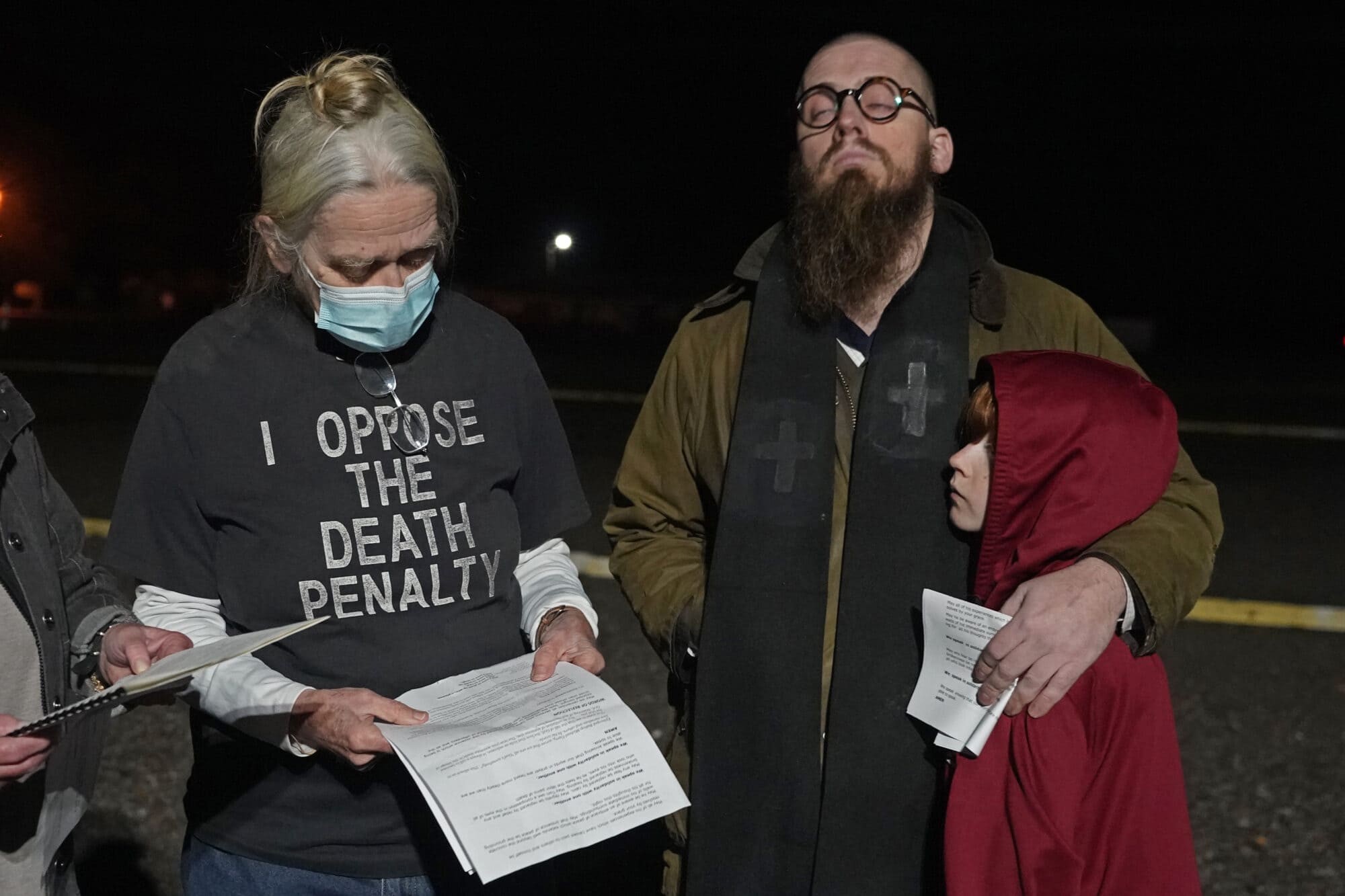
I was outside the fence that night. What stays with me is not the grief. It was the mood of the people running the thing. The staff seemed practically giddy. There was an air of celebration, the feeling a small town gets before the big football game. Now you want to hand those men a mask, a tank and the permission to suffocate people to death?
Thirty-five men remain on Mississippi’s death row.
Though Mississippi has recently chosen injection, nothing in the law requires it to choose injection again.
In 2017 and again in 2022, execution by nitrogen hypoxia existed only on paper – legislative reports, physiological assumptions and confident predictions about what a condemned man would feel. It was enough.
Eight men have now been killed with it. They are Kenneth Smith, Alan Miller, Carey Dale Grayson, Demetrius Frazier, Gregory Hunt, Geoffrey West, Anthony Boyd, all in Alabama, and Jessie Hoffman in Louisiana.
I was there for the first. I was there for the eighth.
Anthony Boyd also asked me to be his spiritual adviser. In the midst of deep prayer, we talked about God’s love.
Then the curtains opened, and the gas began. His chest heaved. His legs came off the gurney. He strained against the restraints. His breathing turned frantic and never stopped. By my count, Anthony was conscious and fighting for at least 19 minutes. He was pronounced dead at 6:33 pm. It was the longest nitrogen execution Alabama had carried out.
I called it the worst one yet. I still do.
The state has an answer for everything I just described. Convulsions become involuntary movement. Gasping becomes an expected physiological response. Terror becomes a reaction the man was not conscious enough to feel.
Each translation may be technically defensible. But not one of them tells you any of what the executed knew. Whether they knew is the only question that matters, and the vocabulary was built so that such a question never gets asked.
The count is mine. The men are not. Eight of them are now on the public record. Mississippi can read that record without producing a body of its own.
In June 2026, the argument stopped belonging to me and a handful of other witnesses.
The U.S. 11th Circuit ruled that Alabama’s nitrogen protocol presents a substantial risk of serious harm over and above death itself.
Judge Emily Marks then entered an order permanently barring Alabama from using the protocol against Jeffery Lee. The Supreme Court did not clear the way for the execution to proceed.
The federal district court found that a man under the mask through the use of nitrogen experiences air hunger. Panic, dread, suffering the court described as capable of being worse than pain. It placed the duration as being too long in minutes.
Minutes were enough for the federal courts.
I watched Anthony Boyd fight for 19.
Those who celebrate the Lee ruling should first understand how he won. Under current Eighth Amendment doctrine, a condemned man cannot simply prove that the state’s method tortures him. He must also provide evidence of a better way to kill him. Lee did. He proposed the firing squad.
The court found the firing squad feasible, readily implemented and a significant reduction of the risk. That finding is why the injunction was issued.
One of the most consequential execution method rulings in modern American history was won by a man who had to volunteer to be shot to death.
Now put that beside Mississippi’s list – injection, gas, electrical current, bullets. Four ways to reach one result, kept on the shelf so that losing one method never stops the process. The state is not asking which method is right. The state is asking which method survives.
That is not lawmaking. That is inventory.
Mississippi should strike nitrogen from the list.
Let’s be honest about what that accomplishes. Strike nitrogen and three methods remain. The chair does not go anywhere. The firing squad does not go anywhere. Mississippi would have removed one instrument from a cabinet stocked precisely so that the loss of an instrument changes nothing.
Strike it anyway.
A law can remain on the books long after the world that produced it has disappeared. Mississippi has already demonstrated that. Mississippi rejected the 13th Amendment, banning slavery in December 1865. It did not ratify it until 1995, 130 years later. The federal government did not formally record that ratification until 2013. Nobody in 1995 believed they were defending slavery. The thing simply sat there.
There is no reason to let nitrogen become another piece of legal residue waiting for someone else to remove it.
Repeal nitrogen now.
The Rev. Jeff Hood is a nationally recognized priest, theologian and founder of the Execution Intervention Project. As a spiritual adviser to death row inmates nationwide, he has accompanied 13 men to their executions, including the first and eighth nitrogen hypoxia executions. Widely regarded as the leading spiritual voice on the death penalty, his work has been profiled in outlets ranging from the New York Times to the Rolling Stone documentary, “The Spiritual Advisor.” For his service, he was nominated for the 2025 Nobel Peace Prize.
A handful of recipients accounted for a substantial share of the first round of federal awards to boost rural health in Mississippi, according to an analysis of funding conducted by Mississippi Today.
Memorial Health System, based in Gulfport, received the largest share of funds — more than $15 million for 12 projects, while a consortium of hospitals in south central Mississippi received more than $13 million for seven projects. Together, the hospitals accounted for over a quarter of $104 million in grants announced by Gov. Tate Reeves on Sept. 14.
Across all recipients, the grants will fund 167 projects to strengthen cybersecurity defenses, replace outdated computers and technology, expand access to diagnostic testing and health screenings, create new service lines and telehealth programs, implement AI-driven software and install back-up generators.
The first round represents more than half of the nearly $206 million allocated to Mississippi as a part of the initial year of the five-year, national $50 billion Rural Health Transformation Program. The initiative was designed to blunt the impact on struggling rural hospitals of federal spending cuts Congress passed and President Donald Trump signed into law in July 2025.
Richard Roberson, president and CEO of the Mississippi Hospital Association, said though the initial awards spanned the state, disparities emerged in the areas and institutions allocated funding.
There were never any targets for awards in certain counties or regions of the state, Reeves said.
“This was never going to be a top-down approach,” he said. “But rather, it is a bottom-up approach where every individual application that we received was judged on its own merit.”
An independent review panel scored proposals using a rubric that graded whether applicants’ planned to address a quantifiable need in rural healthcare and submitted a plan for implementation, budget and tracking outcomes. The panel’s recommendations were then vetted by the Mississippi State Department of Health.
The review panel also considered how to distribute funds to ensure statewide impact and avoid duplication with other programs, according to funding notices.
Greg Flynn and Andrea Dilworth, spokespeople for the Health Department, did not respond to Mississippi Today’s questions about the application review process. Shelby Wilcher, a spokesperson for the governor, also did not respond to Mississippi’s questions.
Memorial Hospital in Gulfport, Miss., on Thursday, Sept. 18, 2025. Credit: Eric Shelton/Mississippi Today
Awards made to Memorial Health System, a public not-for-profit system, alone account for a seventh of the funds allocated for the entire state as a part of the initial three grant programs. The awards, totaling over $15 million, will fund projects that include a mobile MRI program, computer system upgrades for chemotherapy orders, new IT systems and expanded access to diagnostic testing and imaging services. It will also fund AI-enabled virtual primary, behavioral and chronic disease care services in Stone, George, Hancock, Jackson and Pearl River Counties.
The health system operates three hospitals in Gulfport, Biloxi and Wiggins, and an array of clinics. It is jointly owned by Harrison County and the city of Gulfport.
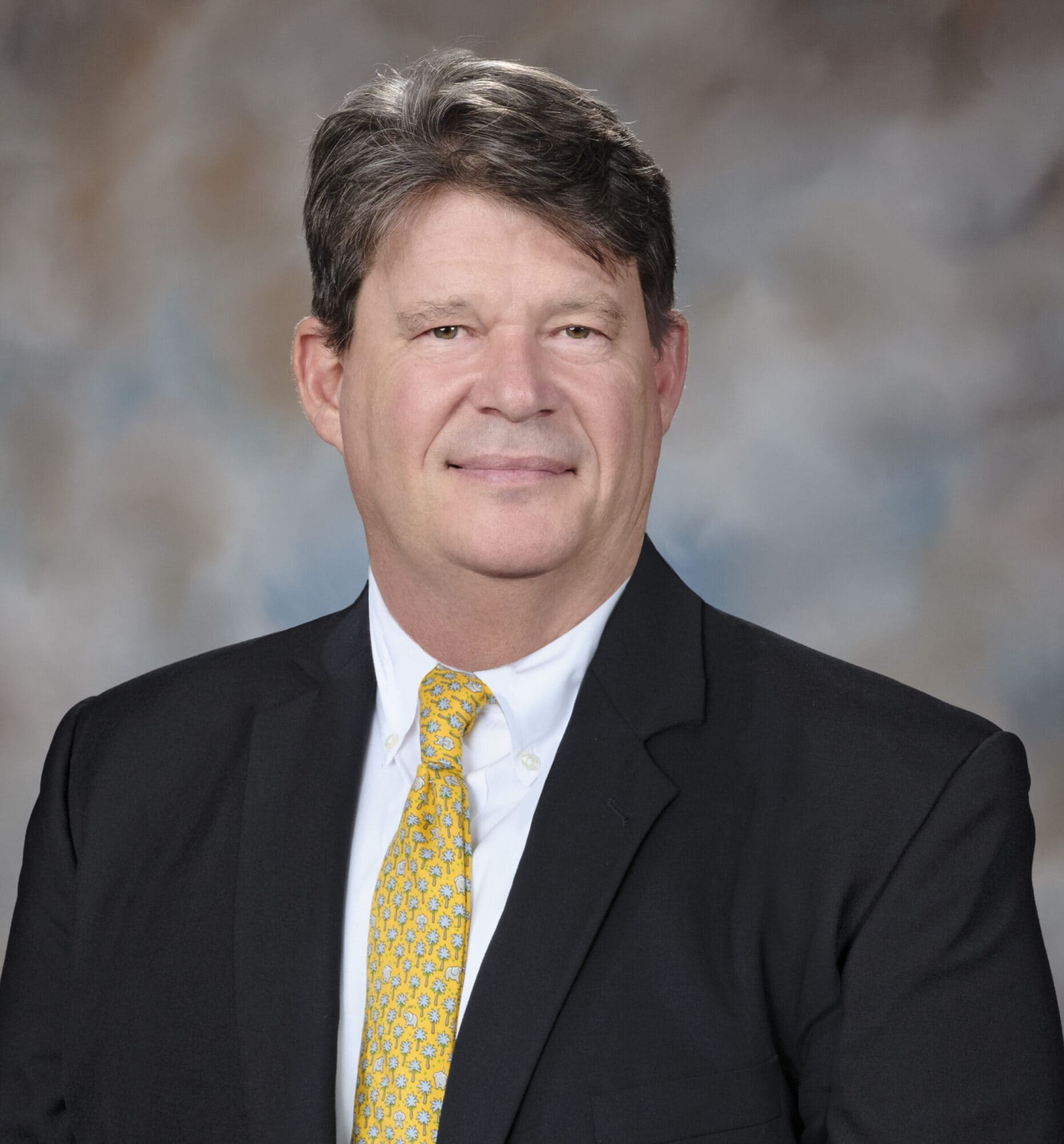
President and CEO Kent Nicaud said in a written response to Mississippi Today that the organization made significant efforts to identify areas of need, including reviewing patient encounters to identify the services rural patients were often leaving their communities to receive, and submit thorough, actionable proposals for the grants. The health system enlisted the help of a national firm and a consultant to assist with the process.
Kent Nicaud, president and CEO of Memorial Health System Credit: Courtesy photo
“This was never simply about pursuing grant dollars,” Nicaud said. “We were asking, ‘If we have an opportunity to rethink how care is delivered in rural South Mississippi, what can we do that will still make a difference five or 10 years from now?’”
Nicaud said that access to diagnostic testing and imaging are limited in Stone County, which has elevated rates of breast cancer and high mortality from heart disease, forcing many patients to travel outside of their communities for care.
He added the health system’s proposals were designed to be scalable, and system administrators plan to share data and best practices learned from the initiatives with providers that want to implement similar projects in their communities.
Nicaud serves as board chairman for the Mississippi Healthcare Collaborative, a statewide coalition of healthcare providers formed in 2024. He has contributed significantly to Reeves’ previous political campaigns, which he said did not impact how Memorial fared in the application process.
“I did not discuss Memorial’s applications or funding requests with Governor Reeves, his office, or any state agency,” Nicaud said.
A consortium of hospitals in south central Mississippi helmed by Gregg Gibbes also received a large portion of the initial grant awards — over $13 million for seven projects in Covington, Jones and Simpson counties. Gibbes is the CEO of South Central Regional Medical Center in Laurel, Covington County Hospital in Collins, Magee General Hospital and Simpson General Hospital in Mendenhall. Gibbes did not respond to Mississippi Today’s request for comment.
Delta Health Center, a Mound Bayou-based federally qualified health center with 17 locations, received over $5 million for five projects. The health center’s plans for the money include a 24/7 urgent and critical response center in Rosedale, patient monitoring and mobile community health workers and strengthening cybersecurity infrastructure. Robin Boyles, a spokesperson for the health center, did not respond to Mississippi Today’s request for comment.
Baptist Memorial Health Care, which operates 14 hospitals in Mississippi, received one award worth about $1.5 million. Baptist Memorial Hospital-Calhoun, located in north central Mississippi, received the award to modernize critical IT infrastructure at Baptist hospitals in Kosciusko, Carthage, Yazoo City and a nursing home in Calhoun.
The hospital system submitted six proposals, together worth $17.9 million, said Keith Norman, the vice president of government relations and chief community relations officer, in a written statement to Mississippi Today.
“Although we anticipated receiving a larger share of the $104.2 million available in the first funding round, the clearer criteria and lessons from the initial process should help us strengthen future proposals and expand services in communities that did not receive funding,” Norman said. “We value every community we serve, and our patients deserve equal access to modern facilities and enhancements across the state.”
Board of Health members’ organizations receive awards
Several healthcare organizations helmed by Mississippi Board of Health members received awards. The Board of Health oversees the operations of the Mississippi State Department of Health, the agency that oversaw the selection process.
Lampton Medical Associates, P.A., a Magnolia-based medical clinic led by Board of Health member Dr. Lucius Lampton, received over $2 million to modernize electronic medical records for 50 rural Mississippi healthcare practices. Lampton served as board chair until July, when Dr. James Chaney assumed the role.
Lorie Till, the CEO of Northwest Mississippi Regional Medical Center, was appointed to the board by Reeves in July. She also serves as president of the Delta Health Transformation Council, a regional collaboration of hospitals and clinics.
Both organizations received rural health awards. Northwest Mississippi Regional Medical Center received about $2 million for three projects to modernize IT infrastructure, support a maternal health initiative and create a cardiology imaging and reporting network. The Delta Health Transformation Council received $3 million to expand access to robotic-assisted surgery in the Delta.
Flynn and Dilworth, spokespeople for the Health Department, Lampton and Till did not respond to questions from Mississippi Today about efforts made to prevent conflicts of interest during the application review process.
Technology leads spending
Roberson said roughly two-thirds of the awards announced Sept. 14 will go to hospitals or affiliated clinics, according to his analysis. The remaining third includes federally qualified health centers, private clinics and urgent care centers, dental, vision and surgical specialists, pharmacies and assisted living facilities.
Richard Roberson, Mississippi Hospital Association President and CEO, discusses the impact of the “Big Beautiful Bill” on health care in the state, Wednesday, July 9, 2025 at the Mississippi Hospital Association Conference Center in Madison. Credit: Mississippi Hospital Association President and CEO,
Roberson said while the proportion allocated to hospitals is substantial, it does not align with the funds’ original intention of supporting rural hospitals facing cuts.
“The billions of dollars of cuts to hospital payments are going to have a dramatic impact, and it’s going to hit rural hospitals particularly hard,” he said.
In Mississippi, federal cuts are expected to reduce provider payments by about $100 million annually beginning in July 2028, according to the Mississippi Division of Medicaid’s strategic plan published in July.
Close to half of the funds awarded are for projects focused on technological improvements. A slightly smaller portion is set to fund infrastructure projects, and a much smaller amount is earmarked for telehealth initiatives. Officials will soon also announce awardees for several other grant programs, including $16.8 million for four grant programs aimed at addressing critical healthcare workforce shortages in rural communities and $14 million to create calm, therapeutic units at hospital emergency departments to improve crisis mental healthcare, Reeves said at a recent press conference.
Roberson said he would like to see more of the funds awarded to capital improvements, like helping rural hospitals struggling to replace equipment, add new services on-site or replace HVAC systems. These types of projects are likely to have a more lasting impact than technology investments — which can quickly become outdated — for small hospitals with slim margins, he said. He acknowledged that some of the allowed funding uses, like one that bars new construction, are dictated by federal guidelines.
“I’m hoping that in the future, we can see more funds shifting to things like capital improvements because those are things that can make a bigger difference over time,” Roberson said.
Khaylah Scott, a program manager at the Mississippi Health Advocacy Program, said she is grateful the funds are being deployed to improve healthcare in rural areas. But she noted that the federal funds will expire in five years, and they won’t expand health insurance to the thousands of Mississippians struggling to afford coverage.
“It might mitigate or lessen the blow, but the blow is still coming,” Scott said.
Correction 9/25/26 — This story has been updated to reflect that Memorial Health System is a not-for-profit health system.
Democratic U.S. Senate candidate Scott Colom on Thursday called for a temporary ban on new data centers in Mississippi.
“The reality is, the consequences of data centers in Mississippi are already here. We’re seeing it in our power bills. We’re seeing it where we live. We’re seeing it where we pray,” Colom said at a press conference.
Colom, who is challenging incumbent Republican Cindy Hyde-Smith has a list of conditions that he would want met before proceeding with any new data center construction in the state. It includes having data centers pay their own way and more transparency about the deals. He said this would give the state a chance to study the impacts of data centers and come up with regulations.
While artificial intelligence and data centers have come up in midterm elections in other states, and have already become an issue for Mississippi’s statewide elections next year, they have not been a driving issues in Mississippi’s congressional races to date. Data center development decisions have been made at the state and local levels, with Republican Gov. Tate Reeves being a leading advocate for them. A recent poll from Pew Research Center found that over half of Americans believe data centers are mostly bad for the environment.
Data centers in Mississippi have come under increasing scrutiny. In the small town of Walls, hundreds of people showed up to a planning meeting this week in opposition to rezoning for a potential data center. Since 2024, the state has seen an influx of projects, part of the historic investment building data centers nationwide to power artificial intelligence. Mississippi has seven data center projects under construction and local leaders are interested in bringing more.
A few states have passed temporary bans on data centers. New York announced a one year moratorium on data centers and Texas Gov. Greg Abbott paused new data center approvals until the state completes audits of the state’s power grid.
Colom said Hyde-Smith has not signed on to the Ratepayer Protection Act, a bill designed to protect customers from paying for upgrades to the grid that data centers need.
“She refuses to provide any oversight,” Colom said, “And then last week we learned why she has refused to do it. The AI data center Super PAC is running ads on her behalf.”
Leading the Future, a super PAC funded by Greg Brockman, president of OpenAI, and prominent venture capitalists Marc Andreessen and Ben Horowitz, is spending $2 million to support Hyde-Smith and three other Republican Senate candidates. The group has cautioned that too much government regulation of AI will slow down innovation and adoption, as has President Donald Trump.
“The senator’s campaign has no involvement in the outside group’s ads. Senator Hyde-Smith shares the concerns of Mississippians and wants to make sure that families come first, that local resources are protected, and that data centers are only built once those standards are met,” said Jake Monssen, Hyde-Smith’s campaign manager.