Lost+Found Coffee Company @ 248 South Green Street, Tupelo,MS. inside Relics in Downtown Tupelo. Open Monday through Saturday from 10:00am till 6:00pm.
With most any restaurant or coffee house, it’s a balance between atmosphere, menu, and know how. For a coffee shop, Lost & Found has it going on!
You could spend the better part of a day just strolling through both floors of the antique building looking at all the treasures. When your ready for a coffee break, the knowledgeable baristas can help you choose the perfect pick me up!
They have everything from a classic cup of joe to the creamiest creation you could imagine! From pour overs to cold brews. From lattes, mochas, to cappuccino’s, Lost & Found Coffee Company has got ya covered!
So the next time you want to hunt for lost treasures, or find the perfect cup of coffee, Lost & Found Coffee Company has got ya covered! See y’all there!
Visit my blog for events, contests, new restaurants, LOCAL Favorites, and their FAMOUS foods!
Help us grow our community @ Eating Out With Jeff Jones * visit our page * Click community * Invite friends * Like and share this post
Message me If you would like to have your restaurant, menu, and favorite foods featured in my blog. Over 18,000 local Foodies would love to see what you have to offer!
Do you thrive on the unexpected? Are you waiting for the next fire to crop up?
Have you ever noticed that you can plan something so intricately and you are still going to catch the glitches when life throws you a curve ball? It is one of the beauties of life that we can never prepare for. The unexpected. The only difference is our response to the unexpected. Do we have a knee jerk reaction that finds us swerving to gain back control of our life? Or do we instead just go with the flow and decide to embrace the scenic route life decided to take us on? Our response to life can cause us more stress or we can just enjoy it for what it is in that moment of time. I used to thrive on the unexpected. It was part of my career for many years. The never knowing what “fire” was going to sprout up that day and how I was going to need to put it out. Even this week as we launched our newest book in my publishing company. I thought I had it all planned out only to run into major “hiccups” within 72 hours of the launch. I could either stress out or take it in stride.
Slow and Steady
As my dad retired I watched him take a different approach to life than I had ever seen him take before. I mean, all you have to do is climb up in the cab of his king ranch Ford pick-up and see he is a changed man. He drives slower than anyone should even be allowed to drive out on the roads these days. He knows how to drive, so don’t go yelling at him next time you are stuck behind him. Trust me, my mom does enough yelling for all of us at him about that! He just takes life these days. His sentiments are that he lived in the fast lane his whole life. Rushing to be on time to work, rushing to come home to his family, the constant busy we get entangled with as adults…now, he doesn’t have to be busy and he is going to enjoy that. Truth is, I can’t even be mad at him for that. Now that I am an adult out here rushing from one thing to the next, I totally could use some driving twenty miles per hour in my life some days. Took me getting to nearly forty to even be able to say that though.
The lesson in his wisdom can be heard by all. Some things we lose it over won’t even amount to anything five years from now, yet we gave them so much energy in the moment. All the things we think are so important that we must do and do now. Most will not really matter years from now, yet we poured our soul into them. What would change if we took the time to just enjoy life? To just flow with things as they happened? When hit with something we didn’t expect, we embraced it instead of fighting it? What would happen? I dare say we might have more peace? I probably would be a lot calmer. I probably wouldn’t lose my temper near as much. I probably wouldn’t have anxiety or stress on the daily. I would probably take time to enjoy life more. I certainly wouldn’t yell at the slow driver in front of me.
What about you? Next time you get behind someone driving slowly…take back the name calling and curse words. Maybe take back all of the assumptions that they don’t know how to drive. Maybe use it as a reminder to take a moment, roll down your window, soak in the sunshine. I can promise you that wherever the heck you are going, you will still get there. Maybe that person figured out life and you can use their wisdom too. If they are driving a blue king ranch Ford truck, I can assure you that he is just enjoying his day and he would want you to enjoy yours too. Matter of fact, I wish I had listened to his wisdom a lot more in my earlier days instead of waiting until now.
Here is a plain, searchable text version (most other versions we found were Images or PDF files) of City Of Tupelo Executive Order 20-018. Effective Monday June 29th at 6:00 PM
The following Local Executive Order further amends and supplements all previous Local Executive Orders and its Emergency Proclamation and Resolution adopted by the City of Tupelo, Mississippi, pertaining to COVID-19. All provisions of previous local orders and proclamations shall remain in full force and effect.
LOCAL EXECUTIVE ORDER 20-018
The White House and CDC guidelines state the criteria for reopening up America should be based on data driven conditions within each region or state before proceeding to the next phased opening. Data should be based on symptoms, cases, and hospitals. Based on cases alone, there must be a downward trajectory of documented cases within a 14-day period or a downward trajectory of positive tests as a percent of total tests within a 14-day period. There has been no such downward trajectory in the documented cases in Lee County since May 18, 2020.
Hospital numbers are not always readily available to policymakers; however, from information that has been maintained and communicated to the City of Tupelo, the Northeast Mississippi Medical Center is near or at their capacity for treating COVID-19 inpatients over the past two weeks without reopening additional areas for treating COVID-19 patients. The City of Tupelo is experiencing an increase in the number of cases of COVID-19. The case count 45 days prior to the date of this executive order was 77 cases. That number increased within 15 days to 107, and today, the number is 429 cases. The City of Tupelo is experiencing increases of 11.7 cases a day. This is not in conformity with the guidelines provided of a downward trajectory of positive tests. By any metric available, the City of Tupelo may not continue to the next phase of reopening.
Governor Tate Reeves in his Executive Order No. 1492(1)(i)(1) authorizes the City of Tupelo to implement more restrictive measures than currently in place for other Mississippians to facilitate preventative measures against COVID-19 thereby creating the downward trajectory necessary for reopening.
That the Tupelo Economic Recovery Task Force and North Mississippi Medical Center have formally requested that the City of Tupelo adopt a face covering policy.
In an effort to support the Northeast Mississippi Health System in their response to COVID-19 and to strive to keep the City of Tupelo’s economy remaining open for business, effective at 6:00 a.m. on Monday, June 29, 2020, all persons who are present within the jurisdiction of the City of Tupelo shall wear a clean face covering any time they are, or will be, in contact with other people in indoor public or business spaces where it is not possible to maintain social distance. While wearing the face covering, it is essential to still maintain social distance being the best defense against the spread of COVID-19. The intent of this executive order is to encourage voluntary compliance with the requirements established herein by the businesses and persons within the jurisdiction of the City of Tupelo.
It is recommended that all indoor public or business spaces require persons to wear a face covering for entry. Upon entry, social distancing and activities shall follow guidelines of the City of Tupelo and the Governor’s executive orders pertaining to particular businesses and business activity.
Persons shall properly wear face coverings ensuring the face covering covers the mouth and nose,
1. Signage should be posted by entrances to businesses stating the face covering requirement for entry. (Available for download at www.tupeloms.gov).
2. A patron located inside an indoor public or business space without a face covering will be asked to leave by the business owners if the patron is unwilling to come into compliance with wearing a face covering
3. Face coverings are not required for:
a. People whose religious beliefs prevent them from wearing a face covering. b. Those who cannot wear a face covering due to a medical or behavioral condition. c. Restaurant patrons while dining. d. Private, individual offices or offices with fewer than ten (10) employees. e. Other settings where it is not practical or feasible to wear a face covering, including when obtaining or rendering goods or services, such as receipt of dental services or swimming. f. Banks, gyms, or spaces with physical barrier partitions which prohibit contact between the customer(s) and employee. g. Small offices where the public does not interact with the employer. h. Children under twelve (12). i. That upon the formulation of an articulable safety plan which meets the goals of this
Executive Order businesses may seek an exemption by email at covid@tupeloms.gov
FACE COVERINGS DO NOT HAVE TO BE MEDICAL MASKS OR N95 MASKS. A BANDANA, SCARF, T–SHIRT, HOME–MADE MASKS, ETC. MAY BE USED. THEY MUST PROPERLY COVER BOTH A PERSON‘S MOUTH AND NOSE.
Those businesses that are subject to regulatory oversight of a separate state or federal agency shall follow the guidelines of said agency or regulating body if there is a conflict with this Executive Order.
Additional information can be found at www.tupeloms.gov COVID-19 information landing page.
Pursuant to Miss. Code Anno. 833-15-17(d)(1972 as amended), this Local Executive Order shall remain in full effect under these terms until reviewed, approved or disapproved at the first regular meeting following such Local Executive Order or at a special meeting legally called for such a review.
The City of Tupelo reserves its authority to respond to local conditions as necessary to protect the health, safety, and welfare of its citizens.
Honeyboy and Boots are a husband and wife, guitar and cello, duo with a unique style that is all their own. Their sound embodies Americana, traditional folk, alt country, and blues with harmonies and a hint of classical notes.
Drew Blackwell, a true Southerner raised in the heart of the black prairie in Mississippi. First picked up the guitar at fourteen, he was greatly influenced by his Uncle Doug who taught him old country standards and folk classics. Later on in high school, he was mentored and inspired to write (and feel) the blues by Alabama blues artist Willie King. (Willie King is credited for bringing together the band The Old Memphis Kings.)
Drew has placed 3rd in the 2019 Mississippi Songwriter of the Year contest with his song “Waiting on A Friend” and made it to the semi finalist round on the 2019 International Songwriting Competition with his song “Accidental Hipster.”
Honeyboy (Drew) can also be found belting out those blues notes as the lead vocalist for the Old Memphis Kings and begins everyday with a hot cup of black coffee!
Courtney Blackwell (Kinzer) grew up in Washington State and comes from a talented musical family. She began playing cello at the age of three taking lessons from the cello bass professor Bill Wharton at the University of Idaho. Her mother was most influential in her progression of technique, tone quality, and ear training. Since traveling around much of the South, she has enjoyed focusing on the variety of ways the cello is used in ensembles. When she plays, you will feel those groovy bass lines making way to soaring leads create an emotional and magical connection between you and her music.
Courtney enjoys working in the studio, collaborating with artists and continuing to challenge the way cello is expressed.
They have opened for such acts as Verlon Thompson, The Josh Abbott Band, Cary Hudson (of Blue Mountain), and Rising Appalachia.
Honeyboy And Boots have performed at a variety of venues and festivals throughout the southeast, including the 2015 Pilgrimage Fest in Franklin, TN; Musicians Corner in Nashville; the Mississippi Songwriters Festival (2015-2018); and the Black Warrior Songwriting Fest in Tuscaloosa, AL (2018-2019). They also came in 2nd place at the 2015 Gulf Coast Songwriters Shootout in Orange Beach, FL.
They have two albums, Mississippi Duo and Waiting On a Song, which are available on their website, iTunes, Amazon, and CD Baby.
The duo also just released their fourth recording: a seven-song EP called Picture On The Wall, which was recorded with Anthony Crawford (Williesugar Capps, Sugarcane Jane, Neil Young). It is now available on Spotify, Itunes, Google Music, and CD Baby.
Who or what would you say has been the greatest influence on your music?
My Uncle Doug, because he began to teach me guitar and introduced me to a lot of great older country music.
Favorite song you’ve composed or performed and why?
“We Played On” because it’s about our family reunions, where we would sit around and play guitar and share songs.
If you could meet any artist, living or dead, which would you choose and why?
Probably Willie Nelson. He’s my all time favorite.
Most embarrassing thing ever to happen at a gig?
A guy fell on top of me while I was performing. I was sitting down. He busted a big hole in my guitar.
What was the most significant thing to happen to you in the course of your music?
Getting to perform at Musicians Corner in downtown Nashville. Probably the biggest crowd we’ve ever been in front of.
If music were not part of your life, what else would you prefer to be doing?
I don’t know, maybe fishing or golf.
Is there another band or artist(s) you’d like to recommend to our readers who you feel deserves attention?
Our friends, Sugarcane Jane. They are a husband/wife duo from the Gulf Shores area. Great people and great artist.
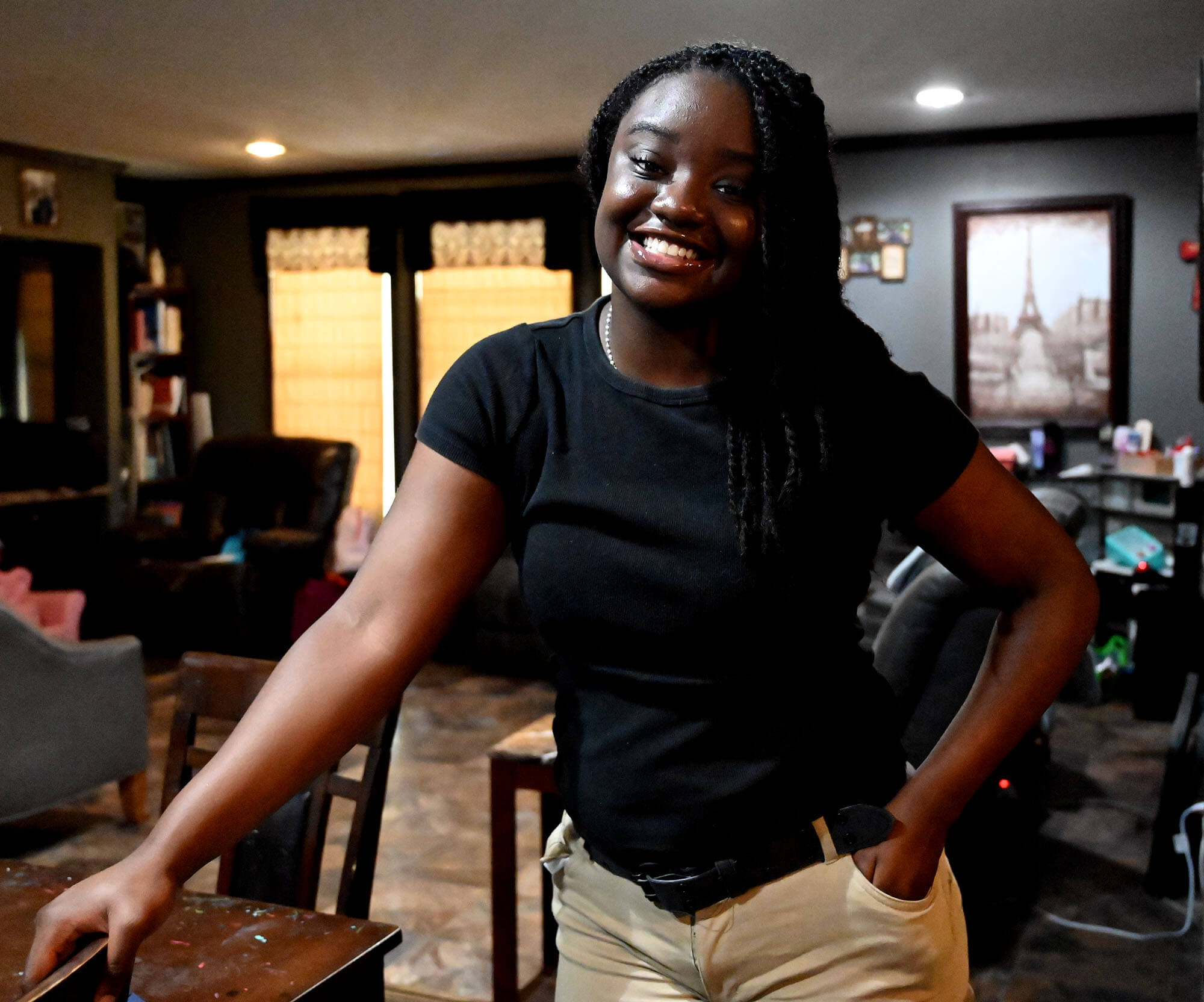
My’Kayla Gaines Cochnauer was delivering DoorDash orders Wednesday when a text from her adoptive mother ended days of uncertainty over how she would pay for her first semester at Mississippi State University.
The message shared a screenshot of an email telling the 18-year-old from Natchez that her Fostering Access and Inspiring True Hope, or FAITH, Scholarship had been restored — a week after the state Office of Student Financial Aid told applicants the awards would not be funded.
Her family had been scrambling to figure out how to cover roughly $5,000 in college costs before she was supposed to move into her dorm and begin studying psychology in mid-August.
My’Kayla Gaines Cochnauer at her Natchez home on Friday, July 31, 2026. She is looking forward to studying psychology at Mississippi State University in Starkville. Credit: Vickie D. King/ Mississippi Today
“I am really happy that I and other kids can now go to college without having to worry about work or where my next dollars will come from,” Cochnauer said. “But I wonder why it took all this media attention to fix this problem?”
Cochnauer is among 170 former foster youths whose scholarships will now be covered for their first semester of college after the Woodward Hines Education Foundation pledged $800,000 to help fill a funding gap in the state aid program. The foundation is also soliciting donations to help cover the scholarships..
The foundation’s contribution is a one-time fix. Mississippi’s financial aid office still faces a $7.3 million shortfall that could reduce aid for nearly 27,000 students, such as those receiving the Mississippi Tuition Assistance Grant (MTAG), Mississippi Eminent Scholars Grant (MESG) and the Higher Education Legislative Plan (HELP). The shortage could affect programs serving low-income students and teachers as well as the FAITH scholarship recipients.
Woodward Hines President and CEO Jim McHale learned about the FAITH scholarship funding issue on Monday. The foundation’s board met Tuesday and unanimously approved a plan to cover eligible students’ first college semester. Officials at state universities and college foundations have also pledged to support FAITH scholarship students.
But private donations can’t solve Mississippi’s broader financial aid funding crisis, McHale said.
“If legislators say they want a strong, educated population and economic workforce then it’s imperative that they invest in the aid that covers tuition of young students and adults looking to boost their careers or education,” he said.
Earlier this year, state financial aid office officials requested $6.5 million from the Legislature for FAITH scholarships and the Winter-Reed Teacher Loan Repayment Program, which helps eligible teachers repay student loans. Lawmakers appropriated $3 million for both programs. The financial aid office applied the full appropriation to the FAITH scholarships, leaving the loan repayment program unfunded for the first time since it was created in 2021.
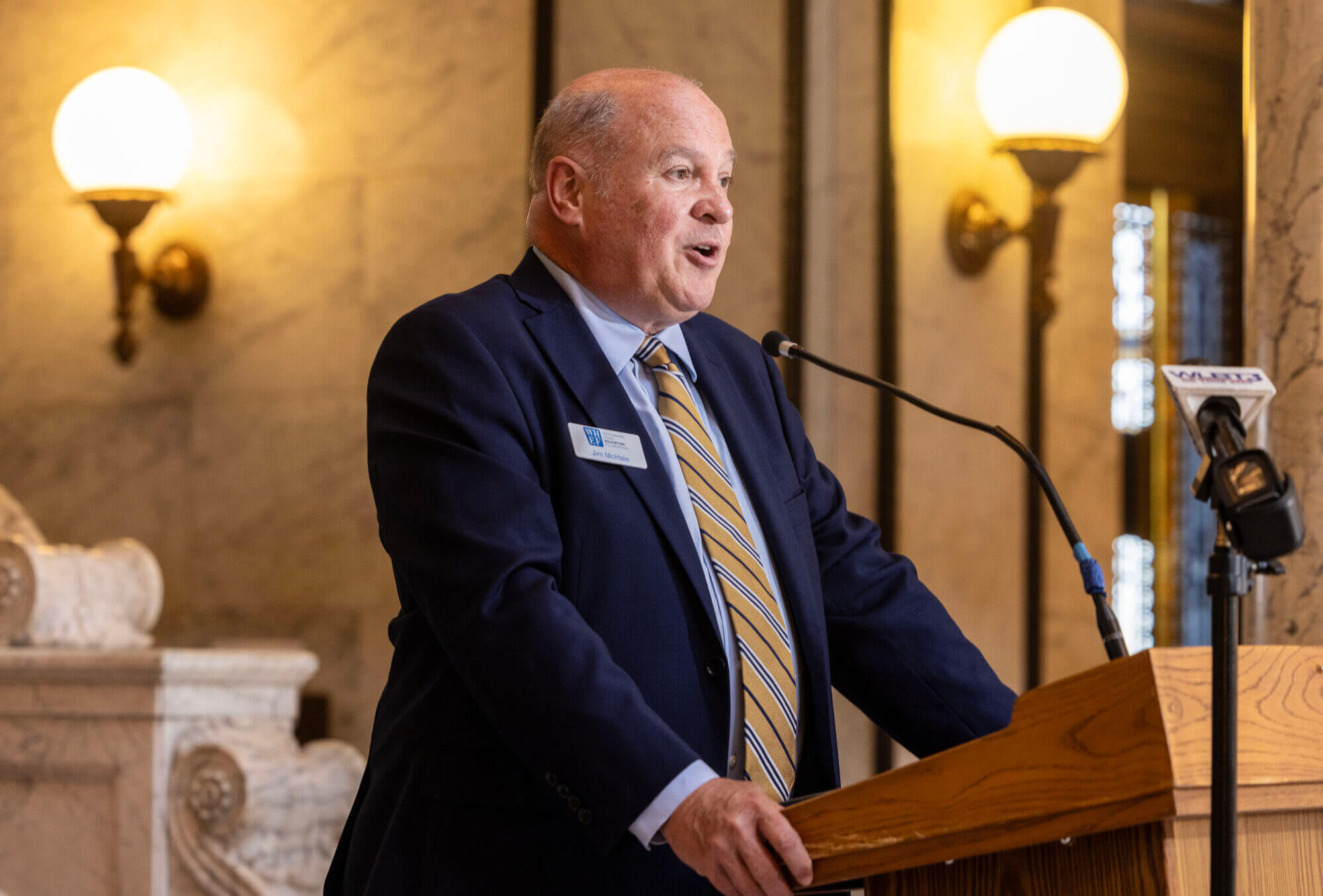
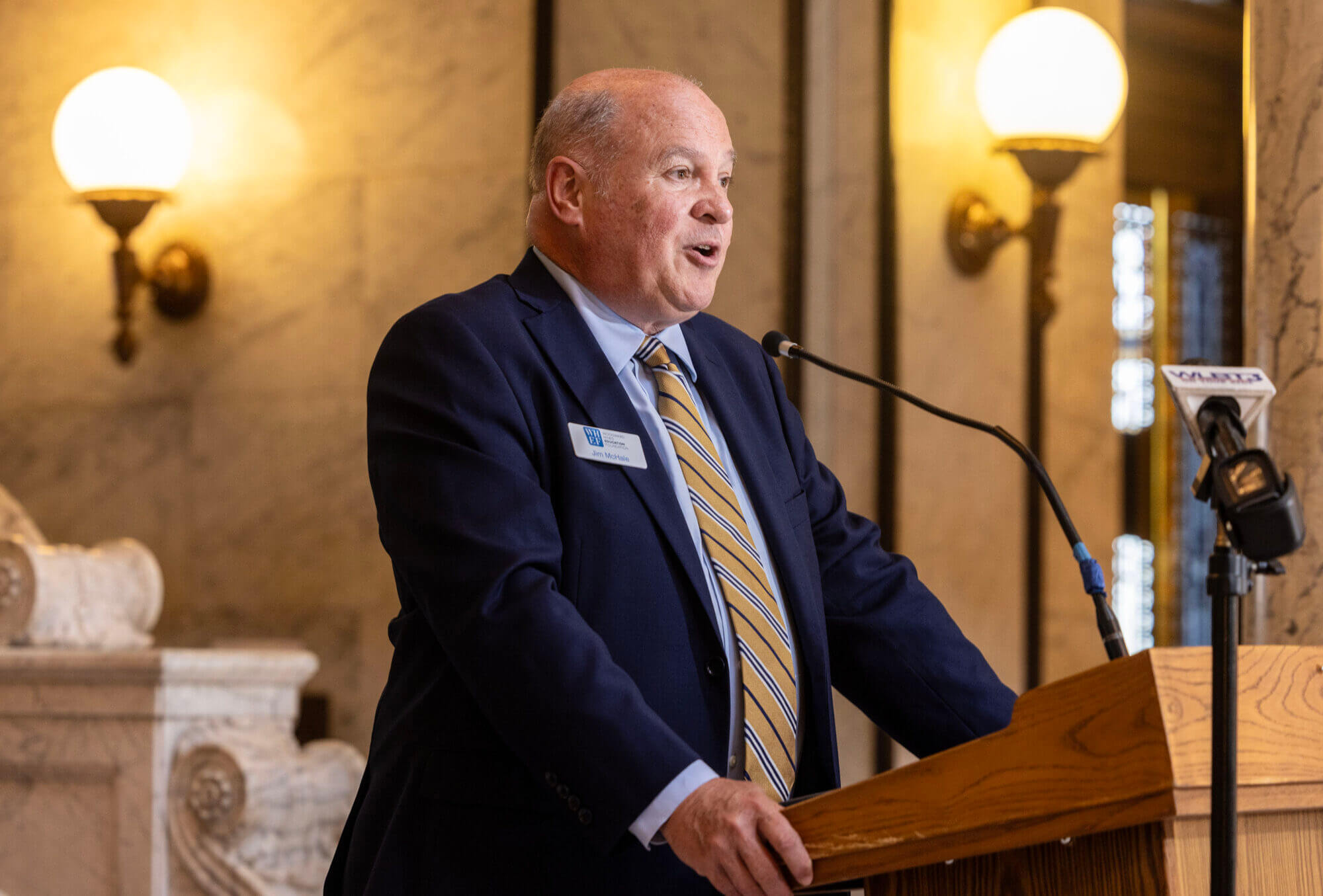
Jim McHale, president and CEO of the Woodward Hines Education Foundation, speaks about the FAITH Scholarship during a news conference at the Capitol in Jackson on Wednesday, Aug. 5, 2026. Credit: Eric Shelton/Mississippi Today
Senate Appropriations Chairman Briggs Hopson, a Republican from Vicksburg, did not respond to a request for comment before publication.
Some colleges and universities, including Delta State and Mississippi Christian University — formerly Mississippi College — have committed to financially supporting FAITH recipients, said Sen. Nicole Boyd, a Republican from Oxford who is chair of the Senate Universities and Colleges Committee.
The state financial aid office prioritized new FAITH applicants on a first-come, first-served basis, said Jennifer Rogers, the agency’s executive director. The $3 million was enough to cover scholarship renewals for 159 students and first-time awards for 23 new applicants, she said.
With the Woodward Hines foundation’s support, about 170 new applicants will get scholarships, too.
Most of those students, 95 of them, plan to attend community colleges, Boyd said.
On Wednesday, officials notified the new applicants that the scholarships would be funded after all.
At least that’s true for this year.
Demand for state financial aid has grown, Rogers said. In 2025, the financial aid office distributed more than $51 million to 22,377 students. Changes to the Free Application for Federal Student Aid, known as FAFSA, and state eligibility requirements have expanded the pool of students who are now eligible for aid, she said. Rogers also said a reduction in the number of credit hours required to qualify as a full-time student and changes to the HELP grant made another 4,520 students eligible for state-funded grants.
State lawmakers need to prevent another funding shortfall, said Rep. Bill Kinkade, a Republican from Byhalia, who sponsored the legislation that created the FAITH scholarship in 2022. The scholarship also has special meaning for Kinkade, who spent part of his childhood in a group home in Jackson.
“We made a promise to these students and we will try to honor them by funding those scholarships next year,” Kinkade said.
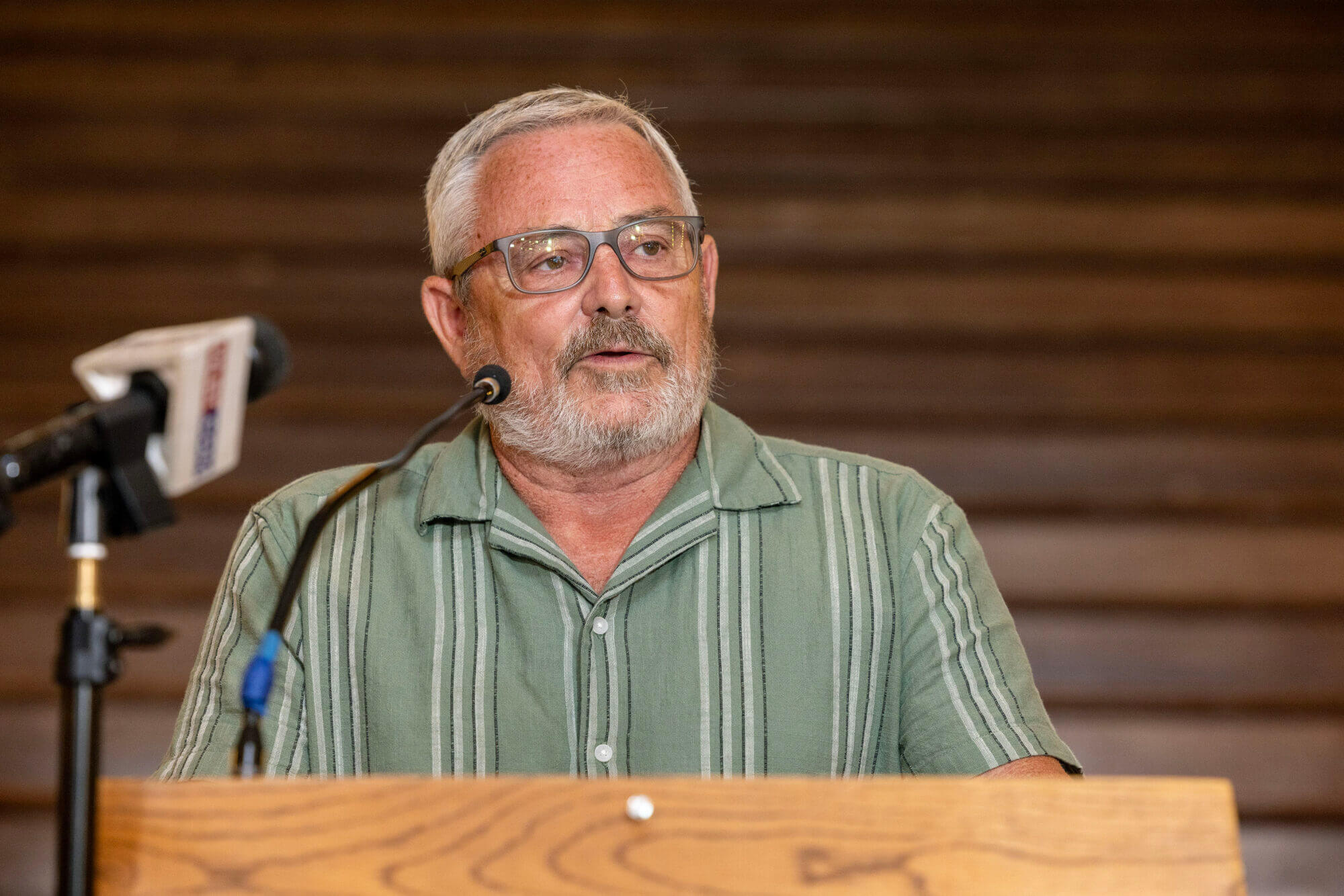
Rep. Bill Kinkade speaks about the Bill Kinkade Fostering Access and Inspiring True Hope, or FAITH, Scholarship during a news conference at the Capitol in Jackson on Wednesday, Aug. 5, 2026. He spent part of his childhood living in a group home in Jackson. Credit: Eric Shelton/Mississippi Today
Kinkade said he plans to work with lawmakers before the legislative session starts in January to address anticipated funding needs for the state financial aid office.
Kell Smith, executive director of Mississippi’s Community College Board, said he was grateful for the recent work to ensure FAITH scholarship students have the opportunity to attend college.
“The FAITH scholarship is integral to a population like first-generation students that oftentimes need help navigating higher education and processes,” Smith said. “This is just an opportunity for us to continue to provide those training and educational opportunities that are so beneficial to our students and to our families and to the state.”
Tammy Cochnauer, My’Kayla’s adoptive mother, said she wants the Legislature to establish rules requiring earlier notification whenever scholarship funding is in jeopardy. The funding crisis erects burdens for students who are determined to get an education, she said.
“The state should be encouraging students like My’Kayla to stay in Mississippi to pursue a higher education, and eventually give back to our communities,” Tammy Cochnauer said.
For My’Kayla, the immediate uncertainty is over. She plans to move into her Creswell dorm room at Mississippi State on Aug. 14
As grateful as she is for the financial support, she worries about scholarships disappearing again.
“It’s good and all that we got it returned back,” My’Kayla Gaines Cochnauer said. “But 170 kids were left to figure out what would come next. It doesn’t erase what happened, and it doesn’t erase the feeling of being abandoned by the system.”
Thirty-four men and one woman in Mississippi await a death sentence handed down years ago, sometimes decades ago. Some people know their names, their victims and details of their crimes. Few probably know who they are or how they spend their days.
Abdur Rahim Ambrose Sr. enjoys fixing broken things for a challenge. Kelvin Lashaun Jordan works on puzzles, draws and writes poetry. Tim Ronk, nicknamed Jersey because he is from the Garden State, likes to read fantasy.
These self-written introductions are possible through a nonprofit organization called Humans Remain, an online platform for Mississippi’s death row prisoners to talk directly to the public by sharing their stories, academic achievements and writing.
“The guys have a platform to talk … and for people to try and understand that, perhaps, they’re not their worst 15 minutes,” said Liz McCann, a co-founder of the group based outside of London, England. “There’s a whole lot more of a story to these people.”
Mississippi is among the few Southern states where she has connected with death row prisoners. McCann began talking with some of the death row men about four years ago, and last year she partnered with some of them to create the organization, which celebrates its first anniversary this weekend.
“It’s an honor to be able to be a voice and to give a voice to so many men and women. We are no longer voiceless and faceless with this inhumane system which seeks to execute us,” Joesph Patri Brown, a co-founder of the group, said in a message shared by McCann.
Joesph Patri Brown, who has been on incarcerated in Mississippi for over 30 years, is the author of “The Image They Had Painted.” The cover is a person emerging from a whirlpool, which he uses to describe the criminal justice system. The book gives a glimpse into his life and the lives of the men around him and critiques the death penalty. Credit: Publication Studio Guelph
Brown has been on death row for over 30 years for his conviction in the shooting death of a convenience store clerk in Adams County during an armed robbery but has maintained his innocence. He is a published author who has used his writing as a form of advocacy for himself and on behalf of others on death row in Mississippi.
He said he is proud Humans Remain has become a national and world-recognized group opposing the death penalty.
McCann has built relationships with the people on death row through consistent phone contact, video calls and exchanging messages on tablets.
She said the organization’s name came from conversations with the men about gruesome headlines used to write about crime.
“We read a lot about human remains, and I thought, ‘Well, yes, but what about the people behind that?’” she said. “ ‘Humans Remain’ became our working title, and we all agreed it was visceral and hit the note that we were looking for.”
McCann, who has previously campaigned for human rights issues, said she has been interested in death penalty abolition since reading a book about it when she was 19.
After finishing her education, having a career and raising children, she focused on meeting people on death row, starting with pen pal correspondence with one man in Florida and another in North Carolina.
Her interest in Mississippi came from reading about the American South and watching the 1987 BBC documentary “Fourteen Days in May,” which was about the days leading up to the execution of Edward Earl Johnson. It featured attorney Clive Stafford Smith, who unsuccessfully tried to stop the execution.
McCann said some of the men who remain on Mississippi’s death row remember Smith, who went on to challenge death sentences across the South and advocate against the death penalty and human rights abuses internationally. In recent years, he has represented detainees at Guantanamo Bay.
“Personally, I am proudest of the things I have done that help to humanize those who society tells us to demonize, so it’s great to see Liz doing just that,” Smith said in a testimonial about Humans Remain that is featured on its website.
The men on death row at the Mississippi State Penitentiary at Parchman meet weekly with McCann over a video call to give updates about Humans Remain, work on projects for the organization and plan for future ones. She said a core group of about nine men play an active role in the nonprofit.
McCann helps maintain the organization’s website featuring journal entries by the men and Lisa Jo Chamberlin, who is the only woman on death row in Mississippi, and occasional blog posts from McCann’s perspective as an advocate. There are also educational sections about developments in the death row prisoners’ cases, writings about ending the death penalty and information about death row exonerees.
She also helps them create videos to share on social media.
Caleb Corrothers, who received two death sentences in 2011, is an artist and one of the over 30 men Humans Remain co-founder Liz McCann has gotten to know through phone and video calls over the past four years. Humans Remain, founded in August 2025, is a platform where death row inmates like Corrothers have been able to share their first hand experience on death row through writing, art, journals and advocacy. Credit: Courtesy of Liz McCann, Humans Remain
McCann said people are curious about death row and the prisoners’ lives there. People can submit questions on the Humans Remain website for the men to answer.
A common question is about what they eat because people have seen horror stories about prison food, McCann said.
Since moving to Parchman’s Unit 17 late last year, they have a dedicated kitchen team and they are getting good meals using fresh produce from their garden, which is under the watch of Blayde Grayson, she said.
The dedicated kitchen team, garden and self-contained unit where the men live are a stark contrast to the living conditions for Chamberlin, who is in segregated housing and has experienced restrictions, including access to phone calls and enrollment in classes.
On Friday, Chamberlin’s location was listed at the Delta Correctional Facility, the second women’s prison located in Greenwood. It’s over 100 miles away from the women’s section at the Central Mississippi Correctional Facility in Pearl, where she had been housed since her 2006 conviction for the murder of two people in Hattiesburg.
McCann said people are also inquisitive about the executions and some have asked for commentary about states adding execution methods. Mississippi uses lethal injection. In 2022, it added toxic gas, firing squad and electrocution as execution methods, although those options have not been used
McCann said the death row men have also found it bizarre to be living in the “death house” where the execution chamber resides, and they find it baffling when people have come to visit the chamber.
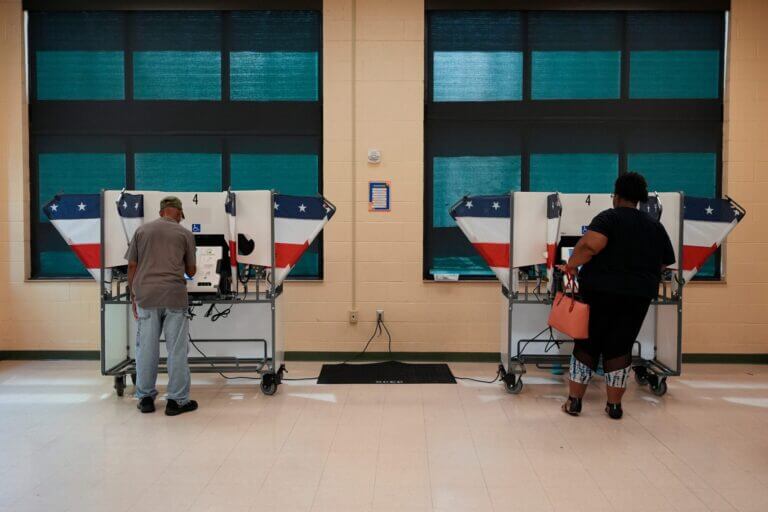
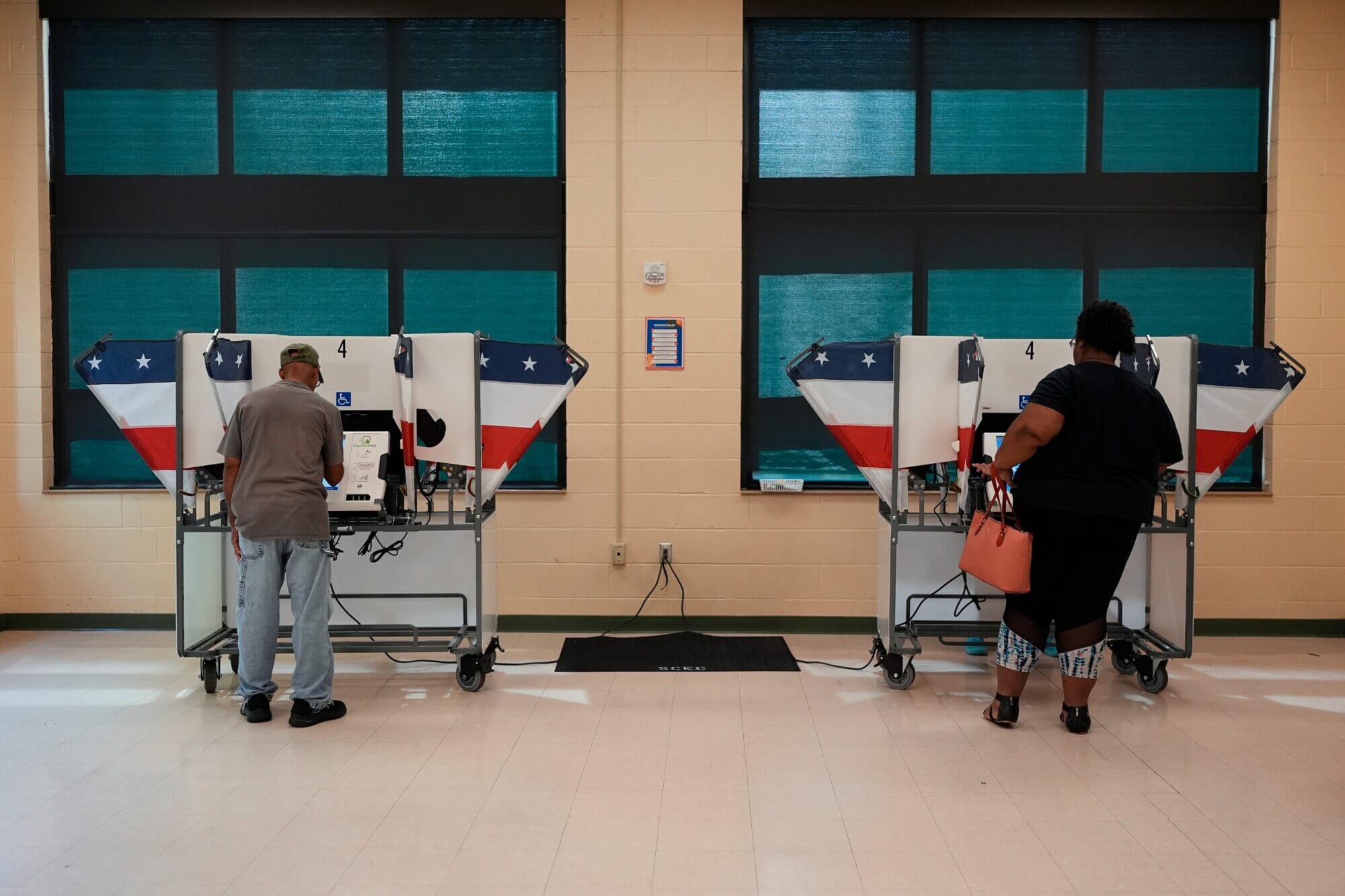
MEMPHIS, Tenn. — Former Tennessee Agriculture Commissioner Charlie Hatcher defeated U.S. Rep. Andy Ogles in a Republican primary Thursday for a significantly reshaped congressional district — marking a rare rejection of a candidate endorsed by President Donald Trump.
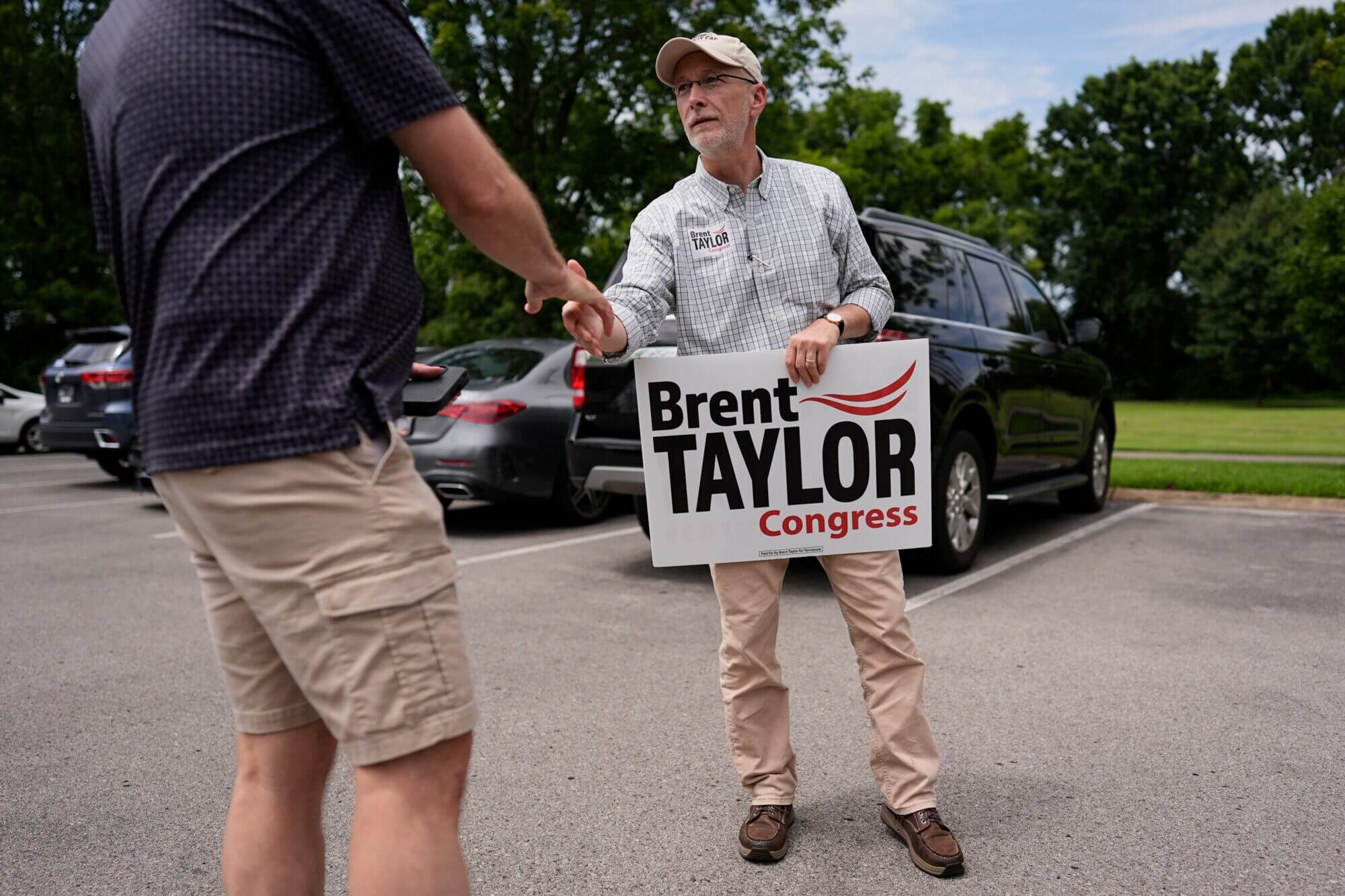
Voters also picked a pair of Memphis-area lawmakers to square off in another vastly reconfigured U.S. House district. Trump-backed state Sen. Brent Taylor will face Democratic state Rep. Justin Pearson, who gained national prominence when he was expelled from the Tennessee House for protesting in support of gun control measures and then reelected by voters.
The primaries provided the first test of a new U.S. House map that was redrawn in May by Republican state lawmakers after the U.S. Supreme Court weakened federal Voting Rights Act protections for minorities. Trump cheered along the redistricting as part of a broader national plan to try to hold on to a slim House majority in the midterm elections.
Republicans already hold eight of the state’s nine congressional seats and will be going for a clean sweep of the districts in November.
The previously compact 9th Congressional District, based in Memphis, had a majority Black population and is represented by a Democrat. But it was cracked apart by Republicans this year, causing a ripple of changes that also reconfigured Ogles’ 5th District.
A Trump-endorsed candidate is defeated
Ogles, a member of the conservative Freedom Caucus, had faced controversies related to his campaign finances and his resume, among other things. But Trump gave him an early endorsement last fall — and praised him on Election Day as “a Conservative Warrior” — as Ogles sought a third term.
Ogles capitalized on a previous redistricting in the 2022 elections, winning a formerly Democratic-held seat that was reshaped to Republicans’ advantage by splitting the Nashville area among three districts.
The new 5th District stretches from Ogles’ base in central Tennessee to the northwest corner of the state before snaking south along the Mississippi River to Memphis — with 82% of its voters new, according to an Associated Press estimate.
Although he lacked Trump’s endorsement, Hatcher was backed by Republican Gov. Bill Lee, under whom he served for seven years. Hatcher campaigned as pro-Trump while emphasizing his farming background.
“The message resonated, and the message was: Work like a farmer, get things done and serve others,” Hatcher told the AP after winning the primary.
Ogles’ campaign declined to comment. Ogles’ controversies have included the FBI seizing his cellphone in 2024 as part of an investigation into his campaign finance reporting. The Justice Department recently agreed to return the device, signaling that it was abandoning the probe, which began under the Biden administration.
In 2023, Ogles acknowledged that he had graduated with a liberal studies degree from Middle Tennessee State University, saying he was “mistaken” for previously describing it as an international relations degree.
Columbia Mayor Chaz Molder won the Democratic primary in the 5th District.
Democratic congressional candidate State Rep. Justin J. Pearson, D-Memphis, speaks to supporters at a primary election night party on Thursday, Aug. 6, 2026, in Memphis, Tenn. Credit: AP Photo/George Walker IV
Pearson and Taylor to face off in revamped Memphis district
The new 9th District stretches about 200 miles east from Memphis across rural areas before reaching north toward Nashville. It previously favored Democrats but now tilts Republican, with 71% of voters new to the district, according to an AP estimate.
Pearson noted to supporters Thursday night that it was 61 years ago to the day that the Voting Rights Act was signed. He said the Supreme Court and Tennessee lawmakers have effectively undone portions of it, leading to the redrawing of the formerly majority-Black district.
“The political dilution and degradation of our rights is happening,” Pearson said. But he added: “We’re one step closer to Washington, D.C.”
Taylor said in a statement to supporters that “Pearson is the face of the extreme left in this race — the same activist who has repeatedly put chaos over order.”
Republican congressional candidate State Sen. Brent Taylor, R-Memphis, speaks to a supporter outside an early voting polling place Friday, July 24, 2026, in Brentwood, Tenn. Credit: AP Photo/George Walker IV
Taylor also sponsored a 2024 law that required law enforcement agencies to communicate with federal immigration authorities if they discover people are in the country illegally.
Memphis voters voice dismay over redistricting
For decades Memphis, the most populous city in Shelby County, formed the base of its own congressional district. Now the county is split among three districts that extend outward like spokes into rural areas.
Lonzo Taylor, a retired postal worker and military veteran, said Black voters like himself have had their voices diluted.
“We only had one district in the whole state of Tennessee, and you don’t even want that to be fair? It’s just terrible,” said Taylor, 72. “I love this state, but I am very disappointed in our governor,” who called lawmakers into a special session for the redistricting.
Terrice Thomas, 45, an educator who votes for Democrats, had to learn a lot more about the candidates when she got switched from District 9 to District 8. She is concerned Memphis constituents could get overlooked.
“Is everybody going to have an equal say on what’s happening in their communities or even the people that you’re voting for?” Thomas said. “Are they going to really take into account the different areas and what makes us unique?”
Garrett wins GOP primary for open seat in 6th District
Republican U.S. Rep. John Rose opted not to seek reelection in the 6th to run for governor instead. That created a contentious primary for the GOP-leaning district, which stretches east from Nashville.
State Rep. Johnny Garrett won a Republican contest that included Rose’s recent chief of staff, former U.S. Rep. Van Hilleary. Mike Croley won a five-way Democratic primary.
Sen. Marsha Blackburn, R-Tenn., speaks during a ceremony to rename a bridge after President Donald J. Trump, Thursday, July 9, 2026, in Dandridge, Tenn. Credit: AP Photo/George Walker IV
Republican voters pick Blackburn for governor
U.S. Sen. Marsha Blackburn, who is a Mississippi native, defeated Rose in the GOP primary to succeed Gov. Lee, who is barred by term limits from seeking reelection. Memphis City Council member Jerri Green won for the Democrats.
Republicans have held the governor’s office since 2011 and won every U.S. Senate election since 1994.
Sen. Bill Hagerty won the Republican primary without opposition and will face Marquita Bradshaw, who won the Democratic nomination, in November.
___
Lieb reported from Jefferson City, Missouri. AP writer Geoff Mulvihill in Haddonfield, New Jersey, contributed.
The U.S. Equal Employment Opportunity Commission filed a lawsuit against Richland-based KLLM Transport Services for allegedly discriminating against female students at its driver training academy. The company is owned by Mississippi billionaire brothers Tommy and James Duff.
Tommy Duff has publicly said he is considering running for governor in 2027 but has not announced as a candidate.
The commission, which enforces federal worker discrimination laws, filed the lawsuit against the company Wednesday in the U.S. District Court for the Northern District of Texas under Title VII of the Civil Rights Act. KLLM runs training programs in Mississippi and Texas.
Duff Capital, which is at least a part owner of KLLM, is owned by the Duff brothers. According to Forbes, Duff Capital Investors purchased KLLM for $12 million in 2008 and in 2018 the trucking company brought in $600 million in revenue.
Duff Capital is the largest privately held business in Mississippi with ownership in over 20 companies, making the Duff brothers the wealthiest people in the state. They are estimated to be worth a combined $7 billion.
Court filings said that as early as 2021, students who received a conditional offer of employment from KLLM were required to complete on-the-road training with an experienced driver before they could work independently. Before the approximately six-week training, students were given a form where they could mark whether they preferred a male or female trainer or opt for the earliest available trainer. Trainers were also allowed to indicate the same preferences for their student driver.
KLLM did not assign female students to male trainers who said they preferred to only train male students. Because there were fewer female trainers, female students often had to wait longer to start their training.
In addition, female student drivers who stated a preference for a female trainer for on-the-road training were not paid while they waited to be paired with a trainer, but male students who indicated a preference for a male trainer were paid, the lawsuit said.
The lawsuit also said the company had a policy that required female students to inform their spouse that they had requested for the first available trainer or a male trainer, and that they had to certify that the information was shared. There was no similar requirement for male students. The company also required trainers and students to sleep in the truck’s bunk bed, even when the trainer and driver were the opposite sex.
“Rather than provide the female student driver’s single-sex sleeping quarters that protected their privacy and ensured equal employment opportunity, the employer here instead decided to adopt a series of sex-based discriminatory policies that treated women trainees worse than male trainees and disadvantaged them in their employment opportunities, which is unlawful disparate treatment,” said acting Employment Commission General Counsel Catherine Eschbach in a statement.
KLLM and a representative for Tommy Duff did not respond to a request for comment by publication time Thursday.
The Hinds County coroner has identified Tasia Fortune as the woman found hanging from a tree behind a vacant home in Jackson earlier this week.
Jackson police declined to release details that might explain how Fortune, a 29-year-old Black woman, ended up in the manner she was discovered Monday that evoked memories of the South’s history of lynching.
The coroner’s office said her family has been notified. Her body was sent to the Mississippi State Medical Examiner’s Office for an autopsy.
LaToni Fortune told Mississippi Today on Wednesday she last saw her sister last month when she returned to Kentucky to visit family.
“She just comes back to Kentucky and visit us or we’ll go to Jackson and visit her,” she said.
It’s unclear how long Tasia Fortune was behind the vacant house before neighbors spotted her and summoned police to the 500 block of Road of Remembrance, a mostly Black neighborhood in west Jackson.
Tommie Brown, public information officer for the Jackson Police Department, declined to release an incident report, saying in an email, “This is an active investigation. We are not able to release any information regarding this case at this time.”
In a similar case, Trey Reed, a Black student at Delta State University, was found hanging on campus last September.
The results of an independent autopsy on Reed have yet to be released. His family recently revealed to the Mississippi Free Press that his ex-girlfriend shared his suicidal texts with the police, and they haven’t heard from their attorney, Ben Crump, in months.
Crump, a nationally known civil rights attorney, represents the family of Nolan Xavier Wells. Wells died after traveling to Horn Island by boat on July 4 with a group of mostly white friends. His body was found two days later off the island, located about 10 miles off the Mississippi Gulf Coast.
An independent autopsy was unable to determine Wells’ cause of death, while the state autopsy has yet to be released.
A north Mississippi man acquitted in 2023 for stabbing a restaurant customer in New Albany will be tried again for attempted murder next year.
The first-degree attempted murder trial for Lane Mitchell is scheduled for March 22 in Union County.
Circuit Court Judge Kent Smith acquitted Mitchell before the first trial ended because the victim, Russell Rogers of Tennessee, did not come to court to testify, which the judge found violated Mitchell’s right to confront and cross-examine witnesses.
After Smith dismissed Mitchell’s charge, prosecutors appealed. The prosecutors from the attorney general’s office were appointed after the district attorney recused himself from the case. They argued that the acquittal would set a precedent of dismissing “every criminal cause when a recalcitrant victim refuses to appear at trial.”
In a 5-4 decision in July 2025, the Mississippi Court of Appeals reversed Mitchell’s acquittal and returned the case to Union County for a new trial. The court said the state had the right to appeal and Smith was incorrect for dismissing Mitchell’s charge.
Mitchell appealed to the state Supreme Court, arguing that the state couldn’t appeal and that he couldn’t be retried without facing double jeopardy, which protects defendants from being tried twice for the same crime.
The high court initially agreed to review the appeal, but this year all justices agreed to dismiss the petition for review.
The case dates to a Feb. 9, 2019, stabbing at the Tallahatchie Gourmet restaurant in New Albany.
Rogers, a regular at the restaurant, had been there for several hours when Mitchell arrived to join his parents and their friends in the bar area. Staff members testified about interactions with Rogers that day, including how he seemed to make a waitress feel uncomfortable.
An hour after Mitchell’s arrival, video presented in court and included in court records shows him taking a knife from the bar and holding it behind his back while Rogers talked with a waitress. Mitchell’s father, who was the bartender, talked with Rogers and then Rogers moved toward him. Mitchell approached Rogers from behind and stabbed him in the neck three times, video shows.
Mitchell testified that he was trying to defend his father and the waitress, according to court records. He also said he believed Rogers had a weapon, but none was found.
Rogers nearly bled out and suffered a stroke. Following the attack, he was diagnosed with post-traumatic stress disorder and mental issues, which later led to him being placed under a conservatorship, according to court records.
A civil lawsuit was filed while the criminal case was active, leading to years-long litigation revolving around access to Rogers’ medical records related to the stabbing.
A week before the May 2023 criminal trial, attorneys from the prosecution and defense sent subpoenas to Rogers to appear in court and testify. The Tennessee probate court overseeing his conservatorship quashed the defense’s subpoena, stating Rogers’ mental health issues from the attack made him incapable of testifying.
Appeal records show a number of accusations made against Rogers and his father, the conservator, including that they refused to talk to police investigators after the incident; that Rogers “appear(ed) to be intentionally unavailable” to testify at trial; and that the conservator inserted himself into the case. The state denied the claims.
The unprecedented wave of AI investment rippling across America has come to Mississippi, with at least seven data centers currently in the works. Companies and government officials have promised high-tech jobs, new tax revenue and economic growth for the whole state.
The data center boom has also crept into politics and education.
Andy Gipson, state agriculture commissioner and Republican candidate for governor in 2027, has been one of the few statewide officials to express skepticism about data centers. On a recent episode of Mississippi Today’s political podcast, Gipson said that it’s one of the top concerns that he hears from voters and called for more transparency from data centers.
As the companies behind the data centers face a labor shortage nationwide, they’ve looked for answers in state education systems. A new training program at Meridian Community College aims to address the gap. The college, in partnership with Compass Datacenters, announced a new 15-week program that will prepare students for careers in the industry.
“Partnering with Compass allows us to meet a national industry need with local talent while giving east Mississippians a direct path to career-building jobs,” said Dr. Tom Huebner, president of Meridian Community College.
On the local governance front, a report from the accounting firm PwC, commissioned by industry group the Data Center Coalition, estimated that existing data centers in Mississippi directly contributed $141 million in state and local taxes in 2024, a 29% increase year over year. This was before any of the large-scale data centers in Mississippi were operational.
An important point of clarification: the 2024 legislation passed for Amazon Web Services’ data centers does not apply to all data centers in the state. So far, all of the other companies have taken the standard data center tax exemption that has been in place since before 2019.
Other news:
Hood Industries will close its Wiggins Mill in a few weeks after over 50 years of operations. Local organizations are working to help the around 250 employees find new work.
A new report argues that paid parental leave, childcare assistance, health benefits and other family-forward policies offered by employers could bolster the state’s workforce. A March report from the Mississippi Business Alliance Foundation found that employers across the state see affordability and childcare as workforce participation issues, and the current childcare tax credit for employers is being underutilized.
A German cookie company plans to invest in a $70 million manufacturing operation and create 30 jobs in Madison County.
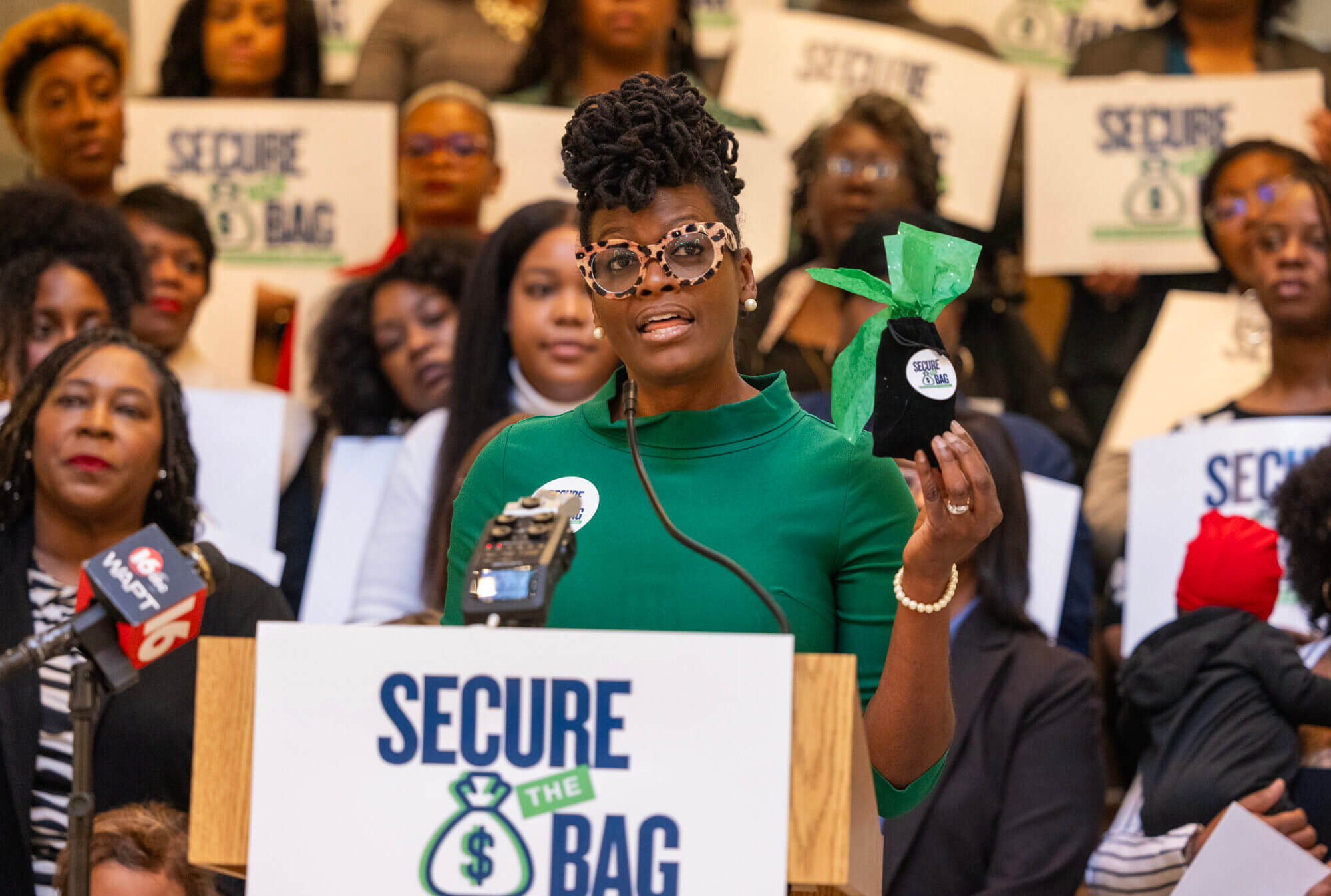
There’s a persistent wage gap between women and men, but the inequality is especially acute for Black women. Some estimate that a Black woman must work 19 months to make what a white man earns in a year. To mark Black Women’s Equal Pay Day, experts in Mississippi called for equal pay, more parental leave and pay transparency to close the gap.
Mississippi Today Ideas is a platform for thoughtful Mississippians to share their ideas about our state’s past, present and future. Opinions expressed in guest essays are the author’s own and do not necessarily represent those of Mississippi Today. You can read more about the section here.
Every day across Mississippi, mothers wake up early, get their children ready for school, go to work and do everything they can to provide for their families. Yet despite their hard work, far too many still face impossible choices: paying the rent or keeping the lights on, covering childcare or buying groceries, replacing a child’s school uniform or filling a prescription. No parent should have to make those decisions simply because her work is undervalued.
At Mississippi Black Women’s Roundtable, we see these realities every day. The stories we hear from mothers across our state remind us that the wage gap isn’t an abstract policy debate. It’s a daily struggle that affects whether families can remain stable and whether children have the opportunity to thrive.
That is why Moms’ Equal Pay Day, which is recognized today, is more than a date on the calendar. It marks how far into the following year mothers must work – added with their pay from the previous year – to earn what fathers earned the previous year.
According to the National Women’s Law Center’s most recent Mothers’ Wage Gap report, last updated in May 2025, mothers working full-time, year-round earn approximately 74 cents for every dollar earned by fathers. In Mississippi, that figure drops to approximately 67 cents on the dollar, and the gap widens even further for mothers working part-time or part-year.
For many mothers – especially single mothers who are often their family’s sole provider – that gap translates into fewer opportunities to build savings, absorb unexpected expenses and create long-term financial stability.
Our mission at Mississippi Black Women’s Roundtable is to build the political, economic and social power of Black women and girls throughout Mississippi. While we advocate for long-term policy solutions, we also recognize that families facing emergencies cannot wait for legislation to catch up. They need support today.
That understanding gave rise to our Community Outreach and Relief Resources Initiative, CORRI, which helps families weather unexpected hardship with dignity while we continue advocating for lasting economic opportunity.
One of CORRI’s signature efforts, Quarters Because We Care, began as a practical response to families facing extraordinary circumstances during the Jackson water crisis and has grown into a lifeline for parents struggling to keep their households together. Through CORRI, Mississippi Black Women’s Roundtable provides emergency support – from laundry services to rent, utility and childcare assistance – that often determines whether a working parent can remain employed.
Clean clothes may seem like a small thing until you’re the parent trying to report to work or send your child to school with dignity. Economic justice is often built on meeting these everyday needs.
The impact of Quarters Because We Care is reflected in what participants tell us. One of the most common responses we hear is: “Thank you. I only came in to wash a couple of loads of laundry – whether it was my children’s school uniforms or my work clothes. Because your organization provided this service, I can now use those resources for other things my family needs.”
Many participants return later the same day or the following day to finish the rest of their laundry because they know they have a safe, welcoming place where they can meet an essential need without added financial stress.
Through the Quarters Because We Care program, the Mississippi Black Women’s Roundtable provides struggling families with help for basic needs like laundry services, rent, utility and childcare assistance. Credit: Courtesy photo
The families we serve come from every corner of Mississippi. They are teachers, restaurant workers, social workers, government employees and, at times, people experiencing homelessness. Their circumstances differ, but they all share the same determination: to provide for themselves and their families with dignity.
Programs like Quarters Because We Care give families room to breathe – allowing them to redirect scarce dollars toward groceries, gas, school supplies, utilities or rent while preserving dignity, restoring hope and reminding them they are not facing these challenges alone.
That program is just one example of how CORRI responds when families face immediate hardship. Our Emergency Assistance Program provides another critical safety net, helping parents bridge temporary financial crises before they become long-term setbacks.
We regularly hear from mothers whose financial stability has been disrupted almost overnight. One mother lost her childcare voucher, threatening her ability to continue working. Another welcomed a new baby while unpaid maternity leave reduced her household to a single income. In both cases, emergency assistance helped prevent temporary setbacks from becoming lasting financial crises by easing concerns about utility shutoffs, eviction and other immediate hardships, allowing parents to focus on caring for their families while regaining stability.
These stories remind us that the wage gap is not simply about unequal paychecks. It is about unequal opportunity. It is about whether families can build savings, purchase homes, afford healthcare, invest in education or recover when life inevitably brings unexpected challenges.
While Mississippi Black Women’s Roundtable will continue meeting immediate needs through programs like CORRI, we know firsthand that emergency assistance alone cannot solve the structural inequities that leave too many working mothers one unexpected expense away from financial crisis.
When mothers are paid less than they have earned, the impact extends far beyond individual families. Employers lose valuable talent, local economies lose spending power and communities lose the stability that comes when working families have the opportunity to thrive.
That is why we continue advocating for policies that strengthen economic security for Mississippi’s families, including raising the state’s minimum wage, which has remained at $7.25 per hour for 17 years; strengthening equal pay protections by prohibiting employers from relying on salary history; expanding pay transparency and protecting workers who discuss wages from retaliation; strengthening protections against pay discrimination; and expanding access to affordable healthcare so mothers can remain healthy, employed and able to care for their families.
These are not partisan ideas. They are practical investments in Mississippi’s workforce, businesses, children and future.
Moms’ Equal Pay Day should challenge all of us – not simply to acknowledge the wage gap, but to ask what we are willing to do about it.
Every mother deserves the opportunity to provide for her family without having to work harder simply to earn less. Every child deserves the stability that comes when the youngster’s parent is paid fairly.
When we invest in mothers, we invest in stronger children, stronger communities and a stronger Mississippi. Closing the wage gap is about more than equal pay. It’s about ensuring every family has the opportunity not simply to survive, but to build a secure future for generations to come.
Cassandra Welchlin is executive director of the Mississippi Black Women’s Roundtable. A licensed social worker, advocate and mother, she has spent more than 20 years advancing policies that strengthen economic security and health for Mississippi women and families.
WASHINGTON — President Donald Trump’s administration said Thursday it plans to overhaul Head Start, tossing out many of the regulations that are the hallmark of the early education program for the nation’s poorest children.
Officials from the Department of Health and Human Services, which oversees the federally funded preschool program, said the proposed changes would encourage more local decision-making. Early childhood policy experts argue the deregulation could undermine Head Start’s position as the gold standard in early education.
The Associated Press previously reported on the overhaul proposal, which became public Thursday when it was posted online. The public will have 60 days to weigh in on it before it goes into effect.
Head Start centers serve around 700,000 of the nation’s most vulnerable children, including those who are homeless, in foster care or disabled. That wouldn’t change under the overhaul.
But Alex J. Adams, an assistant secretary at Health and Human Services, said the department is hoping to give Head Start centers the flexibility to change the way they operate. That means eliminating most of Head Start’s regulations, such as standards for low staff-to-student ratios or requirements to provide services to preschoolers’ families.
“Federal mandates can certainly hinder local decision-making, drive up costs and limit the program’s reach,” Adams said on a call with reporters. He highlighted a decade-long decline in Head Start enrollment. “If we get this proposed rule right, we will grow the number of Head Start slots.”
On a call previewing the proposed changes, Health Secretary Robert F. Kennedy spoke reverently about Head Start, which was started by his uncle Sargent Shriver during the Lyndon B. Johnson administration.
“It’s a program that works for the most vulnerable of the poorest kids in our society, and it’s really important we protect it,” Kennedy said.
But the changes would undermine many of the things that make Head Start distinct from other early education programs, policy experts say.
“The model was created with intentionality,” said Khari Garvin, who oversaw Head Start under President Joe Biden, a Democrat. It was designed, he said, “as part of a strategy to move families out of poverty.”
What makes Head Start different
Head Start, which began in the 1960s as part of Johnson’s War on Poverty, is currently governed by more than 100 pages of regulations. Those regulations require centers to have low staff-to-student ratios and a research-backed curriculum, among other things, and they ensure centers are providing wraparound services that are critical to children in poverty, including medical and dental screenings and parent coaching.
The proposal would toss out nearly all of that rule book. Instead, Head Start’s 1,600 operators — which include nonprofits and school districts — would look to state and local childcare licensing requirements for guidance on many aspects of the program.
Once the proposed regulations are published online, the public will have 60 days to weigh in. The final rules could face legal scrutiny, further delaying their implementation.
While the proposed rules largely loosen requirements, Adams emphasized that centers have the option to continue to operate as they had in the past. He estimated the new rules could generate more than $2 billion in savings and potentially allow Head Start to serve more children.
The proposal adds in at least two new requirements, officials said. It includes a 5% cap on administrative expenses, down from 15% under current rules, and new nutrition provisions championed by Kennedy.
State rules are more lenient
Overall, experts emphasize, state childcare licensing requirements are far more lax than Head Start’s current regulations. State rules are largely focused on ensuring children are healthy and safe. Generally speaking, they do not require centers to provide things like medical or dental screenings, they don’t specify ways to engage with parents, and they don’t speak to what — if anything — should be taught in childcare settings.
Shantel Meek, who heads the Children’s Equity Project at Arizona State University, co-authored an analysis that compared state licensing requirements with Head Start standards and found massive gaps.
“Whereas licensing is, like, the bare minimum to keep kids safe, Head Start includes keeping kids safe but also ensuring that kids are developing, growing, learning well,” Meek said. “It’s a totally different purpose.”
Critically, states allow adults to care for far more children than is allowed under Head Start standards. In Mississippi, for example, one Head Start teacher is only allowed to teach up to four 2-year-olds. State childcare regulations would permit up to a dozen 2-year-olds to be supervised by one adult.
Head Start, which operates in all 50 states, has long had support from both Democrats and Republicans. But it has faced repeated threats under the Trump administration, whose budget chief, Russell Vought, had previously called for it to be eliminated. Not long after Trump, a Republican, took office again in early 2025, some Head Start programs had to briefly shutter because they had problems accessing their federal money. Later, a budget draft eliminated Head Start’s funding, but it was restored after widespread backlash.
In a call with reporters, Kennedy said he believes Head Start is effective. He cited research showing its graduates have fewer law enforcement encounters, do better in school and have better jobs than their peers. He added that he tried to shield Head Start from many of the cuts that hit the rest of his agency.
Still, the Trump administration succeeded last year in laying off much of Head Start’s support staff and closing half of its regional offices.
The Woodward Hines Education Foundation will provide $800,000 for FAITH scholarships, which the state awards to former foster youths who are attending colleges in Mississippi, officials announced Wednesday. The announcement comes a week after the Mississippi Office of Student Financial Aid notified applicants that the scholarships were not being funded for 2026-27.
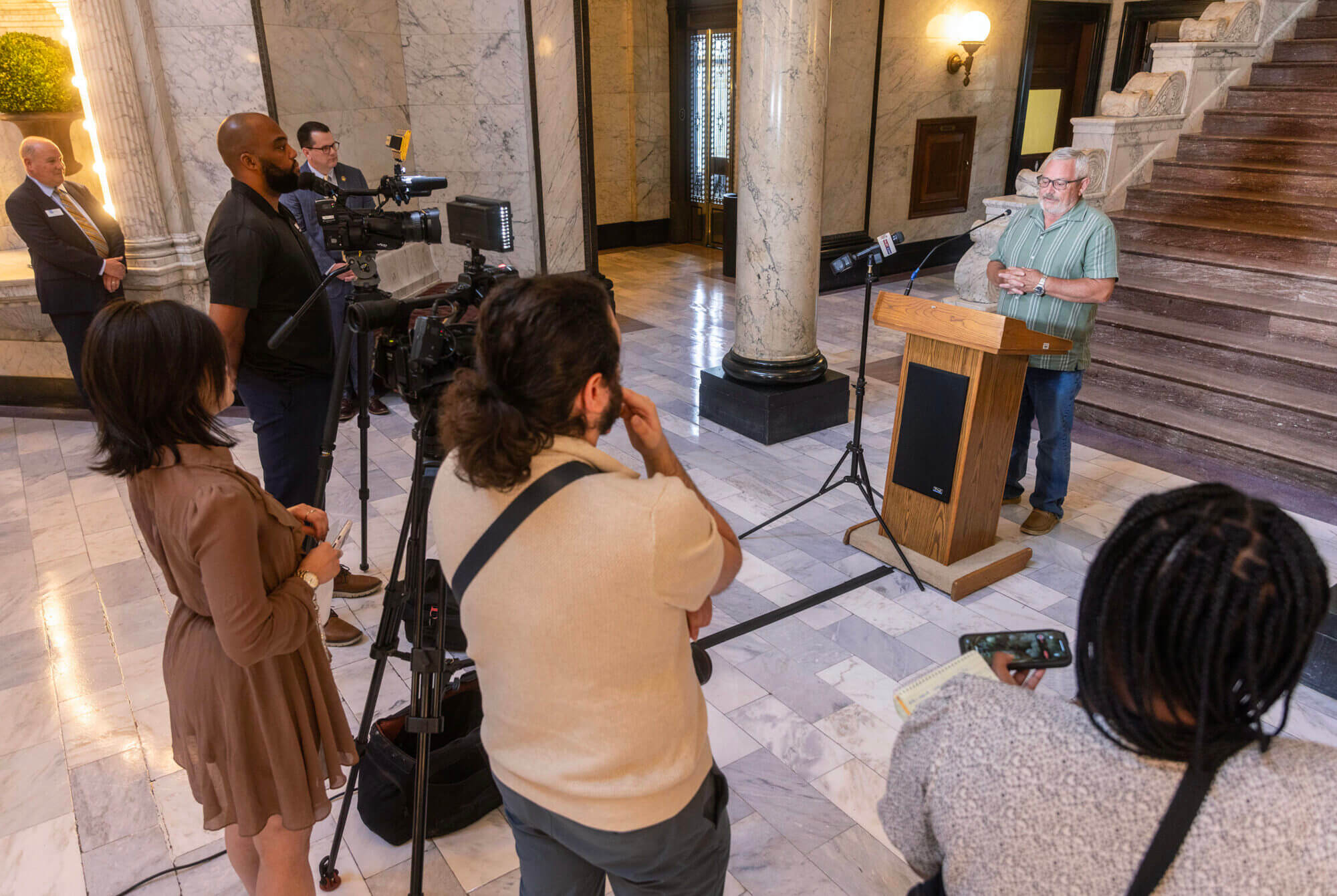
The foundation stepped up to cover the awards in response to news about the lack of funding, President and CEO Jim McHale said Wednesday during a news conference. The scholarships will go to about 170 students.
“We are going to make sure that every one of these students has the opportunity to take advantage of the scholarship,” said Nicole Boyd, a Republican from Oxford who is chair of the Senate Universities and Colleges Committee. “That is the thing about Mississippi. In a time like this, everybody is going to work together to make sure that we get things covered.”
The office had requested $6.5 million — enough to cover the FAITH scholarships and Winter-Reed Teacher Loan Repayment Program — but the Legislature approved appropriations for less than half that amount. Officials at the financial aid office applied the money they received to the scholarships, but that was not enough to cover awards for all of the eligible students.
The loan repayment program will not award money this year for the first time since it was created in 2021.
The FAITH scholarships and the funding loss for the loan repayment program are part of a broader funding crisis for the state financial aid office. Mississippi financial aid officials have said almost 27,000 college students could receive less state financial aid because of a $7.3 million budget shortfall, a gap between the funding request and legislators’ appropriation.
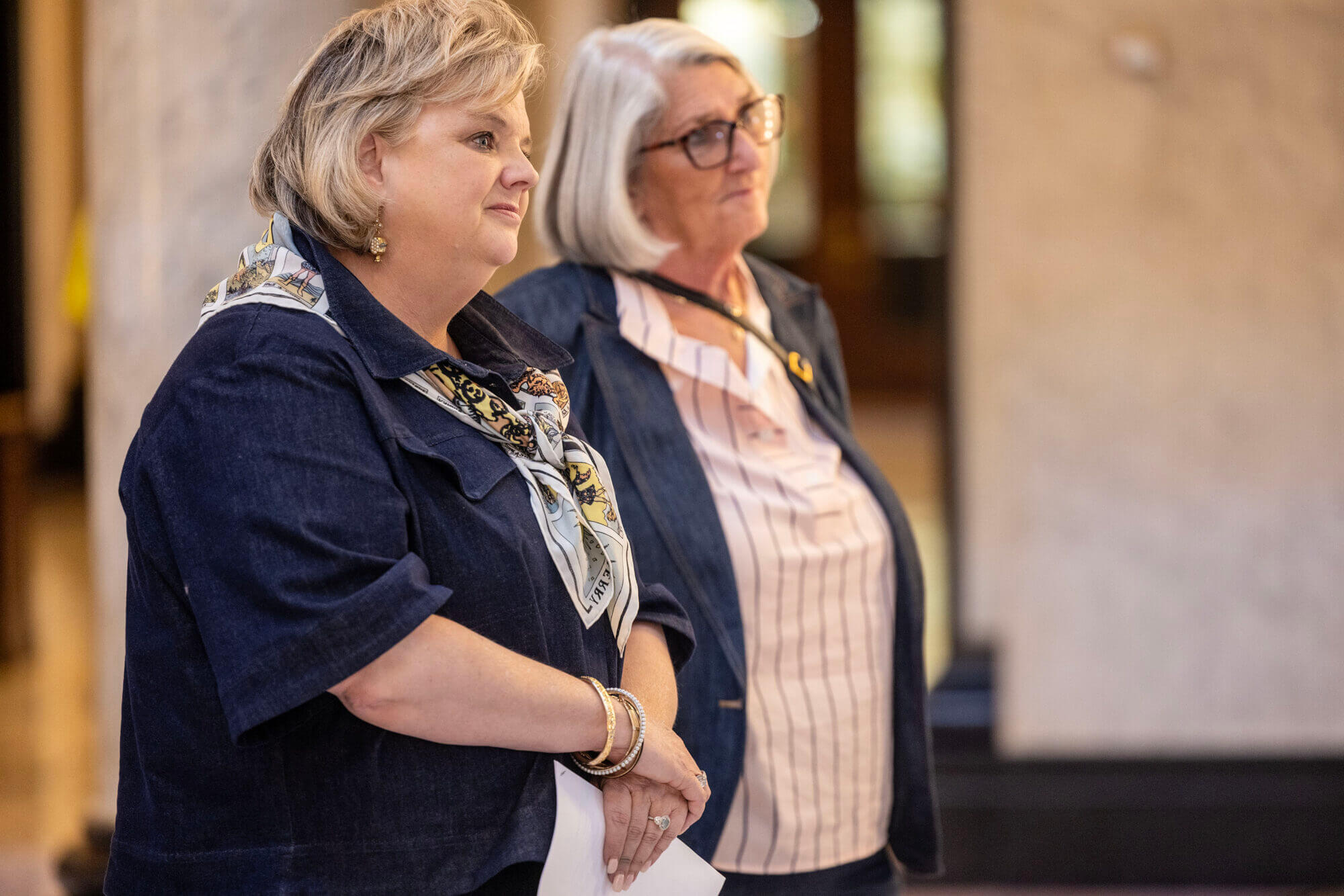
Jim McHale, president and CEO of the Woodward Hines Education Foundation, speaks about the Bill Kinkade FAITH Scholarship during a news conference at the Capitol in Jackson on Wednesday, Aug. 5, 2026. Credit: Eric Shelton/Mississippi TodaySen. Nicole Boyd listens as Rep. Bill Kinkade speaks about the Bill Kinkade FAITH Scholarship during a news conference at the Capitol in Jackson on Wednesday, Aug. 5, 2026. Credit: Eric Shelton/Mississippi Today
The funding gap could force the financial aid office to cut programs that help low-income students, as well as hundreds of foster youths and future teachers, pay for college.
The Woodward Hines foundation’s gift is a one-time boost for the FAITH scholarships. Future funding for the awards is uncertain.
On Friday, the foundation will publish information on its website for anyone who wants to donate to the FAITH scholarships.
Bill Kinkade, a Republican from Byhalia and the FAITH scholarship’s namesake, vowed to work with other legislators before January to address any anticipated funding shortfalls for the financial aid office. In 2022, the Legislature created the State Representative Bill Kinkade Fostering Access & Inspiring True Hope Scholarship, which covers expenses such as tuition, housing, books and living costs that remain after other financial aid is applied.
“This program has such a broad impact for our most needed youth because I’ve received so much input,” Kinkade said. “We need to continue funding it because it is vital.”