Lost+Found Coffee Company @ 248 South Green Street, Tupelo,MS. inside Relics in Downtown Tupelo. Open Monday through Saturday from 10:00am till 6:00pm.
With most any restaurant or coffee house, it’s a balance between atmosphere, menu, and know how. For a coffee shop, Lost & Found has it going on!
You could spend the better part of a day just strolling through both floors of the antique building looking at all the treasures. When your ready for a coffee break, the knowledgeable baristas can help you choose the perfect pick me up!
They have everything from a classic cup of joe to the creamiest creation you could imagine! From pour overs to cold brews. From lattes, mochas, to cappuccino’s, Lost & Found Coffee Company has got ya covered!
So the next time you want to hunt for lost treasures, or find the perfect cup of coffee, Lost & Found Coffee Company has got ya covered! See y’all there!
Visit my blog for events, contests, new restaurants, LOCAL Favorites, and their FAMOUS foods!
Help us grow our community @ Eating Out With Jeff Jones * visit our page * Click community * Invite friends * Like and share this post
Message me If you would like to have your restaurant, menu, and favorite foods featured in my blog. Over 18,000 local Foodies would love to see what you have to offer!
Do you thrive on the unexpected? Are you waiting for the next fire to crop up?
Have you ever noticed that you can plan something so intricately and you are still going to catch the glitches when life throws you a curve ball? It is one of the beauties of life that we can never prepare for. The unexpected. The only difference is our response to the unexpected. Do we have a knee jerk reaction that finds us swerving to gain back control of our life? Or do we instead just go with the flow and decide to embrace the scenic route life decided to take us on? Our response to life can cause us more stress or we can just enjoy it for what it is in that moment of time. I used to thrive on the unexpected. It was part of my career for many years. The never knowing what “fire” was going to sprout up that day and how I was going to need to put it out. Even this week as we launched our newest book in my publishing company. I thought I had it all planned out only to run into major “hiccups” within 72 hours of the launch. I could either stress out or take it in stride.
Slow and Steady
As my dad retired I watched him take a different approach to life than I had ever seen him take before. I mean, all you have to do is climb up in the cab of his king ranch Ford pick-up and see he is a changed man. He drives slower than anyone should even be allowed to drive out on the roads these days. He knows how to drive, so don’t go yelling at him next time you are stuck behind him. Trust me, my mom does enough yelling for all of us at him about that! He just takes life these days. His sentiments are that he lived in the fast lane his whole life. Rushing to be on time to work, rushing to come home to his family, the constant busy we get entangled with as adults…now, he doesn’t have to be busy and he is going to enjoy that. Truth is, I can’t even be mad at him for that. Now that I am an adult out here rushing from one thing to the next, I totally could use some driving twenty miles per hour in my life some days. Took me getting to nearly forty to even be able to say that though.
The lesson in his wisdom can be heard by all. Some things we lose it over won’t even amount to anything five years from now, yet we gave them so much energy in the moment. All the things we think are so important that we must do and do now. Most will not really matter years from now, yet we poured our soul into them. What would change if we took the time to just enjoy life? To just flow with things as they happened? When hit with something we didn’t expect, we embraced it instead of fighting it? What would happen? I dare say we might have more peace? I probably would be a lot calmer. I probably wouldn’t lose my temper near as much. I probably wouldn’t have anxiety or stress on the daily. I would probably take time to enjoy life more. I certainly wouldn’t yell at the slow driver in front of me.
What about you? Next time you get behind someone driving slowly…take back the name calling and curse words. Maybe take back all of the assumptions that they don’t know how to drive. Maybe use it as a reminder to take a moment, roll down your window, soak in the sunshine. I can promise you that wherever the heck you are going, you will still get there. Maybe that person figured out life and you can use their wisdom too. If they are driving a blue king ranch Ford truck, I can assure you that he is just enjoying his day and he would want you to enjoy yours too. Matter of fact, I wish I had listened to his wisdom a lot more in my earlier days instead of waiting until now.
Here is a plain, searchable text version (most other versions we found were Images or PDF files) of City Of Tupelo Executive Order 20-018. Effective Monday June 29th at 6:00 PM
The following Local Executive Order further amends and supplements all previous Local Executive Orders and its Emergency Proclamation and Resolution adopted by the City of Tupelo, Mississippi, pertaining to COVID-19. All provisions of previous local orders and proclamations shall remain in full force and effect.
LOCAL EXECUTIVE ORDER 20-018
The White House and CDC guidelines state the criteria for reopening up America should be based on data driven conditions within each region or state before proceeding to the next phased opening. Data should be based on symptoms, cases, and hospitals. Based on cases alone, there must be a downward trajectory of documented cases within a 14-day period or a downward trajectory of positive tests as a percent of total tests within a 14-day period. There has been no such downward trajectory in the documented cases in Lee County since May 18, 2020.
Hospital numbers are not always readily available to policymakers; however, from information that has been maintained and communicated to the City of Tupelo, the Northeast Mississippi Medical Center is near or at their capacity for treating COVID-19 inpatients over the past two weeks without reopening additional areas for treating COVID-19 patients. The City of Tupelo is experiencing an increase in the number of cases of COVID-19. The case count 45 days prior to the date of this executive order was 77 cases. That number increased within 15 days to 107, and today, the number is 429 cases. The City of Tupelo is experiencing increases of 11.7 cases a day. This is not in conformity with the guidelines provided of a downward trajectory of positive tests. By any metric available, the City of Tupelo may not continue to the next phase of reopening.
Governor Tate Reeves in his Executive Order No. 1492(1)(i)(1) authorizes the City of Tupelo to implement more restrictive measures than currently in place for other Mississippians to facilitate preventative measures against COVID-19 thereby creating the downward trajectory necessary for reopening.
That the Tupelo Economic Recovery Task Force and North Mississippi Medical Center have formally requested that the City of Tupelo adopt a face covering policy.
In an effort to support the Northeast Mississippi Health System in their response to COVID-19 and to strive to keep the City of Tupelo’s economy remaining open for business, effective at 6:00 a.m. on Monday, June 29, 2020, all persons who are present within the jurisdiction of the City of Tupelo shall wear a clean face covering any time they are, or will be, in contact with other people in indoor public or business spaces where it is not possible to maintain social distance. While wearing the face covering, it is essential to still maintain social distance being the best defense against the spread of COVID-19. The intent of this executive order is to encourage voluntary compliance with the requirements established herein by the businesses and persons within the jurisdiction of the City of Tupelo.
It is recommended that all indoor public or business spaces require persons to wear a face covering for entry. Upon entry, social distancing and activities shall follow guidelines of the City of Tupelo and the Governor’s executive orders pertaining to particular businesses and business activity.
Persons shall properly wear face coverings ensuring the face covering covers the mouth and nose,
1. Signage should be posted by entrances to businesses stating the face covering requirement for entry. (Available for download at www.tupeloms.gov).
2. A patron located inside an indoor public or business space without a face covering will be asked to leave by the business owners if the patron is unwilling to come into compliance with wearing a face covering
3. Face coverings are not required for:
a. People whose religious beliefs prevent them from wearing a face covering. b. Those who cannot wear a face covering due to a medical or behavioral condition. c. Restaurant patrons while dining. d. Private, individual offices or offices with fewer than ten (10) employees. e. Other settings where it is not practical or feasible to wear a face covering, including when obtaining or rendering goods or services, such as receipt of dental services or swimming. f. Banks, gyms, or spaces with physical barrier partitions which prohibit contact between the customer(s) and employee. g. Small offices where the public does not interact with the employer. h. Children under twelve (12). i. That upon the formulation of an articulable safety plan which meets the goals of this
Executive Order businesses may seek an exemption by email at covid@tupeloms.gov
FACE COVERINGS DO NOT HAVE TO BE MEDICAL MASKS OR N95 MASKS. A BANDANA, SCARF, T–SHIRT, HOME–MADE MASKS, ETC. MAY BE USED. THEY MUST PROPERLY COVER BOTH A PERSON‘S MOUTH AND NOSE.
Those businesses that are subject to regulatory oversight of a separate state or federal agency shall follow the guidelines of said agency or regulating body if there is a conflict with this Executive Order.
Additional information can be found at www.tupeloms.gov COVID-19 information landing page.
Pursuant to Miss. Code Anno. 833-15-17(d)(1972 as amended), this Local Executive Order shall remain in full effect under these terms until reviewed, approved or disapproved at the first regular meeting following such Local Executive Order or at a special meeting legally called for such a review.
The City of Tupelo reserves its authority to respond to local conditions as necessary to protect the health, safety, and welfare of its citizens.
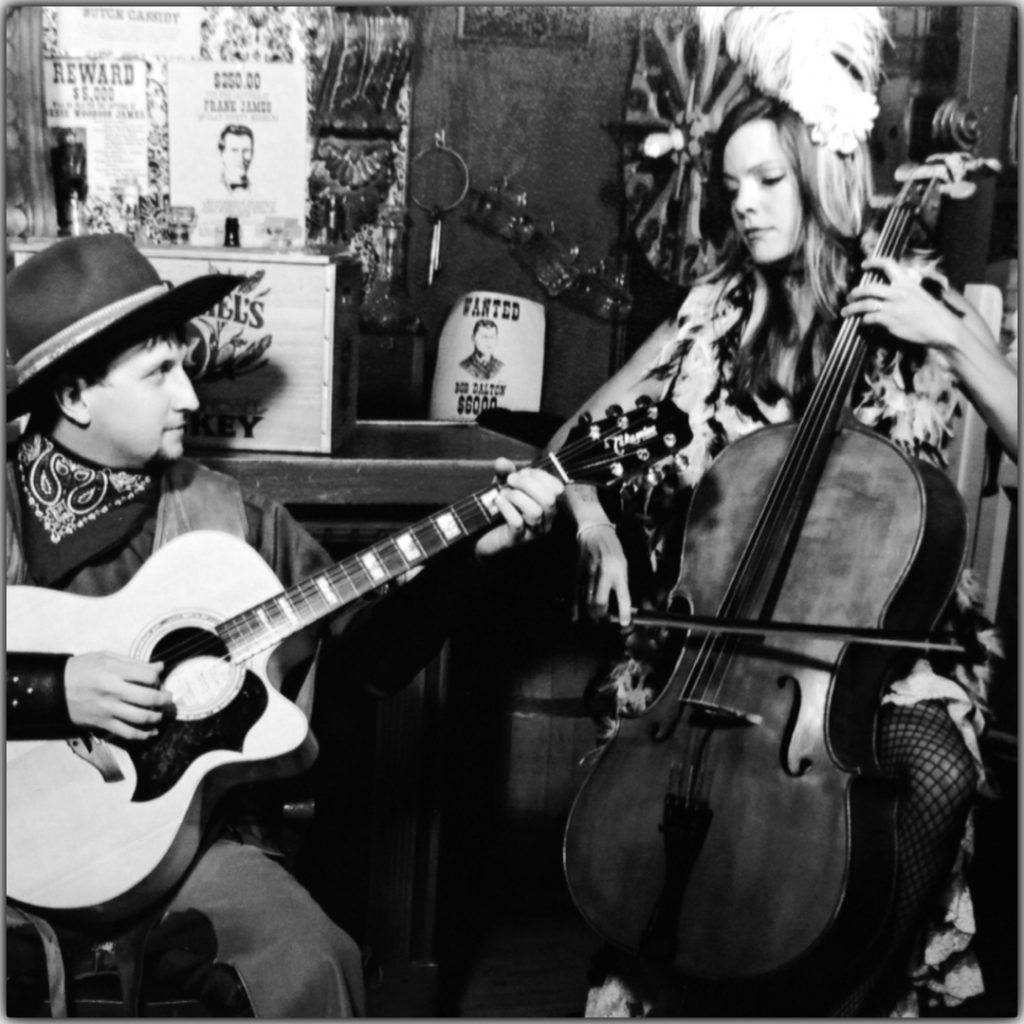
Honeyboy and Boots are a husband and wife, guitar and cello, duo with a unique style that is all their own. Their sound embodies Americana, traditional folk, alt country, and blues with harmonies and a hint of classical notes.
Drew Blackwell, a true Southerner raised in the heart of the black prairie in Mississippi. First picked up the guitar at fourteen, he was greatly influenced by his Uncle Doug who taught him old country standards and folk classics. Later on in high school, he was mentored and inspired to write (and feel) the blues by Alabama blues artist Willie King. (Willie King is credited for bringing together the band The Old Memphis Kings.)
Drew has placed 3rd in the 2019 Mississippi Songwriter of the Year contest with his song “Waiting on A Friend” and made it to the semi finalist round on the 2019 International Songwriting Competition with his song “Accidental Hipster.”
Honeyboy (Drew) can also be found belting out those blues notes as the lead vocalist for the Old Memphis Kings and begins everyday with a hot cup of black coffee!
Courtney Blackwell (Kinzer) grew up in Washington State and comes from a talented musical family. She began playing cello at the age of three taking lessons from the cello bass professor Bill Wharton at the University of Idaho. Her mother was most influential in her progression of technique, tone quality, and ear training. Since traveling around much of the South, she has enjoyed focusing on the variety of ways the cello is used in ensembles. When she plays, you will feel those groovy bass lines making way to soaring leads create an emotional and magical connection between you and her music.
Courtney enjoys working in the studio, collaborating with artists and continuing to challenge the way cello is expressed.
They have opened for such acts as Verlon Thompson, The Josh Abbott Band, Cary Hudson (of Blue Mountain), and Rising Appalachia.
Honeyboy And Boots have performed at a variety of venues and festivals throughout the southeast, including the 2015 Pilgrimage Fest in Franklin, TN; Musicians Corner in Nashville; the Mississippi Songwriters Festival (2015-2018); and the Black Warrior Songwriting Fest in Tuscaloosa, AL (2018-2019). They also came in 2nd place at the 2015 Gulf Coast Songwriters Shootout in Orange Beach, FL.
They have two albums, Mississippi Duo and Waiting On a Song, which are available on their website, iTunes, Amazon, and CD Baby.
The duo also just released their fourth recording: a seven-song EP called Picture On The Wall, which was recorded with Anthony Crawford (Williesugar Capps, Sugarcane Jane, Neil Young). It is now available on Spotify, Itunes, Google Music, and CD Baby.
Who or what would you say has been the greatest influence on your music?
My Uncle Doug, because he began to teach me guitar and introduced me to a lot of great older country music.
Favorite song you’ve composed or performed and why?
“We Played On” because it’s about our family reunions, where we would sit around and play guitar and share songs.
If you could meet any artist, living or dead, which would you choose and why?
Probably Willie Nelson. He’s my all time favorite.
Most embarrassing thing ever to happen at a gig?
A guy fell on top of me while I was performing. I was sitting down. He busted a big hole in my guitar.
What was the most significant thing to happen to you in the course of your music?
Getting to perform at Musicians Corner in downtown Nashville. Probably the biggest crowd we’ve ever been in front of.
If music were not part of your life, what else would you prefer to be doing?
I don’t know, maybe fishing or golf.
Is there another band or artist(s) you’d like to recommend to our readers who you feel deserves attention?
Our friends, Sugarcane Jane. They are a husband/wife duo from the Gulf Shores area. Great people and great artist.
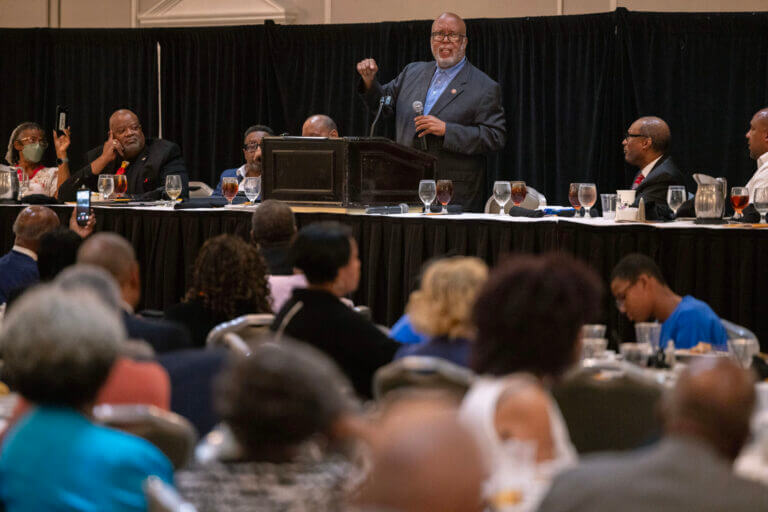
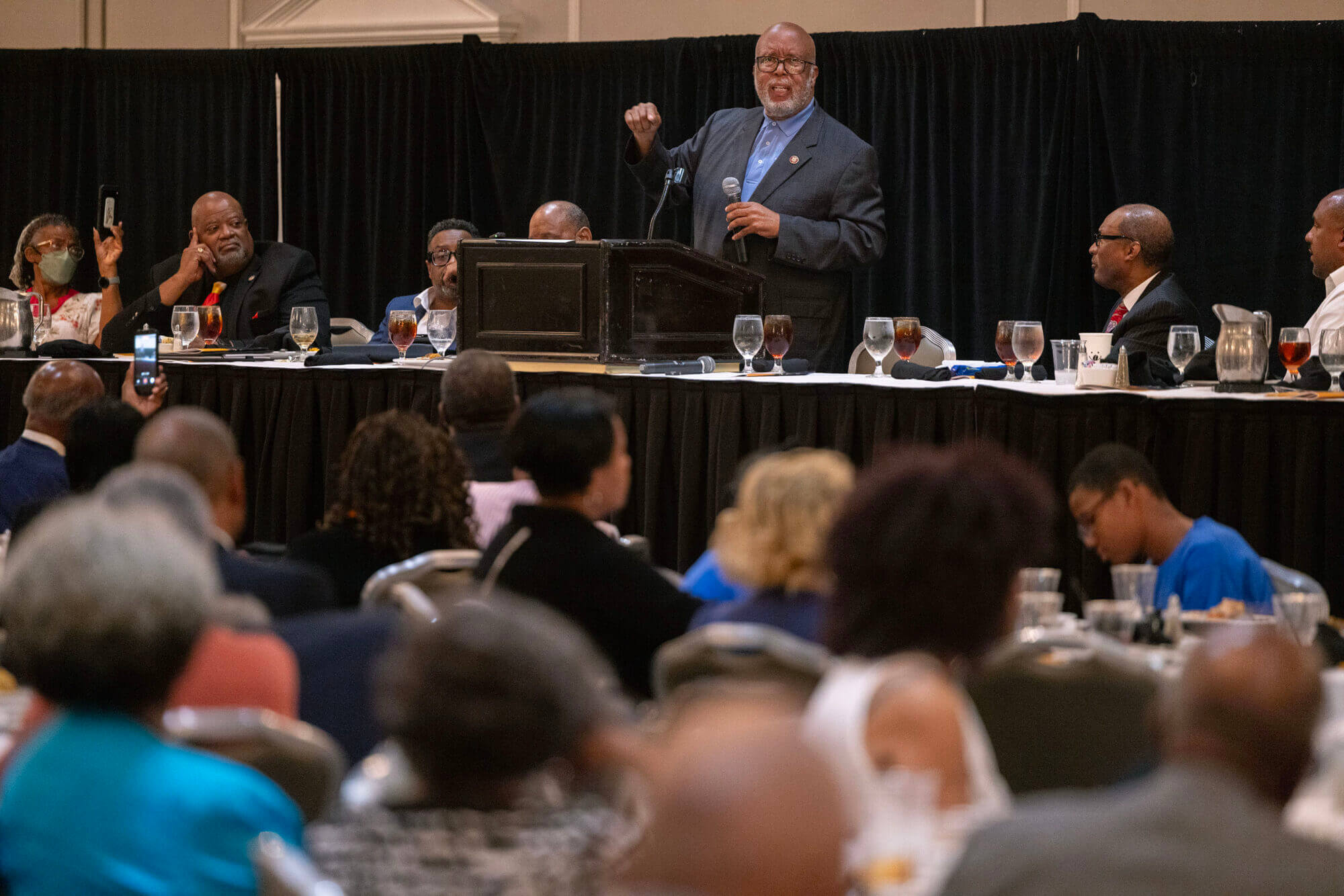
U.S. Rep. Bennie Thompson and Democratic U.S. Senate candidate Scott Colom on Tuesday called for Black Mississippi voters to turn out in November’s midterm elections to fight back against President Donald Trump’s agenda and an expected effort from state leaders to redraw electoral maps in Republicans’ favor.
At a “Power in the Pews” luncheon in Jackson organized by the NAACP, the candidates spoke to a packed room at the Hilton Jackson filled with hundreds of attendees alongside faith leaders, political organizers and Democratic officials.
Churches have long been an engine of political organizing for Black voters in Mississippi and across the Deep South. NAACP workers at the event handed out informational packets on voter engagement and urged attendees to consult their local churches for information on how to get involved. Thompson called such efforts a blueprint for turning out Black voters in Mississippi.
Thompson and Colom warned about what they said were threats to voting rights and Black representation posed by Trump and Republican state officials. Colom, who is gearing up for the final stages of a general election campaign against incumbent Republican Sen. Cindy Hyde-Smith, also took the opportunity to sharpen his closing attacks on Mississippi’s junior senator, whom he labeled “Cindy High Prices.”
“Our junior senator cares more about what her MAGA daddy says than what’s best for Mississippi,” Colom said.
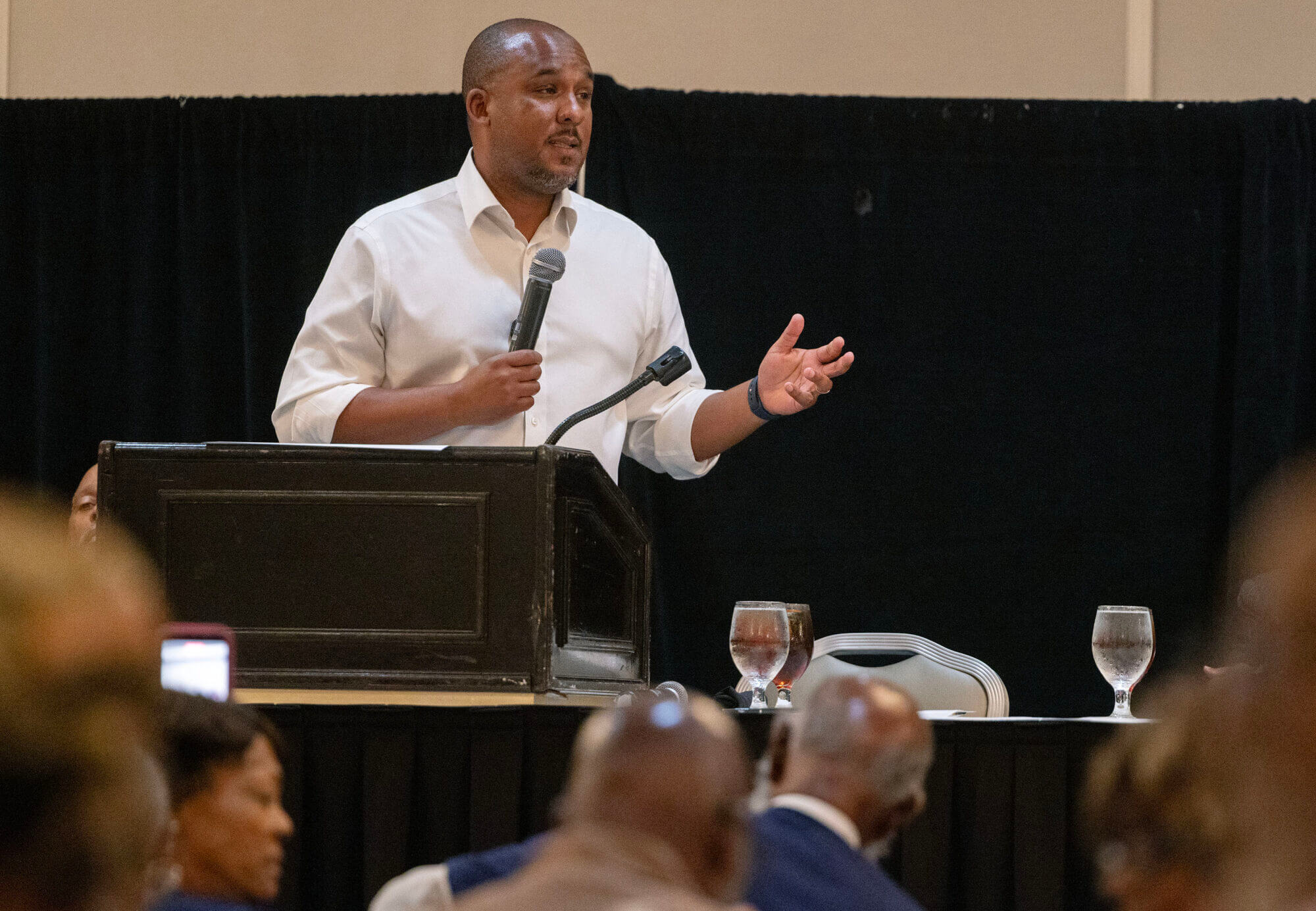
Democratic nominee for the U.S. Senate Scott Colom speaks at the “Power in the Pews” faith leadership luncheon Tuesday, Aug. 25, 2026, at the Hilton Jackson. Credit: Eric Shelton/Mississippi Today
Colom, who also faces independent Ty Pinkins in the general election, criticized Hyde-Smith for voting for the “Big Beautiful Bill” act and supporting President Trump’s tariffs, which he has said raised prices of consumer goods across the economy. He also accused Hyde-Smith of using political donations for personal travel, such as billing trips to Las Vegas to her campaign account.
“Not only is she allowing the corruption, not only is she remaining silent, she’s partaking in it,” Colom said.
In a statement, Jake Monssen, Hyde-Smith’s campaign manager, disputed Colom’s remarks.
“Scott Colom started lying to voters about Sen. Hyde-Smith on the very first day of his campaign,” Monssen said. “We shouldn’t be surprised to see him double down on that tactic.”
Thompson, the only Democrat and only Black member of Mississippi’s congressional delegation, noted the size of the crowd that came out on a Tuesday afternoon. The turnout could be traced to Trump’s unique ability to unite Black voters in opposition, he said.
“Now let me tell you what’s making this happen. It’s that fella in the White House,” Thompson said. “This man has done more to get Black folks together in America than Martin Luther King could have ever done”
If Democrats reclaim a majority in the U.S. House this November, six Black members could become committee chairmen, Thompson told the crowd.
“There’s nothing like being in the room, in charge,” he added.
Thompson faces Republican Ron Eller and independent Bennie Foster this November.
Since the U.S. Supreme Court’s decision in the Louisiana Callais redistricting case in May, which weakened the Voting Rights Act, Thompson has been the target of calls from Gov. Tate Reeves and Republican state legislators to redraw Mississippi’s electoral maps.
A legislative joint committee is holding public hearings across the state, and the full Legislature is expected to convene in a special session this fall to redraw at least state legislative maps. That wouldn’t impact this November’s federal election, but Mississippi lawmakers are likely to target Thompson’s seat with redistricting before he’s up for reelection again in 2028.
Colom called the Callais decision “a threat to our democracy” the country hasn’t seen in decades.
“(Gov. Tate Reeves) is going to try to draw lines that prevent the people in this room from being able to pick leaders they want. He wants to pick your leaders for y’all,” Colom said. “He doesn’t want Cindy High Prices to have to compete for votes, because they won’t to have to answer for these terrible policies.”
Charles Taylor, Mississippi’s NAACP executive director, said his organization has been meeting with Black circuit clerks and election commissioners to discuss “election security” and that organizers will “turn out Black folks in droves.”
“The eyes of the country have been on Mississippi this year, and it’s because of the work we’ve been doing day in and day out,” Taylor said. “The election in November is crucially important because it has been a long time since they have tried to roll back our rights like this.”
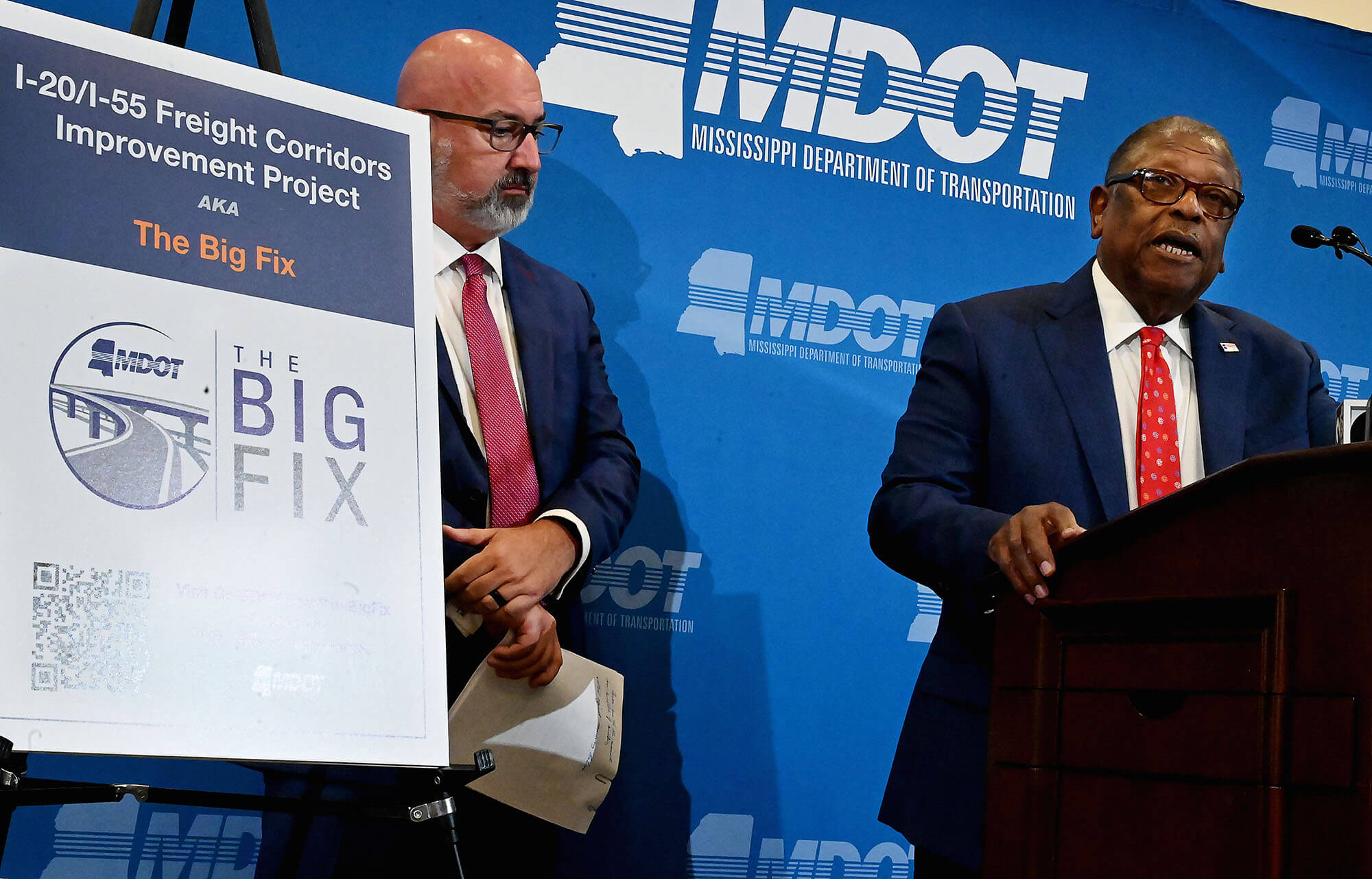
Leaders at the Mississippi Department of Transportation announced Tuesday that some of Mississippi’s busiest roadways will undergo major renovations over the next two-and-a-half years as part of a $400-million project.
Called the “Big Fix,” the project will improve roads and bridges on Interstate 20, which runs east-west, and Interstate 55, which runs north-south, in Hinds and Rankin counties. The project, funded with federal and state dollars, will rehabilitate 36 bridges, resurface 32 miles of roadway and deploy new technology to make travel safer.
Willie Simmons, Central District transportation commissioner, said at a press conference that when the interstate system was constructed in the 1950s and 1960s, it met all engineering and safety standards at the time. But since then, vehicles have grown larger and traffic has increased.
“Updating this infrastructure today isn’t about correcting the past,” Simmons said. “It’s about keeping pace with today’s demands and tomorrow’s needs.”
The project along I-20 will span from Wiggins Road in Jackson to just east of the Pearson Road interchange in Pearl. The project will also run along I-55 from McDowell Road to north of the High Street interchange in Jackson.
Construction will start next month and is scheduled to conclude toward the end of 2028. Most road closures are expected to occur at night and on weekends to minimize traffic disruption.
Two full interstate closures on I-20 in each direction will occur: one in 2027 and another in 2028. The westbound lane will be shut down for 45 days during the summer of 2027, and the eastbound lane will be shut down for 45 days in the summer of 2028.
Explanation of the Mississippi Department of Transportation’s $400-million renovation of I-55 and I-20 is presented on Tuesday, Aug. 25, 2026, at MDOT headquarters in Jackson. Credit: Vickie D. King/Mississippi Today
Agency leaders said about 110,000 vehicles travel in this area each day, so the agency has worked with local elected officials, emergency services and industry leaders for years to plan safe alternate routes.
Detour routes have not yet been announced but will be posted on the agency’s website as the road closures approach.
Brad White, executive director of MDOT, said the agency decided to renovate the longer stretch of road at one time instead of targeting portions of road piecemeal to save taxpayers money in the long term and reduce the disruption to drivers.
“By doing the project this way, you’re turning a project that otherwise would have taken decades to be built into one that could be done within a two-and-a-half-year time,” White said.
The public can visit GoMDOT.com/TheBigFix for more information and updates about the project.
CANTON — Fees from new data centers in Madison County could generate millions of dollars for area public schools starting in January.
Canton and Madison County schools officials say they plan to earmark the money for building improvements and investing in career and technical education. County leaders say the money could be “transformational,” allowing the schools to update their campuses, attract quality educators and offer innovative courses to students.
That transformation is happening amid concerns about traffic and pollution around the data centers, and their water and energy use.
Amazon aims to build 34 data centers in Madison County over the next two years, said Joey Deason, executive director of the Madison County Economic Development Authority. Five are operating and another five are expected to go online this year. The $25 billion project is the biggest capital investment in the state’s history.
To incentivize Amazon to bring the project to Mississippi, state leaders and county officials worked out a deal for the company to pay discounted fees — a third of what they’d typically owe in property taxes — for the first 10 years of each data centers’ operations over a 30-year term.
Starting in January, Amazon will start paying fees for the first five centers, which are located in Canton. Half of the money — about $14 million — would go toward paying off a loan the county took out to improve infrastructure around the data center project. The other half would be split between community colleges, the city of Ridgeland, Madison County and the county’s public schools.
And as more data centers crop up around the country and in Mississippi, additional school districts could receive more money from fees data center owners have to pay.
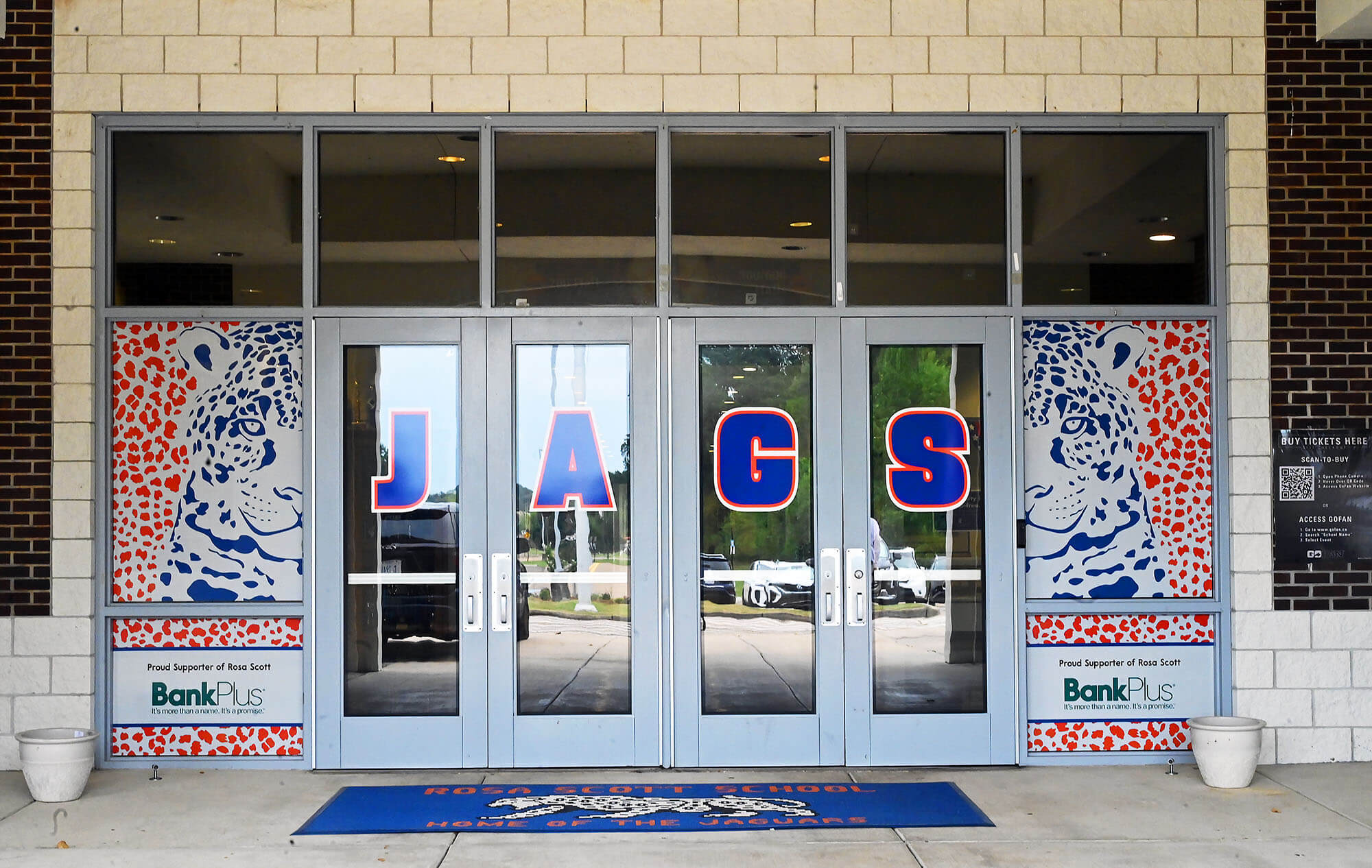
The Jaguar mascot graphic at the front entrance of Rosa Scott High School, located at 929 Poore’s Pass in Madison, Monday, Aug. 24, 2026. Madison County Schools and the Canton district anticipate getting millions of dollars from data centers operating in the county. Credit: Vickie D. King/Mississippi Today
The county tax collector will give Amazon’s fees to the county board of supervisors, who will then give Canton Public School District its share. The district is projected to receive over $7 million in a lump sum during the first quarter of 2027. The annual payments steadily increase to $17 million in 2029.
Once the fee agreement ends, Amazon will pay full property taxes for each of their data centers. By 2038, Canton schools could receive upwards of $35 million annually. That’s about half of the district’s budget for the current school year.
Similarly, Madison County Schools is projected to receive a $7 million annual payment during the first quarter of 2028. The district is getting its share a year later because the Ridgeland data centers began operating a year after Canton’s. The district’s allotment could go up to an annual $33 million payment by 2039. For context, Madison County school district officials approved a $204 million budget this year.
“These schools have got an opportunity that they’ve never had before to think outside of the box,” Deason said.
The amount of money the school districts will receive is not yet certain. Amazon Web Services recently challenged the Madison County tax assessor’s valuation of its five data centers in Canton claiming that the county’s assessment is too high, which could result in millions of dollars less for county government and schools. The tax assessor valued each data center at $292 million, but Amazon said each building is only worth $69 million. The Madison County Board of Supervisors upheld the tax assessor’s valuation, but the company could appeal the decision to the courts and could challenge the valuation again in coming years.
Investing in CTE, teachers, buildings
Austin Brown, Madison County Schools’ new superintendent as of July 1, saw the projections for how much money the data centers would bring into his district on his first day.
“I said, ‘I think I’m gonna retire,’” he recalled. “My day couldn’t get any better, you know? What a blessing.”
Brown said he can’t make promises about how the district will spend the money, but he knows where he’d like to start.
District leadership is interested in increasing teacher salaries. The state is facing a teacher shortage, and increasing the district’s local supplement could help Madison County Schools stay competitive, Brown said.
Schools in other states have used money from local data centers to boost teacher pay.
Madison County Schools is also renovating several buildings. Brown said he’d like to use the money to continue those efforts.
“What you’re seeing is basically the first phase of dedicated, intentional upgrades of our facilities,” he said.
A ninth grade student views organisms through a microscope in Principles of Biomedical Science class at Rosa Scott High School, Monday, Aug. 24, 2026, in Madison. Credit: Vickie D. King/Mississippi Today
A substantial amount of the money could go toward a new career and technical education building.
“Ultimately, we are going to use it in a way that will provide the right kind of experiences for our students to prepare them for what’s next,” Brown said. “There are no limitations on what we can do.”
Canton’s interim superintendent, Dwight Luckett, has similar plans. Luckett, despite his temporary position, has created a five-year strategic plan that hints at his priorities for the money: Recruiting highly trained teachers, boosting student achievement, focusing on career and technical education and providing students with state-of-the-art facilities.
He said the district’s central office, for example, is at least 80 years old and needs to be upgraded. Luckett also said district leaders might consider raising teacher pay the next school year and paying off debts they’ve accumulated.
“Those dollars will definitely, first and foremost, be used in the classroom,” he said. Luckett previously served as the district’s superintendent from 2006 until 2014. “There is also a tremendous need for some capital improvements.”
Luckett said he’d also like to see the dollars go toward creating classes focused on science, technology, engineering and math — or STEM.
His interest in career and technical education is in line with a push from the Mississippi Department of Education and state lawmakers to better prepare students for the workforce and bolster the state’s economy.
Dwight Luckett, superintendent of the Canton Public School District, speaks during an announcement about an Amazon data center in Ridgeland on Thursday, April 9, 2026. Credit: Eric Shelton/Mississippi Today
“I’d like to see … additional teachers,” Luckett said. “So putting money around those that can come in and really help get us our own program … That’s really good for workforce development.”
Data center tradeoffs
Sen. Bradford Blackmon, a Democrat from Canton, said the infusion of money could be impactful to a district like Canton.
“You just have to take the good with the bad because it’s there,” he said. “It’s not going anywhere at the moment or anytime soon.”
Deason said construction at the site stirs up dust. The construction will eventually end, but meanwhile, Amazon and the Madison County Economic Development Authority offered to pay for car washes, humidifiers and house cleaners, Deason said.
“This is a part of growing, a part of getting bigger,” Deason said. “It is what it is.”
Blackmon hopes that despite residents’ concerns, the money could help Canton schools retain teachers, attract talent and offer more to their students.
“School districts drive communities,” he said. “If the district is good, people would think about making this their home. This type of money is transformational for Canton.”
Economic development reporter Katherine Lin contributed to this report.
A federal judge ruled Tuesday that the Madison County man accused of setting fire to Mississippi’s largest synagogue early this year will undergo a psychiatric examination.
U.S. Magistrate Judge LaKeysha Greer Isaac granted a request from Stephen Spencer Pittman’s attorney, who wrote in a sparsely worded court filing last week that he believed Pittman is suffering from a mental illness.
“As such, the defense counsel believes this undefined mental disease makes the defendant unable to understand the nature of the proceedings against him or participate in possible plea negotiations,” Mike Scott, a federal public defender, wrote in the Aug. 20 motion.
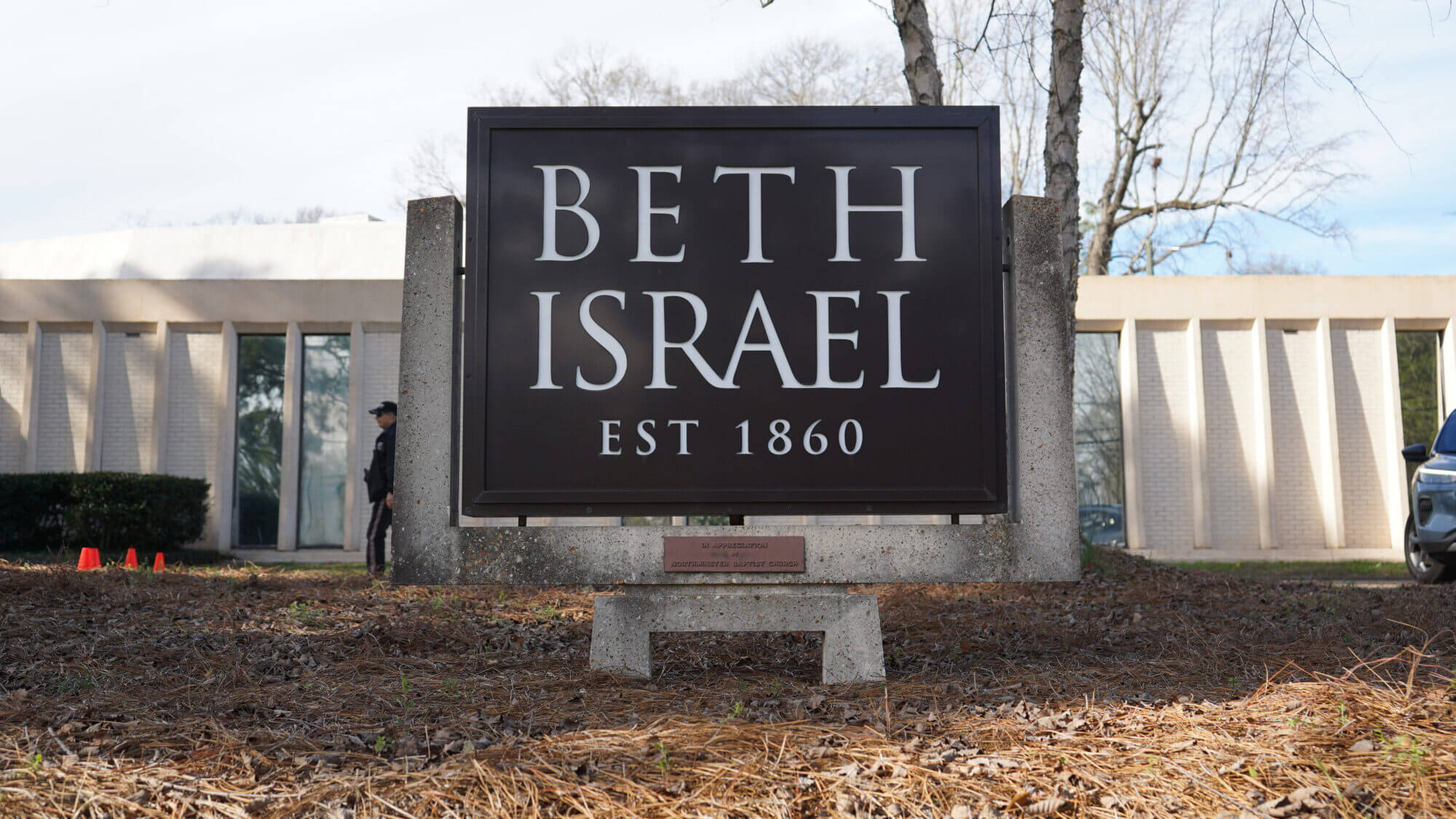
Pittman, who usually goes by his middle name, has remained in jail since his arrest hours after the fire in the predawn hours of Jan. 10. He was swiftly indicted on state and federal charges after investigators said he broke into the Beth Israel Congregation synagogue in northeast Jackson, doused the lobby in gasoline and set it on fire. Security camera footage showed a person splashing a liquid inside the building’s lobby shortly before a fire ignited.
In state court, Pittman is facing an enhanced first-degree arson charge under a Mississippi law punishing “offenses committed for discriminatory reasons.” He has not been charged with a federal hate crime. But in February, federal prosecutors obtained a superseding indictment against Pittman, accusing him of targeting the historic synagogue “because of the religious character of the property.”
In an affidavit, an FBI agent in the Jackson division wrote that Pittman laughed as he confessed to his father and referred to the congregation as the “synagogue of Satan.”
Pittman comes from an affluent suburb of Mississippi’s capital city and attended a private Catholic school, where he was a multiyear honor roll student and varsity baseball player. But his friends and family noticed a change in his behavior in the months leading up to his alleged arson attack, according to court testimony and interviews conducted by Mississippi Today.
Weeks before the fire, Pittman allegedly began making antisemitic statements and behaving in such a way that the “family pets were afraid” of him and his mother was considering “locking their bedroom doors at night,” according to testimony from an FBI agent earlier this year.
The fire reduced the historic synagogue’s library and administrative offices to charred ruins and left smoke damage throughout the building, the same one the Ku Klux Klan bombed in 1967 for its rabbi’s support of civil rights.
Dolly Parton, the country music icon whose soaring vibrato vocals, poignant songwriting and sparkling costumes defined her rise from a log cabin in the Tennessee mountains to the height of stardom and acclaim, has died. She was 80 years old.
Parton died peacefully Tuesday in Nashville, Tennessee, her publicist said in a statement.
Known for her curvy physique, massive blonde wigs and skin-tight outfits that served her self-deprecating wit, she was among the most beloved personalities in music and beyond — the rare celebrity whose appeal transcended generations, geography and politics.
She wrote hundreds of songs, including classics like “Jolene,” “Coat of Many Colors” and “I Will Always Love You,” that totaled more than 100 million worldwide sales and more than 1 billion online streams. Parton, who plucked bejeweled banjos, guitar and dulcimers with her long fingernails during performances, was a generous philanthropist and successful businesswoman whose projects included a theme park in the Smoky Mountain foothills near her birthplace.
Dolly Parton appears at Dollywood’s Season Passholder and Media Day in Pigeon Forge, Tenn., March 8, 2024. Credit: AP Photo/Amy Harris
Her career was forever influenced by her upbringing as one of 12 children born into what she called a “dirt poor” Tennessee family. She started her education nonprofit, Imagination Library, to send free books to children in Tennessee because her father, who quit school to work on the farm, struggled to learn to read.
Parton’s first musical performances were in church, where her grandfather was a preacher. By age 10, she was learning guitar and singing on local television shows. At 13, she appeared on the Grand Ole Opry in Nashville, where Johnny Cash introduced her as “a little girl here from up in East Tennessee.”
With a suitcase of songs, she followed her uncle, Bill Owens, also a songwriter, to Nashville after graduating high school in 1964. Fred Foster, who produced Roy Orbison, Willie Nelson and more, saw her potential and got her songs cut by other artists, as well as recording and releasing Parton singing her own material. By the mid-1970s, Parton was a Nashville queen.
A key collaboration with Porter Wagoner
Parton’s partnership with Porter Wagoner, a pencil-thin pompadoured star with flashy rhinestone outfits, was key to her career. She honed her acting skills on his syndicated TV show and he advocated for her to get a record deal at RCA. Their first duet, “The Last Thing On My Mind,” was released in 1967, the same year she started her own publishing company.
While their duets were often big radio hits, Parton’s solo singles didn’t chart as high at first. With Wagoner as a co-producer, she began to adjust her country warble to a more polished, pop-leaning style.
She got her first No. 1 solo single with “Joshua,” and reached the Top 5 with the ballad “Coat of Many Colors,” about how her mother sewed together scraps of clothes to make a coat Parton wore “so proudly” even as her peers mocked her for being poor. The song, with its Biblical references and ode to maternal love, was later made into a children’s book and a TV movie.
Dolly Parton appears at Dollywood’s Season Passholder and Media Day in Pigeon Forge, Tenn., March 8, 2024. Credit: AP Photo/Amy Harris
In 1973, she had the hit that made her career — “Jolene,” a country music standard with its steady, churning rhythm and Parton’s repeated delivery of the title as she pleads for the woman not to steal her man.
The song topped the country charts, crossing over to pop and later being released internationally, opening up new audiences for Parton. “Jolene” is one of her most covered compositions, including by Miley Cyrus (Parton’s goddaughter), Olivia Newton-John and The White Stripes.
She left Wagoner’s show in 1974, amid reports of squabbling between the two, although they continued to record together and Wagoner stayed her producer for years after that. But the relationship turned litigious when Wagoner sued her in 1979 for millions in management fees and royalties.
A pop crossover star
She followed “Jolene” with a huge hit in 1974, “I Will Always Love You,” an ode and farewell to Wagoner that helped her win the Country Music Association’s female vocalist of the year back-to-back in 1975 and 1976. She famously turned down Elvis Presley, who wanted to record it, because she would not share publishing rights.
Decades later, Whitney Houston’s version of “I Will Always Love You” became a smash for the soundtrack of her 1992 film “The Bodyguard,” and broke sales records. Houston won a Grammy for her performance in 1994, presented to her by Parton.
“Here You Come Again,” a pop crossover hit and one of the few she didn’t write, further established Parton as a multi-genre entertainer and brought her first Grammy Award in 1979.
“A lot of people thought I had totally lost my mind,” she told The Associated Press in 1979 of changing her singing style. “But I had no fear of change. I expected success, but I was braced for failure. I didn’t care if people thought I was wrong. In my own heart, I knew I was doing the right thing.”
Dolly Parton, left, Lily Tomlin, center, and Jan Fonda arrive for the premiere of their film “9 To 5” in New York on Dec. 14, 1980. Credit: AP Photo/Richard Drew
Parton’s other crossover hits included the title song from “9 to 5,” the 1980 comedy starring Parton, Jane Fonda and Lily Tomlin; and her duet with longtime friend Kenny Rogers, “Islands in the Stream,” written by brothers Barry, Maurice and Robin Gibb of the Bee Gees. In 1987, she collaborated with Linda Ronstadt and Emmylou Harris on the million-selling “Trio” album.
Down home charm
For millions of fans, she was simply “Dolly,” a mixture of Southern charm, humor and glamour. But she was also considered a feminist role model for holding the reins of her own career, writing her own songs, owning her content and looking after her finances in an entertainment world dominated by men.
Parton was open to making fun of herself; when she hosted “Saturday Night Live” in 1989 she told the writers that her only restrictions were she wouldn’t curse and she wouldn’t make fun of Jesus. She regularly joked about her breasts or her dumb blonde appearance, but with a wink that she was the one controlling the laughs. In the memoir “My Life So Far,” Fonda remembered Parton’s way with a wisecrack, “usually high raunch,” and a laugh that was “somewhere between a girl’s giggle, an explosive shriek, and a cascade of little bells.”
Dolly Parton reads her book “Coat of Many Colors,” at the Library of Congress in Washington on Feb. 27, 2018. Credit: AP Photo/Andrew Harnik
After her gown split down the front when she won CMA’s entertainer of the year in 1978, Parton quipped: “My Daddy said that’s what I got for putting 50 pounds of mud in a five-pound bag.”
Throughout her career, she embraced her glamorous style, often wearing custom curve-hugging rhinestone dresses and bodysuits even if they drew tsk-tsks from others in the industry. Her look was always a part of her larger musical business plan.
“I knew my songs were good even if I had been ugly as sin,” she told the AP in 2014. “So I thought, ‘Well, I would have probably chose to look this way even if I had been a waitress.’ I mean, this is my look. I mean, I like a lot of makeup. I like a lot of hair. I like flashy clothes. I like to show it off. But that’s just who I am.”
She married Carl Dean, an asphalt paving contractor, in the mid-1960s; they were together until his death in 2025 at the age of 82. Though rarely seen in public, he was an influence on her career. She told NPR that she wrote “Jolene” about a flirty bank teller who seemed to take an interest in Dean.
‘9 to 5’ to Hollywood and Broadway
In her first major film role, Parton played alongside Fonda and Tomlin as office workers who rebel against their tyrannical boss in “9 to 5.” Critic Roger Ebert called her a “natural-born movie star” and the title song earned her two Grammy Awards and a ranking of 78 on the American Film Institute’s list of top 100 movie songs. Starring roles in the “The Best Little Whorehouse In Texas” and “Steel Magnolias” followed.
“I never thought of myself as a movie star,” she told AP’s Bob Thomas in 1979. “I knew I’d be a star, but as a singer or as a writer of songs or books or poetry. I wanted to be a famous performer and wear flashy clothes, but singing in movies was not one of my ambitions. My family lived in the mountains and we didn’t see movies.”
Her love affair with TV and film continued for decades, with appearances alongside Cyrus on “Hannah Montana” and adaptions of her music for Christmas specials, films and streaming series. She also became an author, her books ranging from the memoir “Dolly” to a bestselling novel co-authored by James Patterson, “Run, Rose, Run,”
The stage adaptation “9 to 5: The Musical” debuted in 2009, and “DOLLY: A True Original Musical” had been set to open in December 2026.
United States of Dolly
Beyond her music, Parton’s most lasting legacy might be her generosity and broad appeal.
When a deadly wildfire swept through the Smokies in 2016, she held an all-star telethon and set up a foundation that sent monthly checks to residents whose homes were damaged or destroyed.
Dolly Parton poses at the Carnegie Medal of Philanthropy Ceremony in New York, on Oct. 13, 2022. Credit: AP Photo/Andres Kudacki
She opened up her Dollywood theme park in East Tennessee, a major economic driver in Appalachia that draws tourists from around the country, and established the Dollywood Foundation. She wrote books and memoirs, was inducted into the Country Music Hall of Fame and was given a lifetime achievement award by the Recording Academy. She was selected for the Jean Hersholt Humanitarian Award from the Academy of Motion Picture Arts and Sciences in 2025.
With 55 Grammy nominations and 10 wins, Parton is the third-most nominated woman in Grammy history, only behind Beyoncé and Taylor Swift.
Parton spanned social and political divides, through multiple generations of fans, urban and rural and in between. In tumultuous election years, it wasn’t uncommon to see “Dolly for President” shirts. But she was strict in not voicing her own political beliefs, often turning aside questions about presidents, candidates, policies and other controversies.
“I have too many fans on both sides of the fence. Of course, I have my opinion about everything, but I learned years ago to keep your mouth shut about things.”
When the Rock & Roll Hall of Fame Foundation sent out a ballot in 2022 with her name on it, though she said she felt she hadn’t earned it, the voters answered with a “Hello, Dolly.” Parton showed up to the induction ceremony, performed and then put out a rock album.
Mississippi Today Ideas is a platform for thoughtful Mississippians to share their ideas about our state’s past, present and future. Opinions expressed in guest essays are the author’s own and do not necessarily represent those of Mississippi Today. You can read more about the section here
The hustle and bustle of a new school year has already begun, at least in the McRae household. It’s a time filled with new teachers, new school supplies and, of course, new routines.
As Mississippi families settle into the back-to-school routines, I’d encourage you to consider adding one more: regularly setting aside money for your child’s future.
The cost of education and career training continues to climb, and too many young people are starting adulthood weighed down by debt.
According to a 2026 analysis by the Education Data Initiative, the average Mississippian with student debt owes more than $39,000. That kind of debt can follow someone for years, delaying everything from buying a home to starting a family or saving for retirement.
The state Treasurers office can provide some options.
Of course, a four-year college isn’t the only path that requires planning. Trade schools, certifications and other career training programs can come with significant costs, too.
That’s why starting early matters. Even modest contributions made consistently over time can help families prepare for those expenses and reduce how much their children may need to borrow later.The Mississippi Affordable College Savings, MACS, program is one tool families can use to get started.
A MACS account can be opened with just $25 and offers tax advantages while helping families save for a wide range of education expenses, including college and career training.We recently reduced program fees by nearly 20%, allowing families to keep more of their money invested for the future. Visit treasury.ms.gov/macs to learn more.
For families planning on a four-year degree, the Mississippi Prepaid Affordable College Tuition, MPACT, plan offers another option. MPACT allows families to lock in today’s tuition rates and prepay future college tuition for as little as $10 a day. Open enrollment begins Sept. 1. Visit treasury.ms.gov/mpact for more information.
None of us know exactly what our children will end up doing when they grow up. But whether their future includes a university, community college, trade school or career certification, we can give them more options by planning ahead.
As you settle into the back-to-school routine this year, consider making saving for your child’s future part of it. A little bit today can make a meaningful difference when that next chapter arrives.
And to all of Mississippi’s students, teachers and parents: Have a safe, successful and productive school year.
Republican David McRae is the 55th treasurer for the state of Mississippi. He is in his second term. In this role, he helps manage the state’s cash flow, oversees College and Career Savings Mississippi and has returned more than $180 million in unclaimed money to Mississippians. For more information, visit Treasury.MS.gov.
Democratic nominee for Mississippi’s U.S. House District 1 outlines why he is running against incumbent Republican Rep. Trent Kelly. Johnson, a longtime attorney, is director of the MacArthur Justice Center at the University of Mississippi where he pushed to shut down the state’s anachronistic debtor’s prisons. Johnson said his focus if elected to Congress would be on affordability, access to affordable healthcare, fighting political corruption and protecting people’s rights such as voting rights.
EDWARDS — Every now and then a freight train rumbles through, creaking and groaning on the rusted tracks that run along the edge of the largely deserted downtown. On some days, that train is just about the only thing moving.
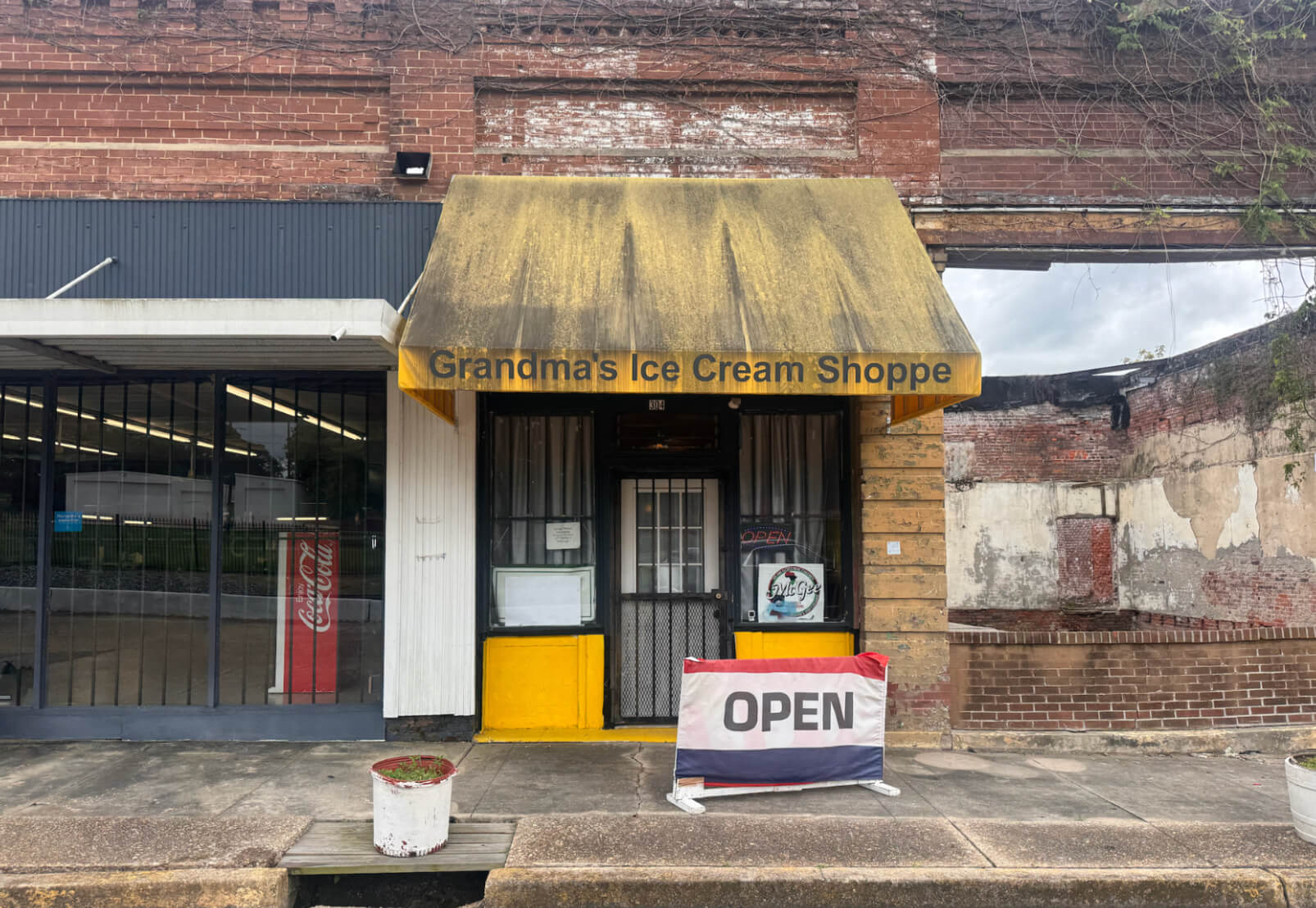
Grandma’s Ice Cream Shoppe, an ice cream parlor owned by a retired preacher and his wife, gets only one or two customers per day. There is a small barber shop, and the empty ruins of a former thrift store. The sugary, smoky red meat at Lee’s Heavenly Barbecue and the fried shrimp and catfish at the M & L Fish Hut draw some folks. But the ellipticals and treadmills are silent, as usual, at the 4-year-old Kut-N-Fit Wellness Club on Vicksburg Street.
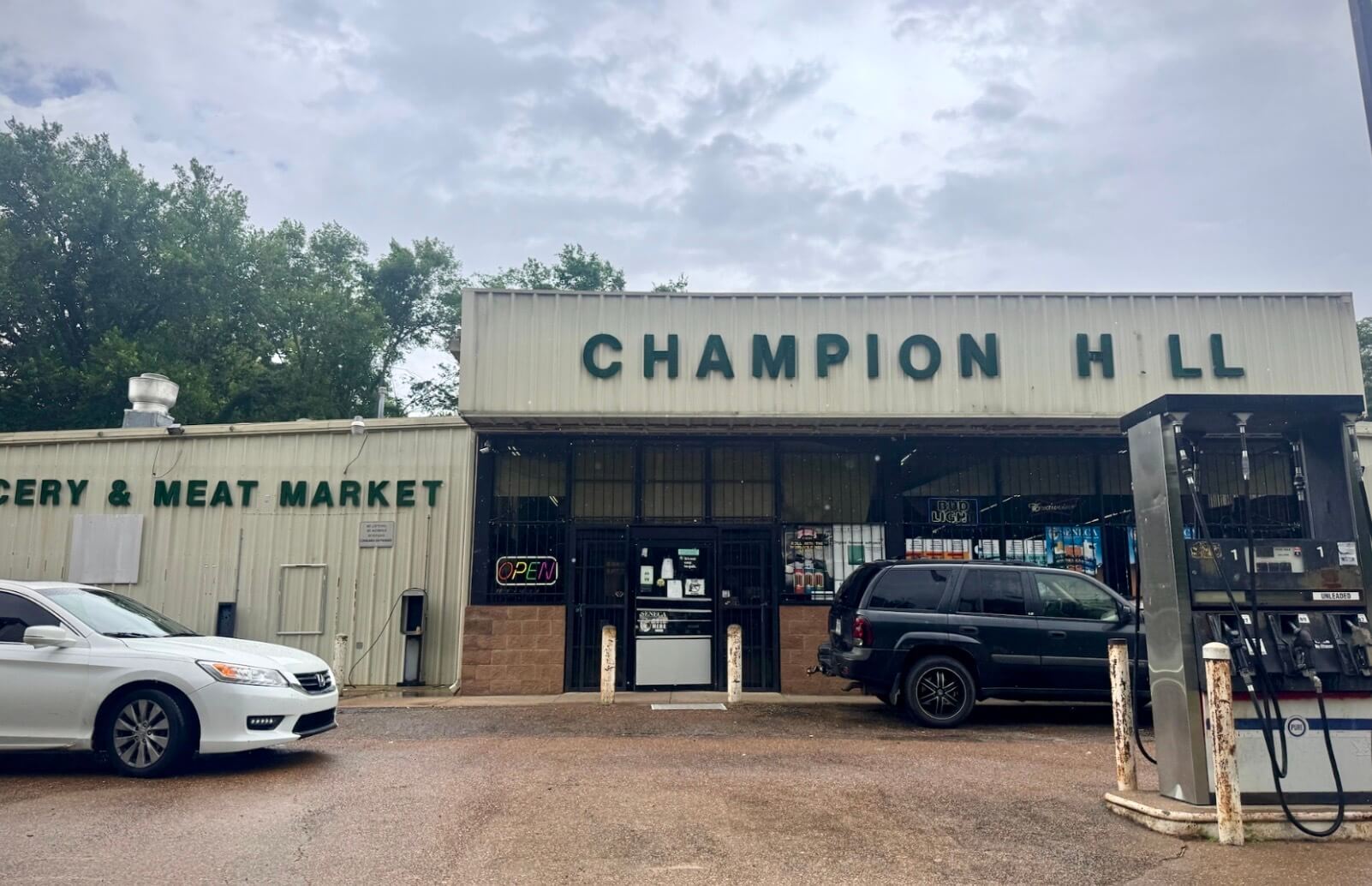
A gas station in Edwards is home to a small market that sells some basic groceries, such as sliced and canned meats, in addition to prepared fried foods. The only other store that sells groceries is a Dollar General. Credit: Shalina Chatlani/Stateline
Derrick Clark, 51, has lived in Edwards his whole life.
Clark has always struggled with his weight and he readily describes himself as obese. About two decades ago, he was diagnosed with Type 2 diabetes.
“My grandmother, my uncle, my dad are all diabetics, and I’ve had some relatives that have gotten some of their limbs cut off because of their diabetes,” Clark said. “When it’s a hereditary disease that runs in the family, it’s kind of hard.”
Last year, Clark was reelected as the at-large member of the Edwards Board of Aldermen. But the part-time job only pays about $500 a month. His family owns a small sports bar in town, but it’s only open for a few hours a day and doesn’t generate much additional income.
As is the case with many chronic diseases, the worst consequences of diabetes — such as blindness and amputations — can be prevented with routine care. Clark and many other diabetes patients in Mississippi were getting that care over the past few years through subsidized Affordable Care Act insurance plans.
But Congress allowed the so-called enhanced subsidies to expire at the end of last year. Now the number of diabetic Mississippians without insurance, and thus regular care, is once again on the rise: According to state data, enrollment in ACA plans has fallen by nearly two-thirds in just eight months. The medical and financial consequences could be dire — for individual patients like Clark and for the state.
Mississippi maladies
Designed as a temporary pandemic-era measure, the enhanced subsidies were made available by the American Rescue Plan Act in 2021 and later extended through the end of 2025 by the Inflation Reduction Act.
In 49 states (all but New Mexico), the number of people enrolled in ACA plans, also known as Obamacare, has declined since the subsidies expired and coverage became more expensive. Nationwide, participation has declined this year by nearly 3 million people, to about 19.2 million from 21.8 million in 2025, according to the Trump administration. The 2025 figure was the highest ever recorded, after six years of steady increases.
But few if any states are feeling the absence of the subsidies as acutely as Mississippi.
By many measures, Mississippi is the poorest state, with more than 14% of its families living below the federal poverty line. Its traditional Medicaid program has strict income limits, and excludes nearly all non-disabled adults, including Clark. And it is among the 10 states that have not expanded Medicaid to single adults and higher-income parents under the Affordable Care Act.
Mississippi is also one of the unhealthiest states. The federal Centers for Disease Control and Prevention has identified a “diabetes belt,” where people are most likely to have the chronic disease. It includes 644 counties across 15 states, primarily in the South; Mississippi is the only state where every county made the list.
In addition to its high diabetes rate, Mississippi has the nation’s second-highest heart disease mortality rate, and it is one of only two states, along with West Virginia, with an obesity rate above 40%.
Black people make up more than 36% of Mississippi’s population — the highest percentage of any state — and Black Americans are more likely than other racial groups to have chronic diseases, including diabetes. That’s largely because Black people are more likely to live in poverty, to have trouble accessing healthcare, and to be exposed to pollution and chronic stress.
When the subsidies significantly lowered the cost of Obamacare coverage — making it free or nearly free for some people with low incomes — Mississippi state health officials made a concerted effort to get residents to enroll. Dr. Daniel Edney, Mississippi’s state health officer, said the state launched a public information campaign to encourage people to sign up at their local health departments.
It worked. The number of Mississippians enrolled in Obamacare plans more than tripled, from fewer than 99,000 people in 2020, the year before the subsidies went into effect, to more than 338,000 at the end of 2025, according to state data.
“Our uninsured rate went down significantly, and I’m convinced it’s one of the reasons why our overall population health scoring has improved,” Edney said in an interview in his office in downtown Jackson.
In its 2025 public health report card, the Mississippi State Department of Health reported lower rates of opioid-related deaths, HIV, syphilis, congenital syphilis, teen births and accidental deaths. Health officials acknowledged that the state had made less progress on chronic conditions such as hypertension and obesity, but also noted that it went from dead last in overall national health rankings three years ago to 48th last year.
But when the subsidies expired at the end of last year, Mississippi’s Obamacare enrollment numbers plunged: Roughly 134,000 residents were still enrolled as of Aug. 21, about 40% of last year’s total. And the state projects that the number will fall to around 127,000 next year.
Many of the Mississippians who dropped their coverage have diabetes or other chronic conditions. Without insurance, they are likely to put off routine care, Edney said.
“What’s gonna happen to them? Probably present to the emergency room, eventually showing up once their vision is blurry, or they start having chest pain, or they have a sore on their foot that won’t heal,” he said. “At that point, you’re scrambling to get them placed into care.”
A gas station in Edwards is home to a small market that sells some basic groceries, such as sliced and canned meats, in addition to prepared fried foods. The only other store that sells groceries is a Dollar General. Credit: Shalina Chatlani/Stateline
The Obamacare subsidies made a huge difference for Clark, who is unmarried and does not have any children. With coverage, his insulin and medications to control his blood pressure and blood sugar cost him about $15 per month, he said. But he could no longer afford his insurance plan when the subsidies expired and his premiums went up by “hundreds of dollars.”
Without insurance, he says his medications now cost him about $200 per month — and that’s with discounts he gets from medical clinics. Sometimes, he said, family members give him insulin they don’t plan to use.
At some point, he said, he might have to choose between paying for medications and paying his other bills.
“I still have utilities and water and gas and food and still have to buy my medicine monthly out of pocket,” Clark said. “I’m just praying for a better day and trying to lose some weight so I can try to get my diabetes in control.”
Opening a gym
Like Clark, 49-year-old hair stylist and salon owner Angie Myles-Griffin grew up in Edwards, and she never really wanted to leave. But the limitations of living in a small town hit home after she gave birth to her third child and she set out to lose some of the weight she had gained: She had to drive more than an hour round trip to Jackson to find a gym and a grocery store selling healthy food.
Frustrated by the back and forth, Myles-Griffin decided to do something about it: She became a certified personal trainer and opened her own gym in Edwards, the Kut-N-Fit Wellness Club, right down the street from Lee’s Heavenly Barbecue.
“I became very passionate about health and just fitness overall,” Myles-Griffin said. “So I wanted to bring that back to my community, so people wouldn’t have that excuse of having to drive.”
Myles-Griffin said that in 2024 she partnered with the University of Mississippi Medical Center in Jackson to lead a yearlong diabetes prevention program for 20 Edwards-area women. Myles-Griffin gave participants fitness and nutrition coaching at her new gym and even brought in dieticians to show them how to prepare healthy meals. A dozen people stuck with it.
But since the medical center concluded its sponsorship, most of Myles-Griffin’s clients have melted away. Even though Kut-N-Fit is conveniently located, she said most Edwards residents just don’t have the “mindset” to work out regularly. And Edwards residents still have to drive about a half hour to get to a grocery store with a wide selection of healthy offerings, she said.
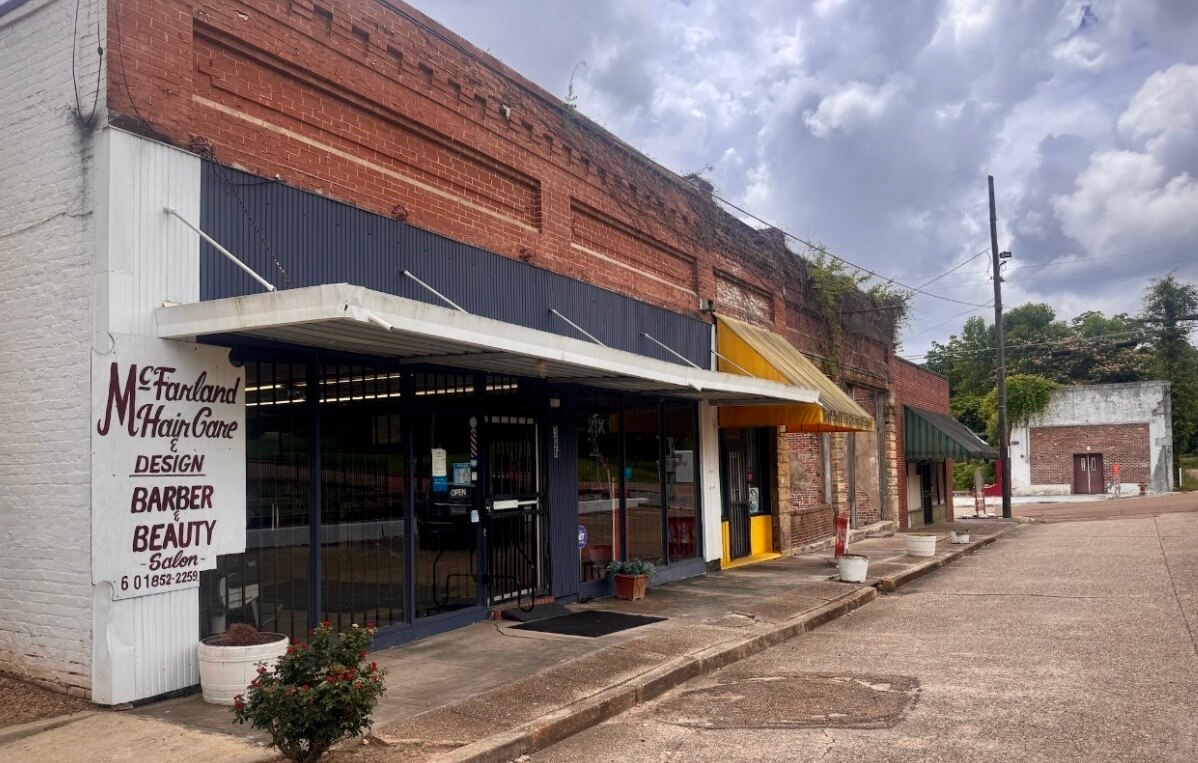
On most days, downtown Edwards is practically deserted. Credit: Shalina Chatlani/Stateline
Unfortunately, a lack of transportation is one of the many challenges that Edwards residents face.
“If you don’t have transportation, you can’t get to a job, and if you can’t get to a job, there’s no income,” Myles-Griffin said. “And so when there’s nothing going on, it’s like a lack of motivation.”
Poverty, a lack of exercise, obesity, diets high in sugar, unhealthy fats and processed ingredients — that confluence of factors exists in many Mississippi communities. It’s a recipe for diabetes, and it’s costing Mississippi billions of dollars.
Diagnosed cases of diabetes cost the state an estimated $5.1 billion annually — $3.4 billion from direct medical expenses and another $1.7 billion from lost productivity in 2022, according to the American Diabetes Association.
And when diabetics don’t get regular care, because they don’t have insurance or don’t have easy access to a doctor, the most extreme — and expensive — health outcomes become more likely. Mississippi’s lower extremity amputation rate is about twice the national rate, according to the American Heart Association.
Irena McClain, the executive director of the nonprofit Diabetes Foundation of Mississippi, said that since the subsidies expired, her organization has been receiving more calls from people asking for help. Without insurance, medical care for diabetes can cost people upward of $1,000 per month, according to a 2022 study.
“I had someone call me up last week, whose doctor wants her on an insulin pump to control her Type 1 diabetes, and she doesn’t have any insurance. She can’t get a pump unless someone donates a pump to us,” McClain said. “And there’s certainly a lot of people who need help much more than the amount that these charities have to give. I don’t know what’s going to happen.”
In Jackson, McClain said, charities, free clinics and community health centers are struggling to provide care to all the diabetes patients who have lost their Obamacare coverage.
Mississippi hospitals also are feeling the pinch, according to Richard Roberson, president and CEO of the Mississippi Hospital Association. In 2023, the most recent year for which numbers are available, Mississippi hospitals provided more than $600 million in “uncompensated care,” or care for which they received no payment from either the patient or an insurer.
“That trajectory of costs combined with the trajectory of uninsureds is just going to really exacerbate the challenges for hospitals,” Roberson said. He added that changes to hospital funding included the broad tax and spending law President Donald Trump signed last summer, the One Big Beautiful Bill Act, will increase the financial strain.
“We’re just going to start seeing that decrease in revenue, increase in cost, and at some point on the axis, they’re going to cross, and it’s going to be bad,” he said.
No help coming
Meanwhile, the cost of Obamacare coverage keeps going up. Next year, the median proposed premium increase is expected to be close to 15%, the second consecutive year of a double-digit premium hike.
In addition to the expiration of the federal subsidies, prices have increased because of other factors, including labor shortages and the rising cost of prescription drugs, driven in part by the growing demand for GLP-1 drugs such as Ozempic and Wegovy.
At least 10 states are using their own money to help people buy Obamacare health plans, partially replacing the expired subsidies. But Mississippi isn’t one of them.
A freight train rumbles through downtown Edwards, a half dozen times a day. Credit: Shalina Chatlani/Stateline
“It’s not that there’s a big money room in the basement where we can go get the money that we’re keeping from everyone,” Mississippi Republican state Rep. Lee Yancey, who serves on the House’s public health and human services committee, told Stateline. “It’s just there’s a limited amount, and there’s only so much you can do.”
Yancey expressed sympathy for Mississippians who can’t afford Obamacare plans without the subsidies. However, he added, he doesn’t believe that “just because a problem exists the government is the one that has to fix it.”
Without the Obamacare plan he used to have, Clark said he has little choice but to drive to Jackson every month to get discounted medications at the Jackson-Hinds Comprehensive Health Center.
“Sometimes you got to do what you got to do, and with this high price of gas and food … it’s just rough,” Clark said as he stood outside the clinic.
“If you go in there, you see it’s not about a race thing,” he said. “It’s just poor people — the working poor.”
This story is part of “Uninsured in America,” a project led by Public Health Watch, a nonprofit newsroom based in Texas. The project focuses on life in America’s health-coverage gaps and the impact of potential Medicaid cuts and other changes.
BRANDON — Before her kids’ first day of second grade in the mid-1980s, Janie McLaurin sat them down in the living room to tell them about hers. She recalled what her history teacher called her: “negress.” She recounted her classmates’ welcome on the morning bus: slaps and shoves.
She shared these memories, not because they’d face the same obstacles, but to impress upon them what she fought against to ensure they could attend Rankin County schools. McLaurin said it was why she joined a suit in 1967 to ensure Black students and teachers were treated fairly.
The lawsuit led to federal oversight and called for regular check ups by a judge. The desegregation order lasted from 1970 until last month, when U.S. District Judge Kristi Johnson ended court oversight when she found school leaders were fair enough to Black students and staff.
McLaurin, along with six Black Rankin County schools alumni who spoke to Mississippi Today, believe the decision was premature.
“Rankin County schools just took a step backwards,” she said.
Johnson acknowledged that racial disparities exist in the school district’s hiring, enrollment, student discipline and course selection, but found those issues result from socioeconomics, where people chose to live and other race-neutral factors.
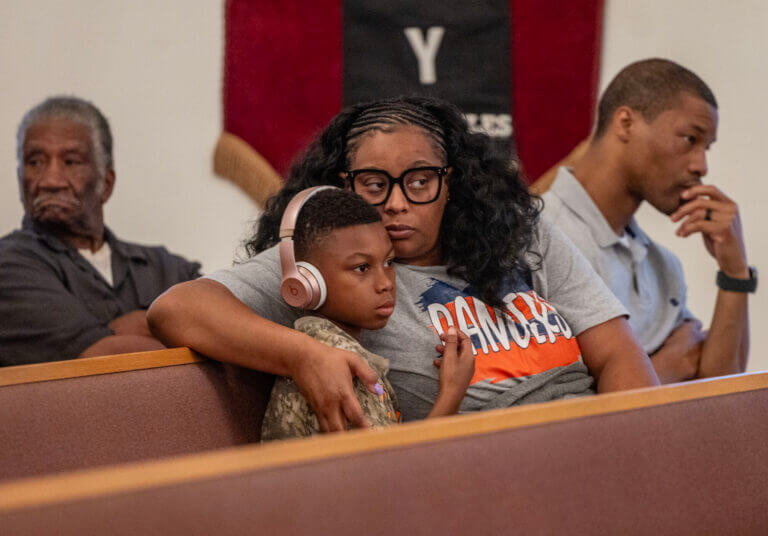
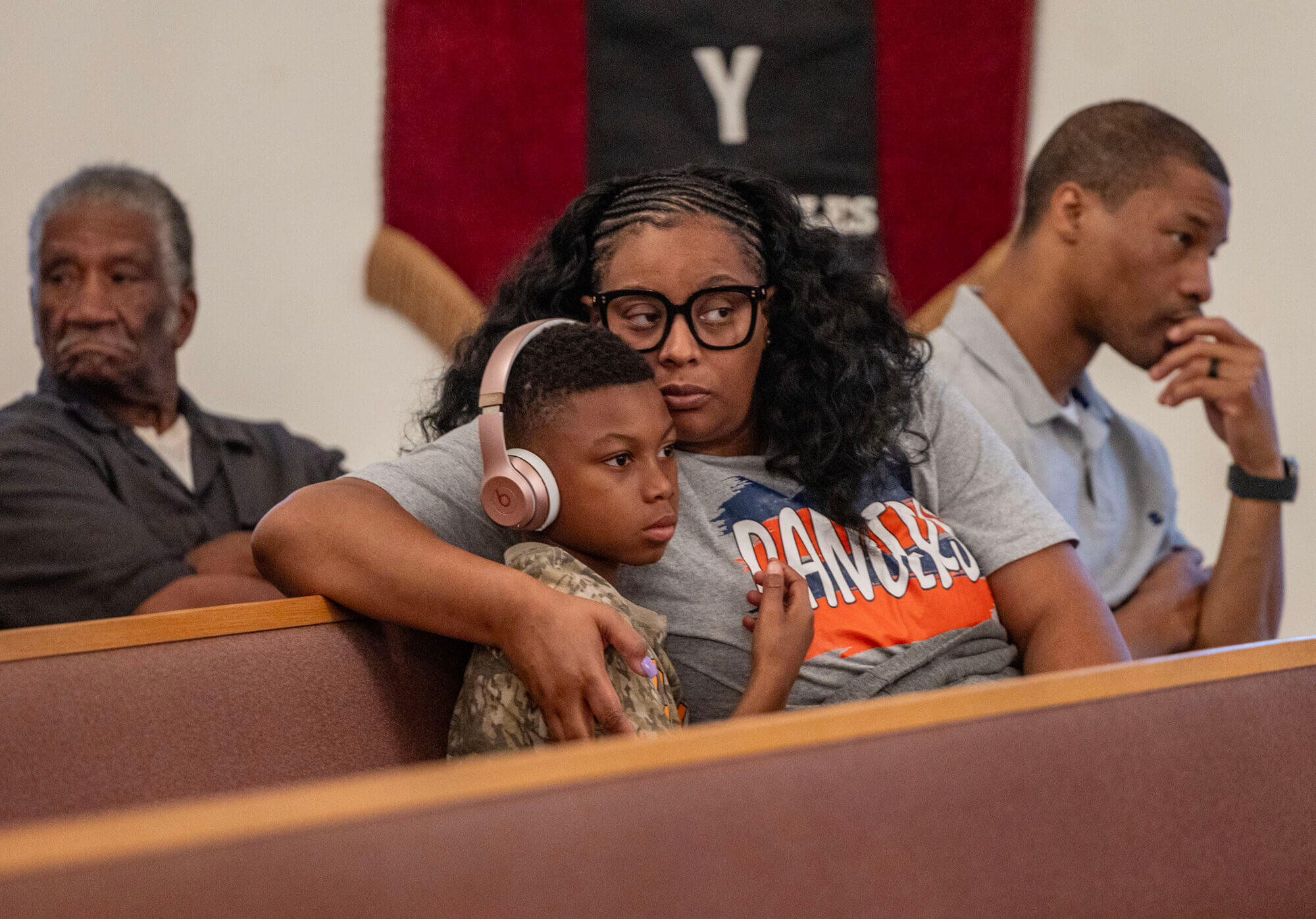
Community members attend a Rankin County NAACP meeting focused on education issues at Mt. Sinai Missionary Baptist Church in Richland on Thursday, Aug. 20, 2026. Credit: Eric Shelton/Mississippi Today
The district isn’t held to a standard of perfect racial balance, Johnson said. The legal standard is whether the district policy is a holdover of segregation. And other school districts that are less racially integrated have been released from desegregation orders, she found.
In September, attorney Katrina Feldkamp, counsel with the Legal Defense Fund, argued against letting the district out from its consent decree. Black Rankin County schools students and staff still encounter discriminatory school policies, particularly related to discipline, she argued. She also contended that district leaders have exacerbated resegregation through intradistrict transfers and staff assignments.
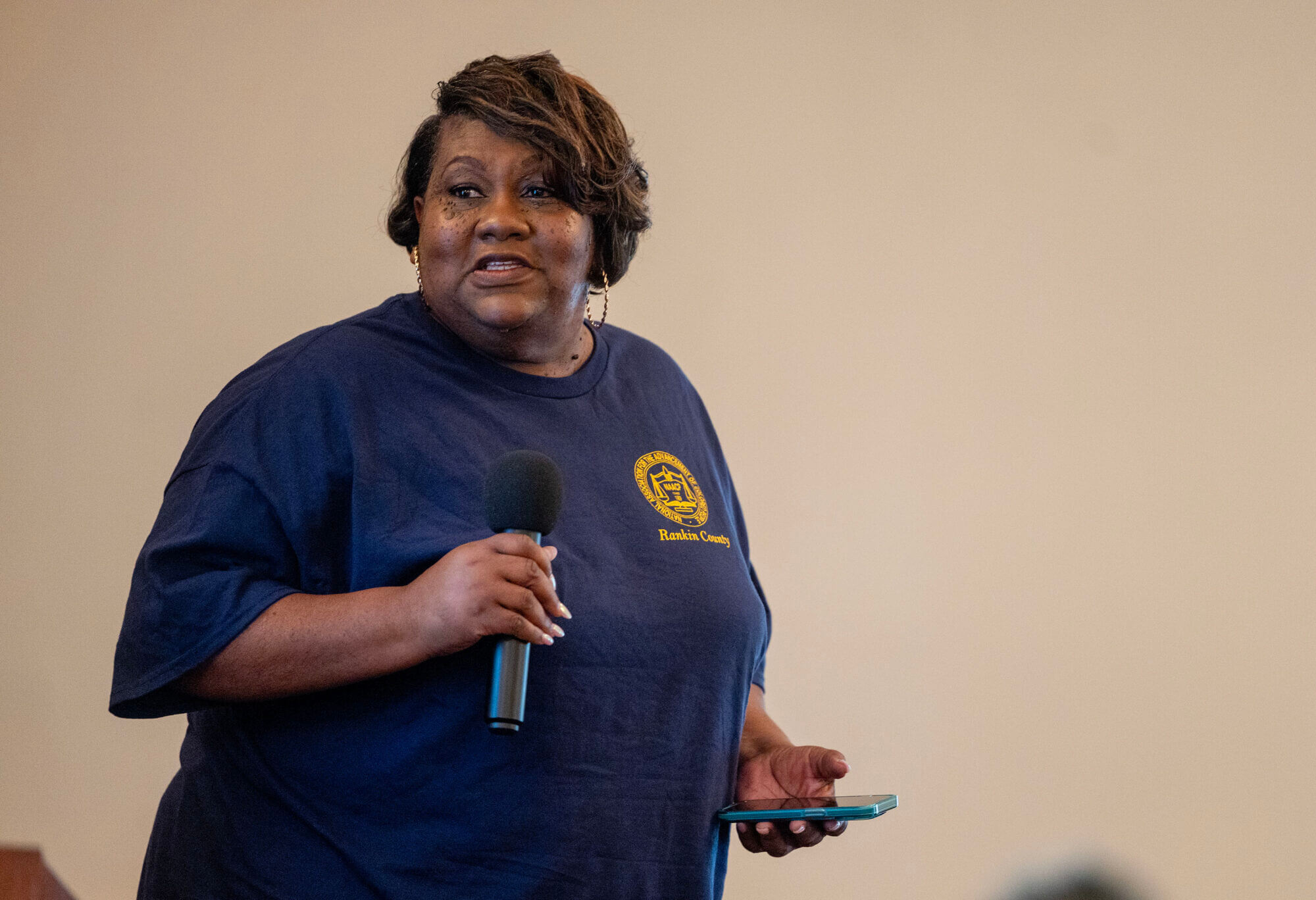
“My sisters and I were some of the trailblazers in desegregating Rankin County schools. So what I’ve seen is almost post-traumatic shock,” Angela English, branch president of the Rankin County NAACP, said of the decision to clear the district of discriminatory practices. “It’s very personal for me. And I don’t intend to see any child have to suffer wrongdoing.”
Are Rankin County schools resegregating?
Rankin County schools have resegregated since court ordered integration in 1970, and they’re not alone. More U.S. schools are either majority white or majority minority than in the past decade.
In Rankin County, white families are moving their students from schools where Black enrollment has increased, such as Brandon and Flowood. During the September hearing to determine if Rankin County should be free from its consent decree, the plaintiff’s attorneys held up Pisgah-area schools as a prime example of such resegregation.
In the 2022-23 school year, 24 white students transferred to Pisgah High School. Three of the students came from Brandon and Flowood, where Black enrollment has increased, according to an analysis by education equity researcher Erica Frankenberg, who was an expert witness for the plaintiffs.
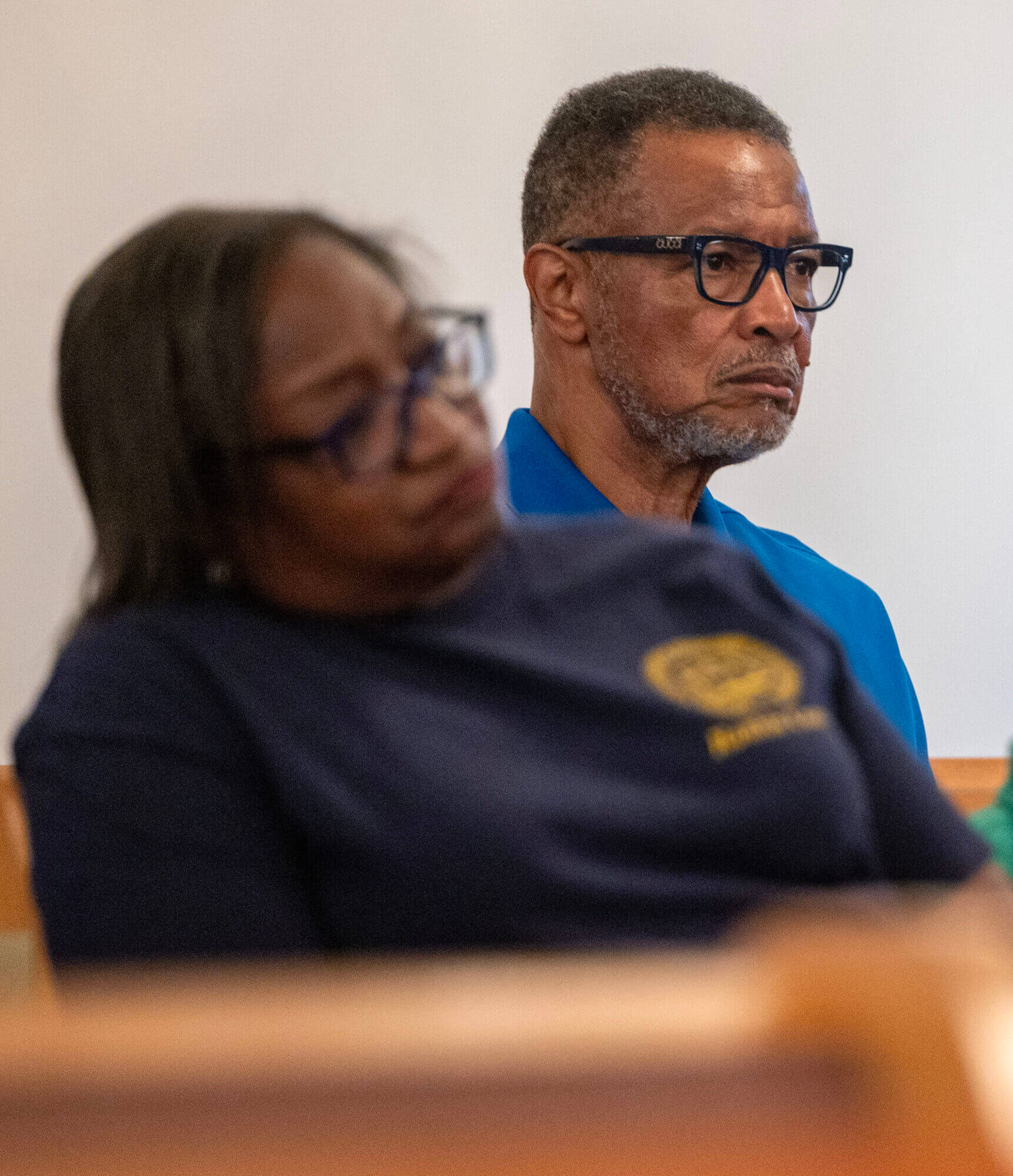
Sen. Sollie B. Norwood attends a Rankin County NAACP meeting focused on education issues at Mt. Sinai Missionary Baptist Church in Richland on Thursday, Aug. 20, 2026. Credit: Eric Shelton/Mississippi Today
Johnson also flagged Pisgah schools for being disproportionately whiter than the district.
Complaints from within Pisgah schools weren’t limited to resegregation or hiring.
Ma’Kesha Adams, a former Rankin County School District employee and daughter of Kenneth Adams, lead plaintiff of the lawsuit, said she was put on an improvement plan after a white student accused her of racism. Despite being the highest rated English teacher in the school, she said, her principal denied her request to see the complaint or other documentation. The move was disappointing because her tenure at the school was mostly positive, she said. She feels conflicted because her tenure as assistant principal at Brandon Middle School was positive, too.
Because of her past experiences, and those of her parents and grandparents, Adams said she believes continued oversight is important. She got into education because she believed in its power to provide opportunity to students regardless of background.
“Now that the case goes away, how likely are we to stay on top of ensuring that things like what I just mentioned at Pisgah get rectified,” she said. “You have to commit to fostering diversity for the benefit of students and staff.”
‘It was a very traumatic experience’
Jeuan Brown, who attended McLaurin Elementary in the early 2000s, said he felt the brunt of policies that attorneys say disproportionately impacted Black students.
“I would get punished and I didn’t do it, and nobody believed me,” he recalled of his time at McLaurin Elementary.
Black students, who comprised 25.7% of the enrollment in 2023-24 in Rankin County schools, were suspended twice as much as white students.
Brown said school leadership ignored racist bullying when he was a student. He remembers when white classmates who taunted him with racial epithets faced no consequences. Instead, he said, school leaders transferred him to the alternative school, without due process, for defending himself in a fight.
“Since you’re in alternative school, you’re stigmatized because everybody thinks you’re a bad child,” he said.
“It was a very traumatic experience,” Brown said of his time in Rankin County schools. “The depression that I have today as a young adult stems directly from those events that occurred starting in elementary school.”
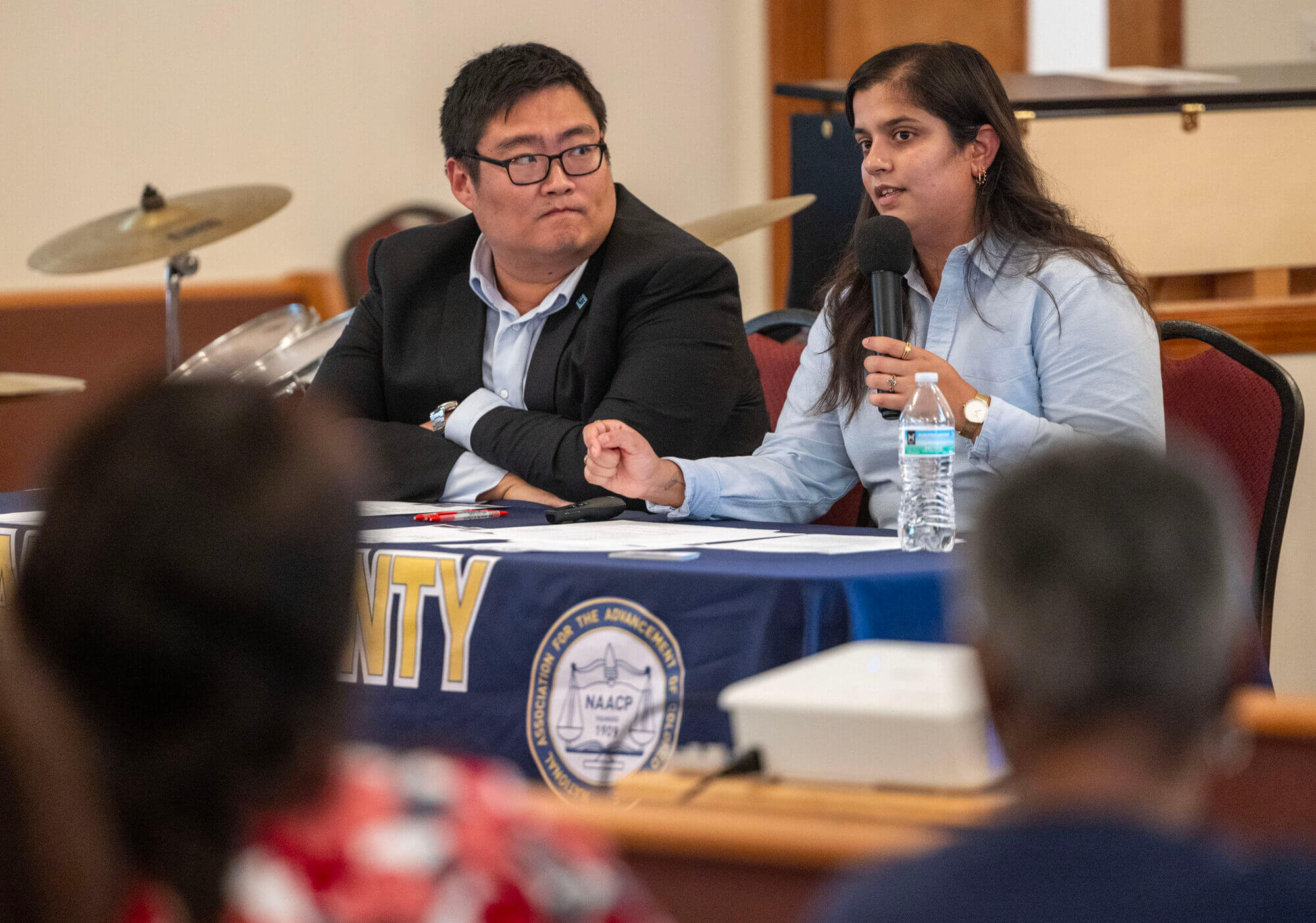
NAACP Legal Defense and Educational Fund’s Katrina Feldkamp, assistant counsel, speaks as Ray Li, policy counsel, listens during a Rankin County NAACP community meeting focused on education issues at Mt. Sinai Missionary Baptist Church in Richland on Thursday, Aug. 20, 2026. Credit: Eric Shelton/Mississippi Today
Expert testimony at the September hearing backs up Brown’s observations on discriminatory discipline practices. District data showed “a clear pattern of racial bias,” according to behavioral health researcher Jamilia Blake, who analyzed district discipline data in preparation for the hearing. She found Black students were most likely to be suspended multiple times, and school policies did not reduce that occurrence.
However, Johnson, the judge, was persuaded by district leadership testimony that referred to new behavior intervention plans despite the absence of proof of their implementation or of their success in reducing punishments.
Adams, who oversaw discipline at Brandon Middle School when she was the assistant principal, said she was surprised to see racial disparities in data for other district schools.
“We always made an effort to ensure that what we were doing was consistent and fair,” she recalled of her time in Brandon. “As an administrator, you have to make a conscious effort.”
Johnson also found that Black students didn’t face discrimination when participating in extracurriculars. But some Rankin County alumni and parents disagree. At least 10% of student clubs and activities lacked any Black participation, Adams’ family attorneys noted at the September hearing.
For Tagira Bush, being Black on the cheer squad at Northwest Rankin High School was isolating, she testified at the September hearing.
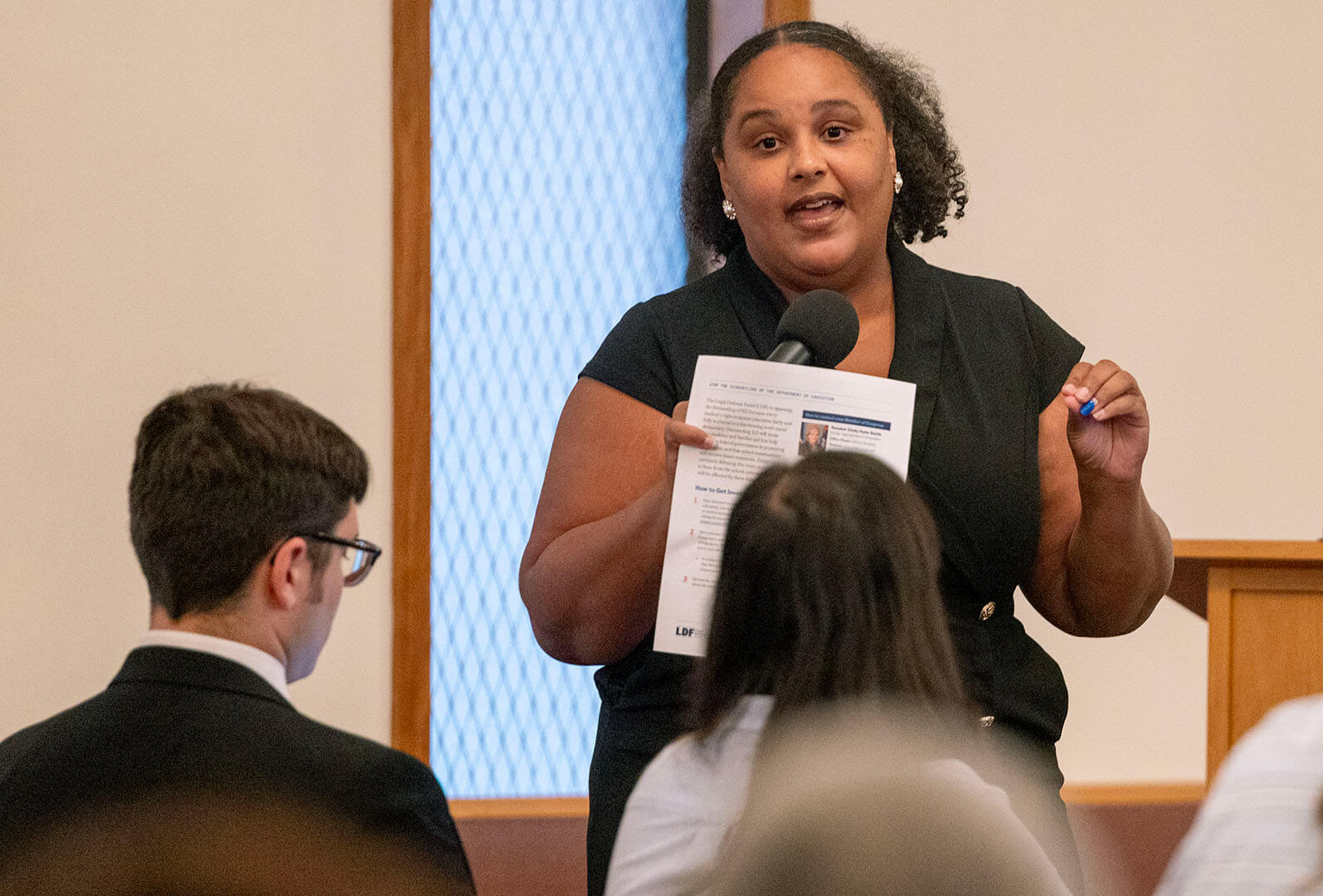
NAACP Legal Defense and Educational Fund’s Hamida Labi, senior policy counsel, speaks during a Rankin County NAACP community meeting focused on education issues at Mt. Sinai Missionary Baptist Church in Richland on Thursday, Aug. 20, 2026. Credit: Eric Shelton/Mississippi Today
The squad’s participation fees were too steep for her mother, and district staff would not grant a waiver. Bush said she felt they didn’t care. She later joined a cheer group outside of school and no longer felt the same distress, she told the court at the September hearing.
“I don’t want any other Black children to have to go through what I had to go through,” she said in September. “I was so discouraged that I just wanted to give up on everything.”
District leadership alluded to implementing “supportive measures” to make some clubs more inclusive. The court found that Bush’s testimony and related data weren’t evidence of systemic harm on account of race.
The steps forward
Black parents in the county schools said they worry now that the court isn’t watching out for their children.
Deidra Moore said she was concerned by the way a district expert witness in the September desegregation hearing explained away high suspension rates for Black students as a socioeconomic fact. She learned new details about the case at a forum hosted Thursday by Mt. Sinai MB Church in Richland. She worries her son could be denied the high quality education she envisioned for him.
“Some of their rationale doesn’t make sense,” Moore said of the expert witness’s testimony.
Rankin County NAACP president Angela English speaks during a community meeting focused on education issues at Mt. Sinai Missionary Baptist Church in Richland on Thursday, Aug. 20, 2026. Credit: Eric Shelton/Mississippi Today
Moore was also alarmed to hear from organizers that Black students are underrepresented in the district’s gifted and talented program.
Moore and her husband moved to Richland for a small-town feel with bigger-city comforts and because they heard Rankin County had top-rated schools.
She said she hopes district leaders continue to see her son the way she does: capable of success and of greatness.
“We don’t have any major issues right now,” Moore told Mississippi Today. “It’s just scary what the possibility can be now for all kids.”
English, the Rankin County NAACP leader, recalled the discrimination she faced integrating Florence Elementary in the late 1960s. Students put frogs and snakes under her desk to spook her. White boys tried to run her off the road in their pickup trucks while she walked to school.
Those childhood experiences at the tail end of the Jim Crow Era motivate her to fight for other marginalized groups. Her organization has fielded several complaints in the last year about Hispanic children experiencing discrimination because of their parents’ immigration status.
Although court oversight of Rankin County schools has ended, English plans to continue asking for district data and records as well as monitoring attendance-zone redistricting.
“And we’re not going to let up,” she said. “We don’t intend for our children or anybody else’s children or grandchildren to have to suffer the way we did. We paid the price so that they wouldn’t have to.”