Lost+Found Coffee Company @ 248 South Green Street, Tupelo,MS. inside Relics in Downtown Tupelo. Open Monday through Saturday from 10:00am till 6:00pm.
With most any restaurant or coffee house, it’s a balance between atmosphere, menu, and know how. For a coffee shop, Lost & Found has it going on!
You could spend the better part of a day just strolling through both floors of the antique building looking at all the treasures. When your ready for a coffee break, the knowledgeable baristas can help you choose the perfect pick me up!
They have everything from a classic cup of joe to the creamiest creation you could imagine! From pour overs to cold brews. From lattes, mochas, to cappuccino’s, Lost & Found Coffee Company has got ya covered!
So the next time you want to hunt for lost treasures, or find the perfect cup of coffee, Lost & Found Coffee Company has got ya covered! See y’all there!
Visit my blog for events, contests, new restaurants, LOCAL Favorites, and their FAMOUS foods!
Help us grow our community @ Eating Out With Jeff Jones * visit our page * Click community * Invite friends * Like and share this post
Message me If you would like to have your restaurant, menu, and favorite foods featured in my blog. Over 18,000 local Foodies would love to see what you have to offer!
Do you thrive on the unexpected? Are you waiting for the next fire to crop up?
Have you ever noticed that you can plan something so intricately and you are still going to catch the glitches when life throws you a curve ball? It is one of the beauties of life that we can never prepare for. The unexpected. The only difference is our response to the unexpected. Do we have a knee jerk reaction that finds us swerving to gain back control of our life? Or do we instead just go with the flow and decide to embrace the scenic route life decided to take us on? Our response to life can cause us more stress or we can just enjoy it for what it is in that moment of time. I used to thrive on the unexpected. It was part of my career for many years. The never knowing what “fire” was going to sprout up that day and how I was going to need to put it out. Even this week as we launched our newest book in my publishing company. I thought I had it all planned out only to run into major “hiccups” within 72 hours of the launch. I could either stress out or take it in stride.
Slow and Steady
As my dad retired I watched him take a different approach to life than I had ever seen him take before. I mean, all you have to do is climb up in the cab of his king ranch Ford pick-up and see he is a changed man. He drives slower than anyone should even be allowed to drive out on the roads these days. He knows how to drive, so don’t go yelling at him next time you are stuck behind him. Trust me, my mom does enough yelling for all of us at him about that! He just takes life these days. His sentiments are that he lived in the fast lane his whole life. Rushing to be on time to work, rushing to come home to his family, the constant busy we get entangled with as adults…now, he doesn’t have to be busy and he is going to enjoy that. Truth is, I can’t even be mad at him for that. Now that I am an adult out here rushing from one thing to the next, I totally could use some driving twenty miles per hour in my life some days. Took me getting to nearly forty to even be able to say that though.
The lesson in his wisdom can be heard by all. Some things we lose it over won’t even amount to anything five years from now, yet we gave them so much energy in the moment. All the things we think are so important that we must do and do now. Most will not really matter years from now, yet we poured our soul into them. What would change if we took the time to just enjoy life? To just flow with things as they happened? When hit with something we didn’t expect, we embraced it instead of fighting it? What would happen? I dare say we might have more peace? I probably would be a lot calmer. I probably wouldn’t lose my temper near as much. I probably wouldn’t have anxiety or stress on the daily. I would probably take time to enjoy life more. I certainly wouldn’t yell at the slow driver in front of me.
What about you? Next time you get behind someone driving slowly…take back the name calling and curse words. Maybe take back all of the assumptions that they don’t know how to drive. Maybe use it as a reminder to take a moment, roll down your window, soak in the sunshine. I can promise you that wherever the heck you are going, you will still get there. Maybe that person figured out life and you can use their wisdom too. If they are driving a blue king ranch Ford truck, I can assure you that he is just enjoying his day and he would want you to enjoy yours too. Matter of fact, I wish I had listened to his wisdom a lot more in my earlier days instead of waiting until now.
Here is a plain, searchable text version (most other versions we found were Images or PDF files) of City Of Tupelo Executive Order 20-018. Effective Monday June 29th at 6:00 PM
The following Local Executive Order further amends and supplements all previous Local Executive Orders and its Emergency Proclamation and Resolution adopted by the City of Tupelo, Mississippi, pertaining to COVID-19. All provisions of previous local orders and proclamations shall remain in full force and effect.
LOCAL EXECUTIVE ORDER 20-018
The White House and CDC guidelines state the criteria for reopening up America should be based on data driven conditions within each region or state before proceeding to the next phased opening. Data should be based on symptoms, cases, and hospitals. Based on cases alone, there must be a downward trajectory of documented cases within a 14-day period or a downward trajectory of positive tests as a percent of total tests within a 14-day period. There has been no such downward trajectory in the documented cases in Lee County since May 18, 2020.
Hospital numbers are not always readily available to policymakers; however, from information that has been maintained and communicated to the City of Tupelo, the Northeast Mississippi Medical Center is near or at their capacity for treating COVID-19 inpatients over the past two weeks without reopening additional areas for treating COVID-19 patients. The City of Tupelo is experiencing an increase in the number of cases of COVID-19. The case count 45 days prior to the date of this executive order was 77 cases. That number increased within 15 days to 107, and today, the number is 429 cases. The City of Tupelo is experiencing increases of 11.7 cases a day. This is not in conformity with the guidelines provided of a downward trajectory of positive tests. By any metric available, the City of Tupelo may not continue to the next phase of reopening.
Governor Tate Reeves in his Executive Order No. 1492(1)(i)(1) authorizes the City of Tupelo to implement more restrictive measures than currently in place for other Mississippians to facilitate preventative measures against COVID-19 thereby creating the downward trajectory necessary for reopening.
That the Tupelo Economic Recovery Task Force and North Mississippi Medical Center have formally requested that the City of Tupelo adopt a face covering policy.
In an effort to support the Northeast Mississippi Health System in their response to COVID-19 and to strive to keep the City of Tupelo’s economy remaining open for business, effective at 6:00 a.m. on Monday, June 29, 2020, all persons who are present within the jurisdiction of the City of Tupelo shall wear a clean face covering any time they are, or will be, in contact with other people in indoor public or business spaces where it is not possible to maintain social distance. While wearing the face covering, it is essential to still maintain social distance being the best defense against the spread of COVID-19. The intent of this executive order is to encourage voluntary compliance with the requirements established herein by the businesses and persons within the jurisdiction of the City of Tupelo.
It is recommended that all indoor public or business spaces require persons to wear a face covering for entry. Upon entry, social distancing and activities shall follow guidelines of the City of Tupelo and the Governor’s executive orders pertaining to particular businesses and business activity.
Persons shall properly wear face coverings ensuring the face covering covers the mouth and nose,
1. Signage should be posted by entrances to businesses stating the face covering requirement for entry. (Available for download at www.tupeloms.gov).
2. A patron located inside an indoor public or business space without a face covering will be asked to leave by the business owners if the patron is unwilling to come into compliance with wearing a face covering
3. Face coverings are not required for:
a. People whose religious beliefs prevent them from wearing a face covering. b. Those who cannot wear a face covering due to a medical or behavioral condition. c. Restaurant patrons while dining. d. Private, individual offices or offices with fewer than ten (10) employees. e. Other settings where it is not practical or feasible to wear a face covering, including when obtaining or rendering goods or services, such as receipt of dental services or swimming. f. Banks, gyms, or spaces with physical barrier partitions which prohibit contact between the customer(s) and employee. g. Small offices where the public does not interact with the employer. h. Children under twelve (12). i. That upon the formulation of an articulable safety plan which meets the goals of this
Executive Order businesses may seek an exemption by email at covid@tupeloms.gov
FACE COVERINGS DO NOT HAVE TO BE MEDICAL MASKS OR N95 MASKS. A BANDANA, SCARF, T–SHIRT, HOME–MADE MASKS, ETC. MAY BE USED. THEY MUST PROPERLY COVER BOTH A PERSON‘S MOUTH AND NOSE.
Those businesses that are subject to regulatory oversight of a separate state or federal agency shall follow the guidelines of said agency or regulating body if there is a conflict with this Executive Order.
Additional information can be found at www.tupeloms.gov COVID-19 information landing page.
Pursuant to Miss. Code Anno. 833-15-17(d)(1972 as amended), this Local Executive Order shall remain in full effect under these terms until reviewed, approved or disapproved at the first regular meeting following such Local Executive Order or at a special meeting legally called for such a review.
The City of Tupelo reserves its authority to respond to local conditions as necessary to protect the health, safety, and welfare of its citizens.
Honeyboy and Boots are a husband and wife, guitar and cello, duo with a unique style that is all their own. Their sound embodies Americana, traditional folk, alt country, and blues with harmonies and a hint of classical notes.
Drew Blackwell, a true Southerner raised in the heart of the black prairie in Mississippi. First picked up the guitar at fourteen, he was greatly influenced by his Uncle Doug who taught him old country standards and folk classics. Later on in high school, he was mentored and inspired to write (and feel) the blues by Alabama blues artist Willie King. (Willie King is credited for bringing together the band The Old Memphis Kings.)
Drew has placed 3rd in the 2019 Mississippi Songwriter of the Year contest with his song “Waiting on A Friend” and made it to the semi finalist round on the 2019 International Songwriting Competition with his song “Accidental Hipster.”
Honeyboy (Drew) can also be found belting out those blues notes as the lead vocalist for the Old Memphis Kings and begins everyday with a hot cup of black coffee!
Courtney Blackwell (Kinzer) grew up in Washington State and comes from a talented musical family. She began playing cello at the age of three taking lessons from the cello bass professor Bill Wharton at the University of Idaho. Her mother was most influential in her progression of technique, tone quality, and ear training. Since traveling around much of the South, she has enjoyed focusing on the variety of ways the cello is used in ensembles. When she plays, you will feel those groovy bass lines making way to soaring leads create an emotional and magical connection between you and her music.
Courtney enjoys working in the studio, collaborating with artists and continuing to challenge the way cello is expressed.
They have opened for such acts as Verlon Thompson, The Josh Abbott Band, Cary Hudson (of Blue Mountain), and Rising Appalachia.
Honeyboy And Boots have performed at a variety of venues and festivals throughout the southeast, including the 2015 Pilgrimage Fest in Franklin, TN; Musicians Corner in Nashville; the Mississippi Songwriters Festival (2015-2018); and the Black Warrior Songwriting Fest in Tuscaloosa, AL (2018-2019). They also came in 2nd place at the 2015 Gulf Coast Songwriters Shootout in Orange Beach, FL.
They have two albums, Mississippi Duo and Waiting On a Song, which are available on their website, iTunes, Amazon, and CD Baby.
The duo also just released their fourth recording: a seven-song EP called Picture On The Wall, which was recorded with Anthony Crawford (Williesugar Capps, Sugarcane Jane, Neil Young). It is now available on Spotify, Itunes, Google Music, and CD Baby.
Who or what would you say has been the greatest influence on your music?
My Uncle Doug, because he began to teach me guitar and introduced me to a lot of great older country music.
Favorite song you’ve composed or performed and why?
“We Played On” because it’s about our family reunions, where we would sit around and play guitar and share songs.
If you could meet any artist, living or dead, which would you choose and why?
Probably Willie Nelson. He’s my all time favorite.
Most embarrassing thing ever to happen at a gig?
A guy fell on top of me while I was performing. I was sitting down. He busted a big hole in my guitar.
What was the most significant thing to happen to you in the course of your music?
Getting to perform at Musicians Corner in downtown Nashville. Probably the biggest crowd we’ve ever been in front of.
If music were not part of your life, what else would you prefer to be doing?
I don’t know, maybe fishing or golf.
Is there another band or artist(s) you’d like to recommend to our readers who you feel deserves attention?
Our friends, Sugarcane Jane. They are a husband/wife duo from the Gulf Shores area. Great people and great artist.
Audio articles are automated for accessibility. Humans wrote and edited the story; however, this audio has not been reviewed for accuracy and may contain errors. Read more about how we use AI to increase access to our reporting.
Jackson’s water and sewer systems would remain outside city officials’ control under a proposal by a federally appointed manager that would establish an independent, customer-governed authority to oversee the troubled utilities.
The 36-page transition plan JXN Water released Thursday blamed Jackson leaders for “decades of failure and the ultimate collapse of the water system.”
The manager, Ted Henifin, was especially blunt: “At bottom, there is no case to be made to return governance to the City in the foreseeable future.”
Henifin’s proposal would create a separate governing entity from the Metro Jackson Water Authority state lawmakers established earlier this year. A federal judge has partially blocked the state-created authority amid a legal challenge from Jackson officials over who should control the utilities once federal oversight ends.
During his State of the City address earlier this week, Jackson Mayor John Horhn acknowledged the ongoing strife.
“Our relationship with JXN Water has been tested. We are now having serious conversations about what comes next when the current arrangement ends,” he said.
“Let me be clear: Jackson owns these water assets. Jackson carries the debt. And the people of Jackson have a legitimate interest in the future of their water system.”
Henifin, who is expected to step down by July 2028, would be replaced by a court-appointed chief executive to lead the new authority – which could be in place as soon as next year.
The proposed authority, which would need court approval, would assume responsibility for the utilities while remaining under federal oversight. That oversight could end by December 2029.
In 2022, U.S. District Judge Henry Wingate placed Jackson’s struggling water system under Henifin’s control following a crisis that left much of the city without reliable running water. The following year, he placed Jackson’s sewer system under Henifin’s control, also.
Under Henifin’s plan, a federal judge would appoint the initial members of the authority’s governing board, with future members elected by ratepayers.
While Henifin considered privatizing the water and sewer systems, he concluded that doing so could prioritize profits over much-needed long-term investments.
Earlier this year, Henifin floated the idea of selling the city’s water and sewer system to an independent authority. The proceeds, he said, could help the city retire roughly $121 million in utility debt, potentially reducing the need for future rate increases.
The idea drew opposition from City Council members, some of whom argued that Jackson should not be forced to surrender ownership of its infrastructure.
Henifin’s transition plan outlines several possible scenarios for governing Jackson’s water and sewer systems.
His recommendation to establish an independent authority, he said in the report, would make it easier to get financing for infrastructure improvements and protect the system from political influence.
That influence is a key reason for his rejection of the legislative remedy adopted earlier this year. The Metro Jackson Water Authority would have board members appointed by the governor, lieutenant governor and the mayors of Byram, Ridgeland and Jackson. Jackson’s mayor would also serve as a non-voting ex-officio member.
Audio articles are automated for accessibility. Humans wrote and edited the story; however, this audio has not been reviewed for accuracy and may contain errors. Read more about how we use AI to increase access to our reporting.
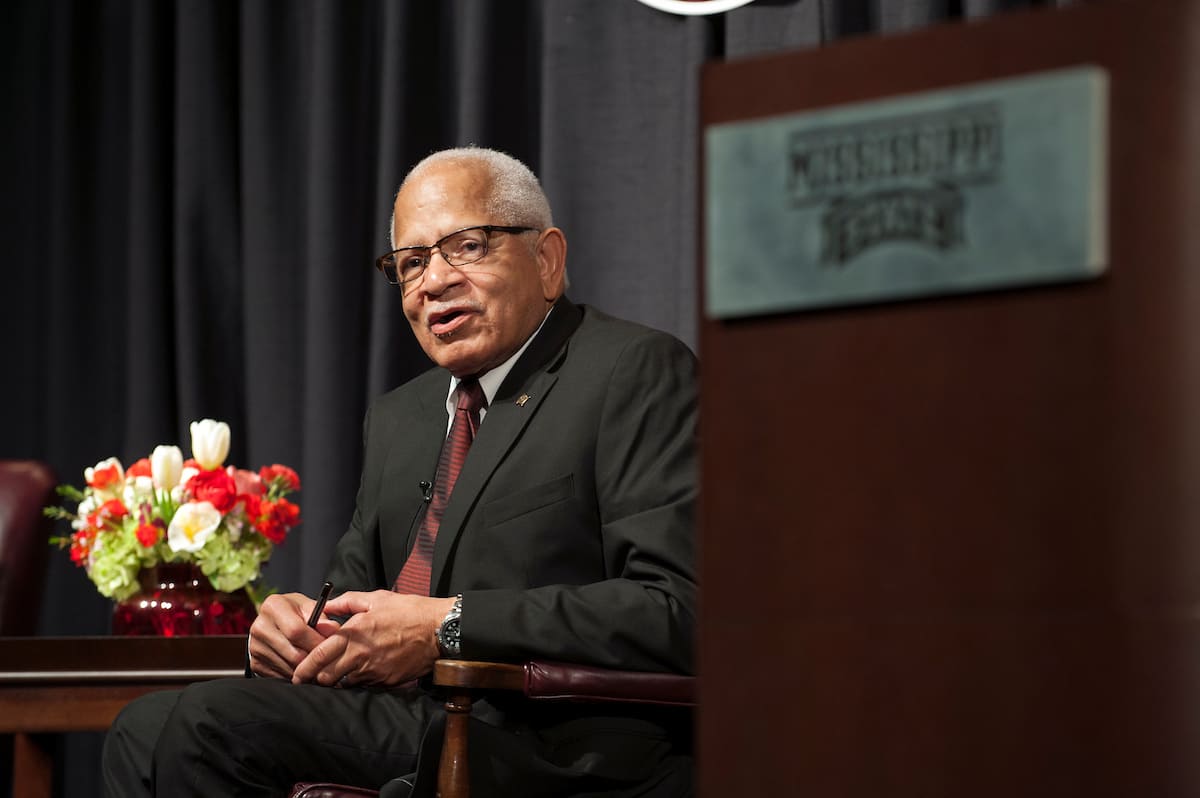
Dr. Richard E. Holmes, the first Black student to enroll at Mississippi State University, died Friday. He was 82.
Holmes enrolled at the previously segregated university in Starkville on July 19, 1965, three years after James Meredith integrated the University of Mississippi amid violent opposition.
MSU president Mark Keenum remembered Holmes as a man of courage, vision and patience who left a lasting impact on the university.
“Dr. Holmes cast a long, productive and impactful shadow over this institution, a shadow that also leaned forward,” Keenum said in a statement. “I will miss his company and his counsel.”
Holmes, a Starkville native, earned a liberal arts degree from MSU in 1969 and a master’s degree in microbiology in 1973. He earned his medical degree from Michigan State University in 1977 and later worked as an emergency room physician in Birmingham, Alabama.
Holmes returned to Mississippi and joined MSU’s Longest Student Health Center in 2003, where he served as a staff physician.
The university named its cultural diversity center in his honor in 1991 and recognized him in 2006 as its first Black National Alumnus of the Year. Holmes and his wife, Judie, also established an endowed scholarship supporting minority students.
Mississippi State’s first African American student, Dr. Richard E. Holmes, died Oct. 16, 2026 at age 82. In August, MSU held a dedication and ribbon-cutting ceremony for the Dr. Richard E. Holmes Plaza. The monument marks Holmes’ significant contributions during his time as a student, staff member and alumnus. Credit: Grace Cockrell/Mississippi State University
Most recently, on Aug. 21, MSU dedicated the Dr. Richard E. Holmes Plaza in recognition of his contributions to the university.
For generations of Black alumni, Holmes’ legacy extended beyond the university honors he received.
Edward Sanders, co-founder of Mississippi State University Black Alumni Weekend, recalled bringing Holmes and Meredith together during the event’s inaugural gala in 2016. Hearing the two men reflect on their experiences integrating Mississippi’s universities left a lasting impression, he said.
“Both were full of wisdom and advice and it was one of the few times we got to see them interact together,” Sanders, a 2006 MSU graduate, said. “His passing will leave a huge void, but there are others from his time and era at Mississippi State that will continue to hold a torch.”
Judy Alsobrooks Meredith, James Meredith’s wife and herself a 2007 MSU graduate, said Holmes’ courage opened doors for generations of Black students.
“He did it,” Alsobrooks Meredith said. “And it allowed me to do it. For that, I’m grateful for him and his legacy.”
Camille Scales Young, who became the MSU National Alumni Association’s first Black president in 2012, said Holmes’ legacy also inspired her own leadership.
Alumni named a tailgating tent “Marvelously Maroon 1965” to commemorate Holmes’ historic enrollment. When she told Holmes about the tribute, Young recalled, he was honored and pleased.
“All graduates have a responsibility of carrying on his legacy and dedication to the school he loved so much,” Scales Young said.
Audio articles are automated for accessibility. Humans wrote and edited the story; however, this audio has not been reviewed for accuracy and may contain errors. Read more about how we use AI to increase access to our reporting.
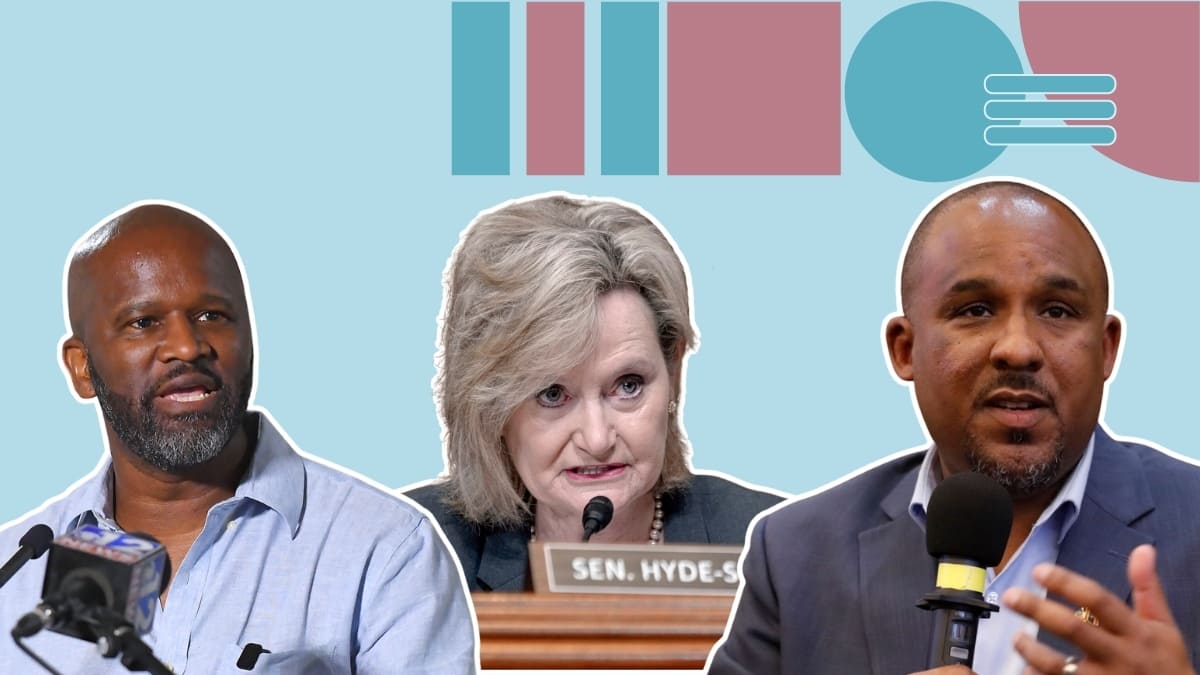
Scott Colom, the Democratic nominee for U.S. Senate, raised almost twice as much money as his Republican opponent over the last three months, according to federal campaign finance reports.
But Republican Sen. Cindy Hyde-Smith still far outpaces him in cash on hand. Federal Election Commission reports show that Colom raised $1.3 million and has $991,802 in cash on hand. Hyde-Smith raised $642,988 last reporting cycle and has $2.4 million on hand.
“We are on track to win because Mississippians are paying attention, and they’re tired of a senator who works for the special interests instead of them,” Colom said in a news release.
As national Democratic figures, including Sen. Raphael Warnock of Georgia, visit Mississippi to campaign with Colom, the Democratic nominee hopes the national attention will energize support in the Nov. 3 election and flip Mississippi’s Senate seat, long thought to be a safe Republican seat.
Hyde-Smith has used the influx of out-of-state Democrats to tie Colom to the national Democratic Party to label him as out-of-touch with Mississippi’s conservative voters.
Nathan Calvert, Hyde-Smith’s communications director, said in a statement that the Hyde-Smith campaign is not surprised “DC extremists are pouring money into Scott Colom’s campaign.”
“We planned for Colom to have plenty of resources,” Calvert said. “We are executing our own campaign plan with that in mind. We have a strong grassroots network statewide, and we believe we will once again win a majority of votes on November 3.”
Colom and Hyde-Smith are competing in the general election on Nov. 3. Independent candidate Ty Pinkins is also on the ballot. He reported raising $6,269 last cycle with $4,862 in cash on hand.
Here are the latest campaign finance reports from Mississippi’s congressional candidates:
Audio articles are automated for accessibility. Humans wrote and edited the story; however, this audio has not been reviewed for accuracy and may contain errors. Read more about how we use AI to increase access to our reporting.
Mississippi Today Ideas is a platform for thoughtful ideas to be shared about our state’s past, present and future. Opinions expressed in guest essays are the author’s own and do not necessarily represent those of Mississippi Today. You canread more about the section here.
At first it might appear that modern-day Mississippi has nothing in common with the Czechoslovak Socialist Republic of 1952. Red-state free-market conservatism versus a dictatorship of the proletariat? Tate Reeves versus Stalinist fellow-travelers? But metaphor and human sociopolitical behavior being what they are, there’s a connection. Let me explain.
In February of 1948, the Czechoslovakian Communist Party seized power in a coup-d’etat. On Feb. 21, the party chairman, Klement Gottwald, addressed a celebratory crowd in Prague’s Old-Town Square. To his right stood another high-ranking Communist official, Vladimír Clementis. It was bitterly cold and Clementis thoughtfully placed his fur hat on comrade Gottwald’s bare head. Photographs of the occasion were distributed by the state, with the dour Communist power couple gazing out on the citizens and bright future of the Czechoslovak Socialist Republic.
Gottwald became Prime Minister, while Clementis was appointed minister of foreign affairs. But authoritarian power dynamics being what they are, Clementis’ position and gracious gesture toward Gottwald did not guarantee his safety. (Are you listening, Marco Rubio?)
In 1952 Clementis was arrested and charged with being a “bourgeois nationalist,” which in Stalin’s world was usually fatal. During the requisite show trial, Clementis confessed to his “crimes” and was later hanged. Because Clementis had become a persona non grata, the state propaganda apparatus removed his face from the 1948 photograph with Gottwald, shifting most of Clementis’ head to hidden behind a microphone. The only identifiable part of Clementis that remained was his fur hat, still perched atop Gottwald’s head.
On the left, the original photograph from Feb. 21, 1948. Klement Gottwald is on the right, while Vladimír Clementis is to the left, partially obscured by the microphone. In the retouched photograph on the right, Clementis’ head is hidden by the microphone, while his fur hat remains atop Gottwald’s head.
The Czech novelist Milan Kundera describes this scenario in the opening of “The Book of Laughter and Forgetting,” before a protagonist observes that the “struggle of man against power is the struggle of memory against forgetting.” For Kundera, Clementis’ fur hat was both a symbol and photographic relic of how Czechoslovakia’s authoritarian regime distorted history.
In the Czechoslovak Socialist Republic, history in the form of Vladimír Clementis was inconvenient and he was eliminated from the 1948 photograph, less his fur hat. Of course, Clementis’ disappearance is just one example of a broader antagonistic response to history by ideologues and authoritarians. History makes them uncomfortable, sad, angry and embarrassed because it argues against entrenched narratives, precious origin myths and stories about perceived victimhood.
Easier, then, for those in power to reprise their own versions of the opening scene from “The Book of Laughter and Forgetting,” symbolic fur hat of forgetting and all. But it is dangerous to ignore history, because doing so disregards a fundamental cause-effect truth described by the German writer Bernhard Schlink: “The tectonic layers of our lives (in other words, history) rest so tightly one on top of the other that we always come up against earlier events in later ones, not as a matter that has been fully formed and pushed aside, but absolutely present and alive.”
“Absolutely present and alive”: The past lives on, despite our attempts to deny it— as in Mississippi, where the forces of forgetting that animated authoritarians in the Czechoslovak Socialist Republic are alive and well. Here, many of those who hold political and economic power insist on wearing magical hats of historical amnesia, substituting an antebellum “plantation owner’s” straw hat for Clementis’ Commie fur hat.
Kundera described the state-sponsored historical amnesia of Stalinist Europe as “organized forgetting.” But the phenomenon also occurs in Mississippi, where it works to misinterpret or ignore the state’s racial history.
In Mississippi, organized forgetting results from an interaction between attitudes embedded in the state’s cultural DNA and government policy. Here, organized forgetting means repeatedly vandalizing the plaque memorializing Emmett Till’s death, and flying “Stars and Bars” battle flags.
It means celebrating Robert E. Lee’s Birthday on the same day as Martin Luther King’s Birthday, along with state holidays honoring Jefferson Davis and Confederate Memorial Day. It means electing a governor who annually proclaims Confederate Heritage Month (ignoring the slavery part), while arguing that “There is not systemic racism in America.” It means electing a United States senator who joked about a “public hanging” in a state where roughly 580 lynchings, primarily of Black people, occurred between 1882 and 1968. It means a legislature that in 2025 passed a ban on teaching “divisive concepts” about race and prohibited DEI programs in public education. It means continuing policies that perpetuate the state’s poverty rate, which is the highest in the United States. It means a new, highly regressive tax structure that will heighten income inequality and disproportionately affect Black people.
“Back to the Future,” circa 1890, when the president of Mississippi’s constitutional convention, S. S. Calhoon, stated that the constitution was being rewritten to “… exclude the Negro. Nothing short of this will do.” Now, Tate Reeves and others in the GOP explain that one goal of redistricting is to eliminate Congressman Bennie Thompson’s district, with Thompson being the only Black member of Congress from the state. Reeves has argued that the Callais decision “is a win for our Constitution and a tremendous win for our republic.”
“To secure a lie,” writes Lewis Hyde, “surround it with a moat of forgetfulness.”
Of course, organized forgetting is present throughout our country, where the “Book of Forgetting” (minus the laughter) manifests itself in many of the Trump Administration’s actions: establishing the 1776 Commission as a response to the New York Times’ 1619 Project on the effects of slavery; eliminating funding for schools that teach “divisive, race-centered ideology” or “white privilege,” and attacking DEI programs. Among the institutions and organizations targeted are the National Museum of African American History and Culture, the American Women’s History Museum, the National Park Service and the Smithsonian American Art Museum. The Trump administration attacks historical memory that it deems “divisive” or “revisionist” because that history makes it uncomfortable and conflicts with stories about when and for whom America was “great.”
The problem with forgetting history is that although doing so might support entrenched political and economic power, it perverts our understanding of both the past and present, and distorts our imagined futures. In Mississippi, as elsewhere, forgetting often represents an active refusal to know, which as the philosopher Karl Popper wrote, issues “from cowardice, pride or laziness of mind.” For Popper, “ignorance has an ethical dimension, and knowing is a moral obligation for human beings.”
Actively embracing a past that never existed inhibits adaptation to the world created by our history. As the historian Timothy Snyder observes, “to abandon the search for understanding (is to) abandon history.” And to abandon history is to abandon hope of healing and positive change. Instead, we remain “victims of our own incomprehension,” bound to repeat past mistakes and make new and equally harmful ones.
A flawed aspect of human nature is a deep-seated resistance to understanding the past, in all its uncomfortable complexity. So, although one quote widely but wrongly attributed to William Faulkner is apparently apocryphal, it remains devastatingly accurate, whether we’re talking about the United States, Communist Czechoslovakia or anywhere else on this earth: “To understand the world, you must first understand a place like Mississippi.”
And here, the hats of forgetting are everywhere: thousands of them, worn by politicians and the economic elite, worn by people who should know better, worn by those willing to follow them into darkness.
Christopher Norment holds a PhD in Systematics and Ecology from the University of Kansas and is an emeritus professor of environmental science and ecology at the State University of New York–Brockport. During his career he published over 50 peer-reviewed scientific papers and three science-related books of creative nonfiction, and received awards from the State University of New York for teaching and scholarship. He now lives in Jackson.
Audio articles are automated for accessibility. Humans wrote and edited the story; however, this audio has not been reviewed for accuracy and may contain errors. Read more about how we use AI to increase access to our reporting.
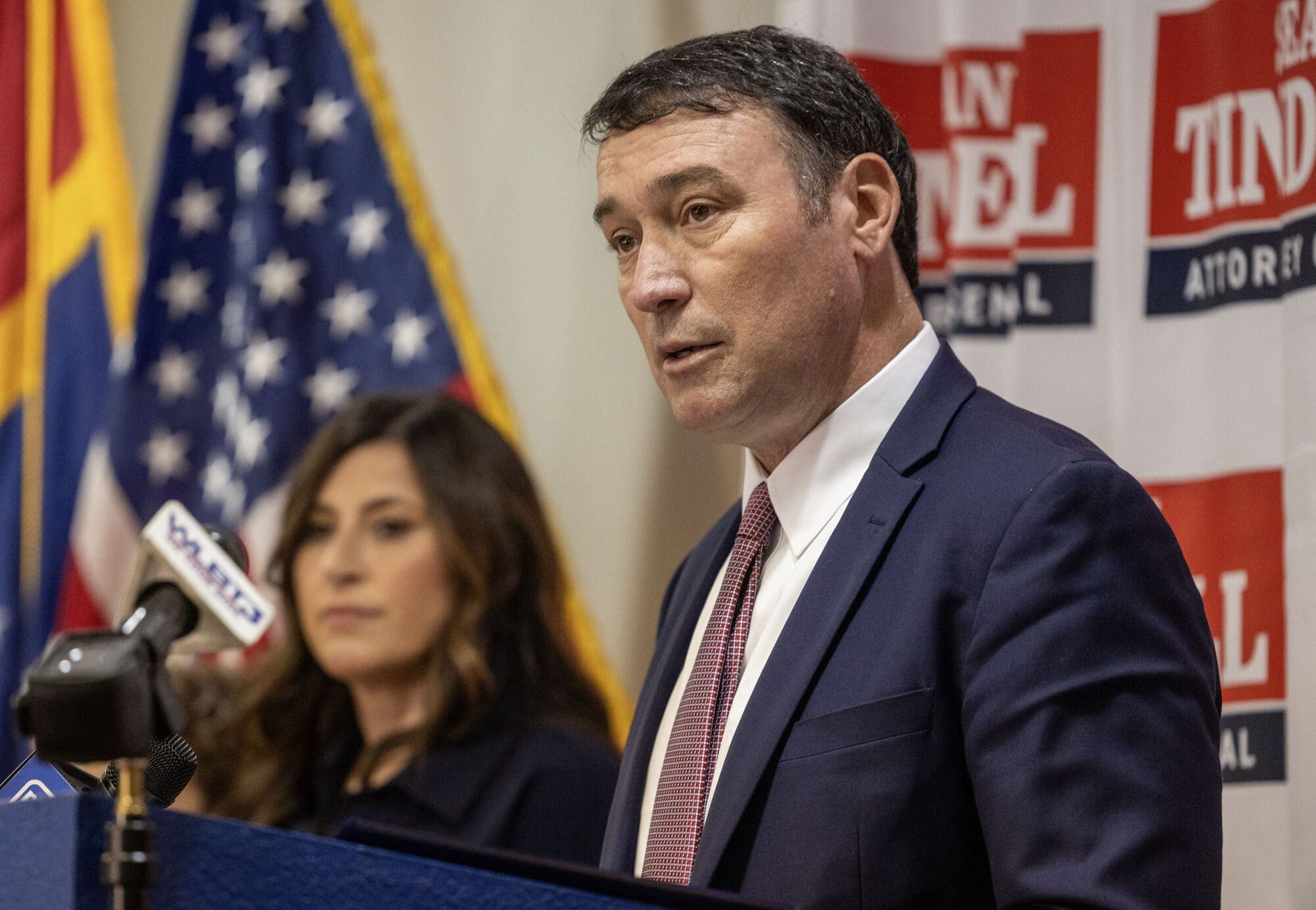
Sean Tindell will step down next month after serving six years as Mississippi’s public safety commissioner and will be replaced by Capitol Police Chief Bo Luckey, Gov. Tate Reeves announced on Friday.
Tindell, a Republican, is running for attorney general, and he confirmed with Mississippi Today that he is resigning to focus on his campaign. In a statement, Tindell said he is proud of his tenure at the Department of Public Safety and praised Reeves’ appointment of Luckey.
“Chief Luckey has led Capitol Police to a level that has exceeded everyone’s expectations, and I’m confident he will continue that success as the next Commissioner of Public Safety,” Tindell said. “I’m proud of what we’ve accomplished together and look forward to the opportunity to serve the people of Mississippi in other capacities in the future.”
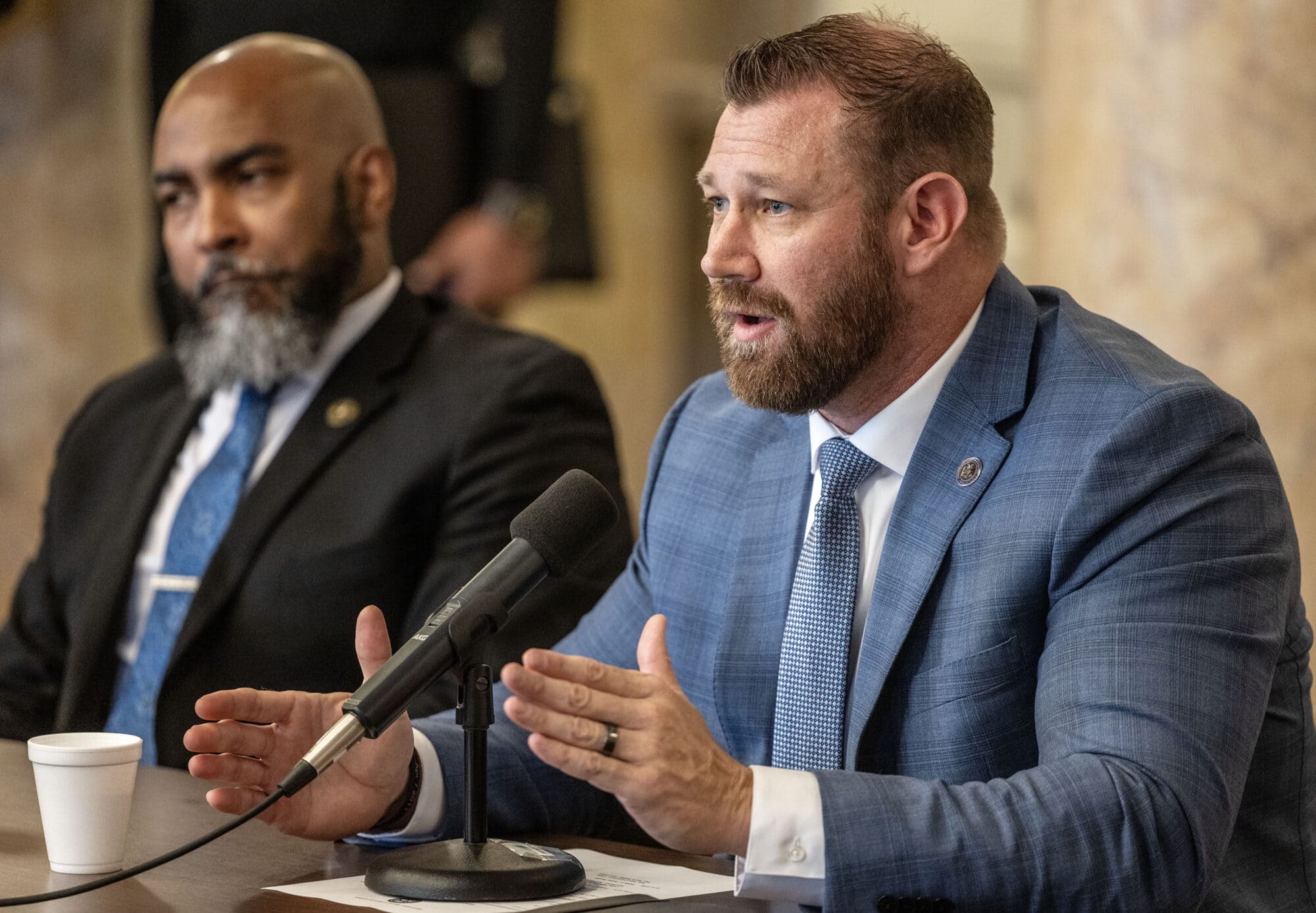
Hinds County Sheriff Tyree Jones, left, listens as Capitol Police Chief Bo Luckey speaks during the Capital City Revitalization Committee meeting at the Mississippi Capitol in Jackson, Miss., on Wednesday, Aug. 27, 2025. Credit: Eric Shelton/Mississippi Today
Tindell has led DPS since Reeves nominated him to the post in 2020. Tindell previously served as a judge on the Mississippi Court of Appeals for three years and represented the Gulfport area in the state Senate for five years.
Tindell will remain at DPS until Nov. 30 to assist with the transition, Reeves said.
Luckey has served as chief of Capitol Police, a state-run unit that patrols parts of Jackson, since Reeves appointed him in May 2022. During that time, the Republican-controlled Legislature expanded the department’s jurisdiction, giving it more terrain to patrol in Jackson amid concerns over crime.
Capitol Police is a division of the Department of Public Safety.
Before his time as Capitol Police chief, Luckey was an investigator in the Mississippi Attorney General’s Office. He has also worked for the Brandon Police Department, Rankin County Sheriff’s Department, U.S. Department of Homeland Security Investigations and the Drug Enforcement Administration.
“I am deeply honored and humbled to accept Governor Reeves’ appointment as Commissioner of the Mississippi Department of Public Safety,” Luckey said in a statement. “I am grateful for his trust and the opportunity to continue serving the people of Mississippi.”
Reeves said Luckey is ready to lead DPS.
“His work has made our capital city and state safer,” Reeves said. “He has years of law enforcement experience and is the right person to lead the Mississippi Department of Public Safety. I’d like to thank Sean for admirably serving our state and wish him well in the next chapter of his career.”
Audio articles are automated for accessibility. Humans wrote and edited the story; however, this audio has not been reviewed for accuracy and may contain errors. Read more about how we use AI to increase access to our reporting.
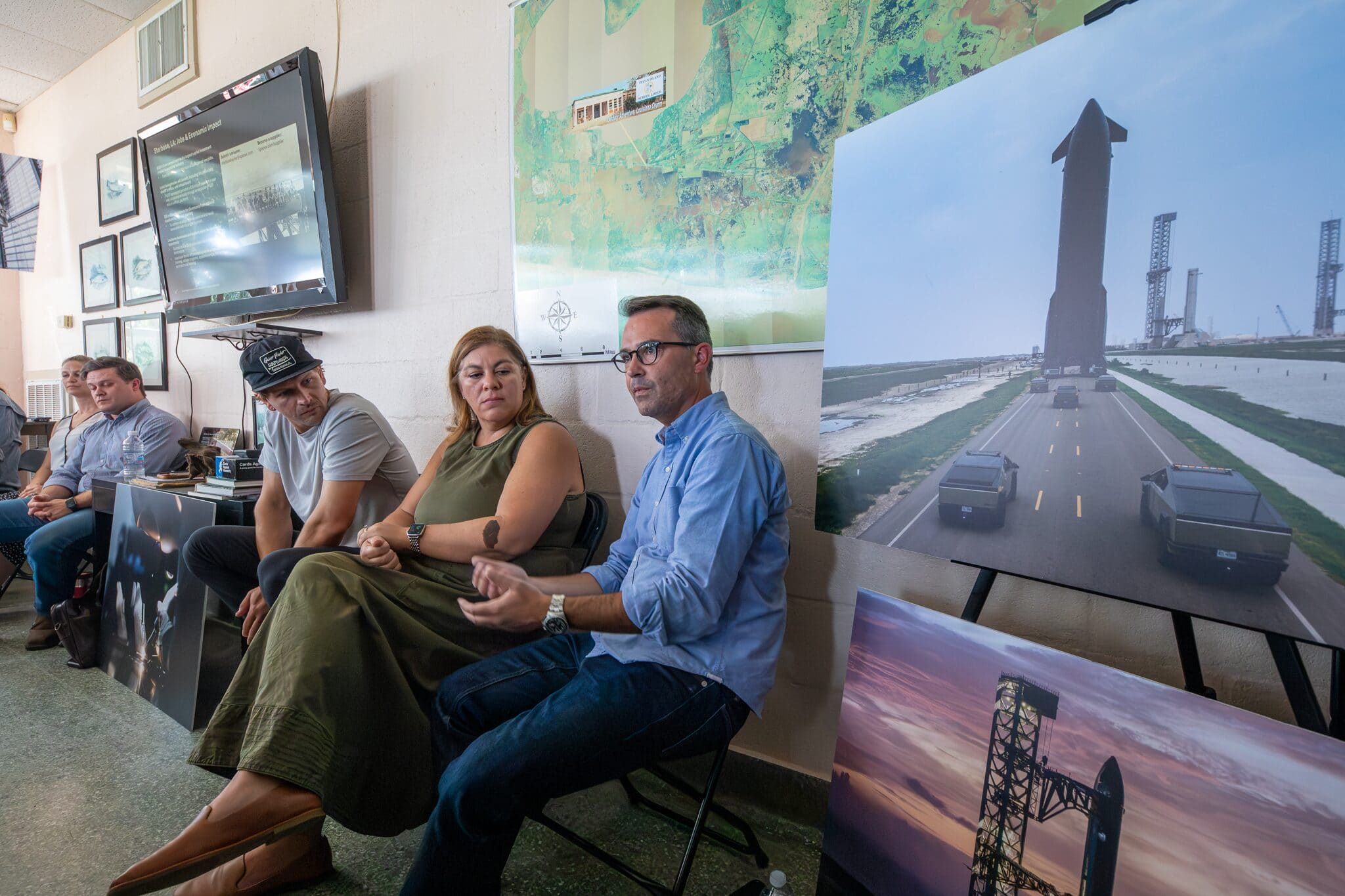
PECAN ISLAND, La. – At the front of a dimly lit cafeteria, half a dozen SpaceX high-level managers sat before a photo of a rocket.
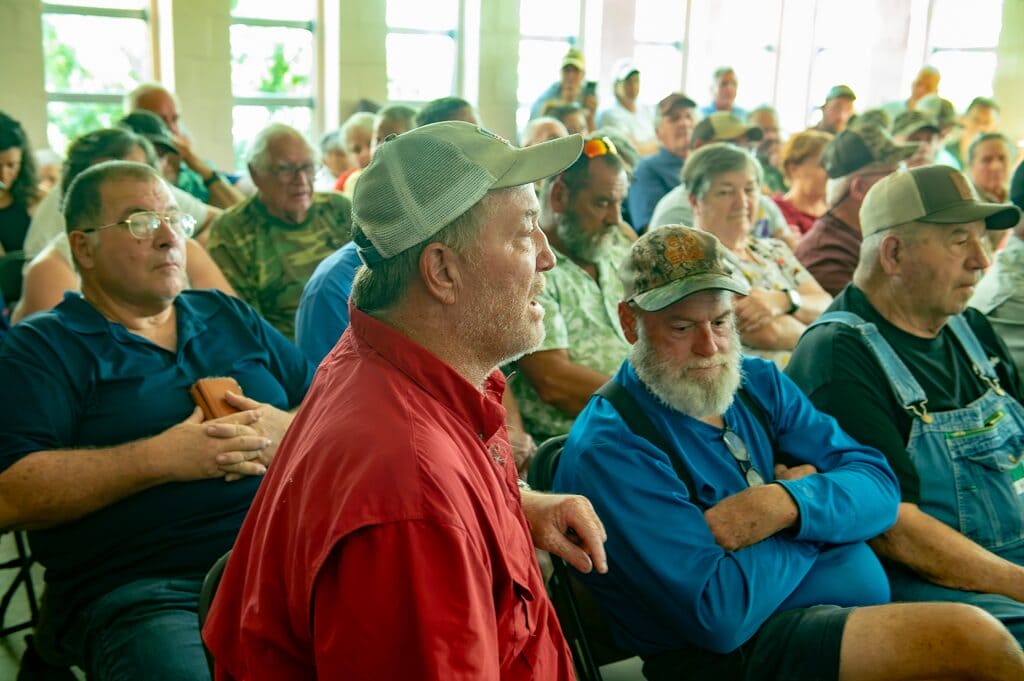
Facing them sat the residents of Pecan Island — fishers and hunters, many of whom could trace their family’s presence here back generations.
Mark Soltys, principal launch engineer, began telling the crowd about SpaceX’s advances in aerospace technology: “Only SpaceX is demonstrating reusability,” Soltys said. With Starship, he said, “you’re actually increasing the performance, but also lowering the cost to send something to space by multiple orders of magnitude — yes, sir?”
Craig Pitre, a retired welder sitting in the front row, had raised his hand with a question.
“I don’t think too many of us are worried about the flagship rocket and recoverability,” Pitre told Soltys. “What we are all [worried about] is the ecological damage.” He continued, “All this stuff goes out and it’s going to pollute the waters. I mean, is there going to be any accountability for anything? That’s mostly what we are concerned about.”
Craig Pitre, a retired welder, interrupted SpaceX reps to tell them that locals are not worried about rocket recoverability. He said, “We are worried about ecological damage.” Credit: Gus Bennett/The Lens
For the next two hours, residents peppered SpaceX representatives with questions about the incoming impacts of the company’s planned spaceport. Will they be able to stay in their homes? Will it kill off the wildlife? Will it worsen flooding and endanger their lives?
SpaceX reps repeatedly tried to reassure those present that the massive project would have no negative impact on their lives whatsoever. But they also were unable to answer many of the questions the residents posed. And in at least two instances, SpaceX reps were forced to backtrack, as locals held the promises up against the sheer, unprecedented scale of the planned rocket launches.
SpaceX announced plans this summer to build a $100 billion spaceport here on the fragile coast of Vermilion Parish. The company is planning to ramp up to 10,000 annual launches of its superheavy Starship at the Louisiana site, or 30 launches a day. The 300 or so permanent residents of this village will be the closest locals — only about six miles from the planned launch pads.
The company’s goal, Soltys told the room, is “to make space life normal. You can go have lunch in orbit. You can go spend a weekend on the moon.”
Soltys didn’t mention that if those ambitions don’t pan out, the company can terminate its lease and agreement at any time for just $1,000, according to a copy of the PILOT lease agreement reviewed by The Lens.
Pecan Island residents were largely unmoved by the visions of lunch in orbit. After all: They live here, now, in Vermilion Parish, on Earth.
“You just explained the thrust and power,” Pitre pressed. “Well, there are consequences behind thrust and power.”
“Lil Mark” Broussard, who manages cattle on land abutting SpaceX’s planned spaceport, leaves a meeting with SpaceX reps held at Pecan Island School. Credit: Gus Bennett/The Lens
At 30 launches a day, ‘temporary means nothing’
It is difficult to square the scale of SpaceX’s promises with the reality of Vermilion Parish today. Along the single two-lane road to the school, stands of cattle graze in the sun, and smoke billows up from sugarcane fields.
SpaceX had been tightlipped about the meeting. Residents were only alerted with a phone call a day or two before, and the late notice meant some couldn’t attend.
About 150 people crowded into the room, representing around half the village’s permanent residents. Before The Lens arrived, at least two Louisiana residents had been asked to leave by the Vermilion Parish Sheriff’s Office as they were not local to Pecan Island.
Early in the meeting, Katy Groom, SpaceX’s director of environmental regulatory affairs, told those gathered that “the actual launch infrastructure is very small.” SpaceX will be building across about one-third of their 125,000 acres — land leased from the local development board after the state acquired it from Exxon through a lawsuit. The company’s construction will still sprawl across 40,000 acres, nearly three times the size of Manhattan Island.
Soon after, questions started to arise.
“Am I still going to be able to get down there to my property?” asked “Lil Mark” Broussard, about an hour into the meeting.
“Yeah, we’re not going to deny access to property,” a SpaceX rep replied immediately.
But they were soon forced to retract that promise.
Broussard was referring to a strip of land between the shoreline and the southern border of SpaceX’s property. He runs horses and manages cattle on the land.
“We’re right in the middle. So am I still going to be able to go over there?”
Soltys repeated, “We are not going to deny you access to land.”
“I’m going to hold you to that.”
The launch sites’ exact location is not yet known, but in SpaceX renderings they are in a row along the coast, the Starships towering above the land where Broussard keeps cattle. How could SpaceX guarantee unrestricted access to property so close to the proposed launchpads? For a few minutes, the meeting dissolved into worried crosstalk.
Soltys then acknowledged, “It’s likely that there is a point where access is restricted — ”
“But do you know where that point would be?” a woman called out.
“No ma’am,” said Soltys, and soon steered the conversation elsewhere: “Without SpaceX, China is very much ahead of America” in the space race, he went on.
But another resident soon asked for specifics about access: “How big is the exclusion zone when you actually fly the rocket?” the man asked. Exclusion zones temporarily prohibit people or vehicles from access during launches.
Ben Lancaster, SpaceX’s senior manager for government affairs in Texas, said the zone would extend three to five miles from the launch site. That means the exclusion zone would reach from the launch pads, to the shoreline and then beyond, into Gulf waters.
“If you’re launching that many times a day, then ‘temporary’ means nothing,” the man pointed out. “So if you have property between the Gulf and the [launch] pad — you say you’re not going to block access, but if you can exclude, and you’re launching that many times, then access essentially is blocked. Correct?”
Soltys hesitated, then conceded: “Correct,” he said.
“Okay. Question answered. Access is blocked.”
SpaceX will ‘figure out’ bird migration
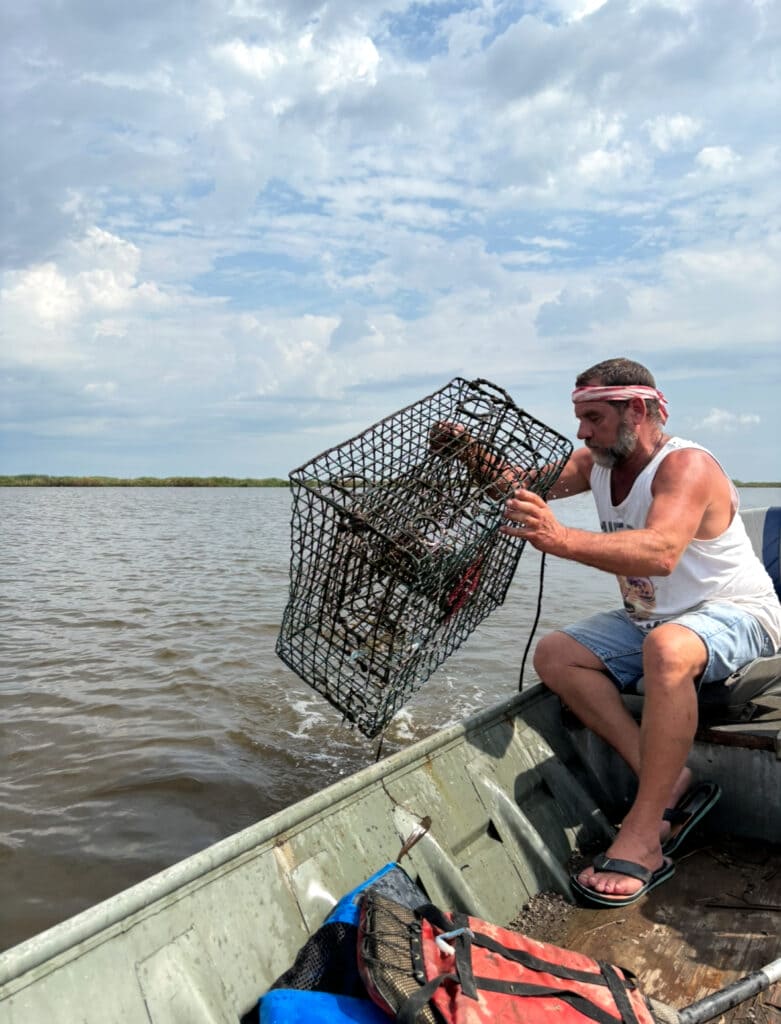
Soltys’ admission suggests that the exclusion zone will extend into fishing waters, which many depend on for their livelihoods.
“Immediately off the coast here, within a quarter mile or so, is seasonally one of the best shrimping industries in the state, as well as crabs,” said a fisherman. SpaceX’s project is “going to severely affect some of the commercial fishing industry over here.”
Martin Broussard, raised on Pecan Island with his 13 siblings, pulls a crab trap out of the water. SpaceX’s exclusion zone, which temporarily prohibits people or vehicles from access during launches, would extend into fishing waters, which many residents depend on for their livelihoods. Credit: Courtesy Brooke Broussard
Vermilion Parish also sits at the base of the Mississippi River Flyway, a crucial migration route used by millions of shorebirds. After a 600-mile nonstop flight across the Gulf, this is the first land many of them see.
“What are y’all going to do about the Mississippi Flyway?” a resident asked a few minutes after Soltys’ about face on property access. “I’m not talking about planes, here, I’m talking about birds.”
“A big part of that we think is addressed through those required mitigations,” began Owen McDonough, SpaceX’s senior manager of government affairs. McDonough previously worked as an advisor for Chevron, and before that, was a director at the American Petroleum Institute.
“How you going to detour the birds?” the resident pressed.
Groom, SpaceX’s director of environmental regulatory affairs, began to explain that the buffer zone around the launch site — land that an outside biologist described as one of the best managed wetlands in Louisiana — will still be “a flourishing place for all the species.” She added, “The birds will momentarily flush, but they return.”
“How can they return in 30 [rocket] flights a day?”
Groom hesitated. “That is — that is one thing that we will have to figure out,” Groom conceded. “We don’t know what’s going to happen at 30 flights.”
Residents muttered in frustration. “BS, BS, BS,” said one man quietly.
“What happens if the birds don’t come back?” another asked.
Groom answered, “We’re going to go figure out where they are.”
A representative of SpaceX speaks to the audience in Pecan Island. Credit: Gus Bennett/The Lens
Flood protection or higher risks?
Other questions revolved around water. An employee of Pecan Island Waterworks asked whether the massive spaceport would be using the same aquifer that supplies the village.
SpaceX didn’t have a clear answer for that either.
“Right now we are obviously very much in the design phase,” said Groom, though she added that SpaceX recycles most of the water it uses. Groom did not pledge to not use the aquifer, but said, “If we are, then we will figure out how it does not impact your guys’ source.”
Talk then turned to flooding. When SpaceX replaces wetlands with launch pads, marsh will no longer be there to dissipate the dangers of storm surge.
“Are y’all having any plans to make some levee system that would protect Pecan Island people?” a man asked. Or would flood protection only surround the company’s interests — thereby worsening flooding in their homes?
A barrier to protect SpaceX would “leave the far east and the far west exposed to the water going around what you’re building,” a woman chimed in. “So the ask would be to protect the entire island, and not just divert water into one side.”
McDonough, the senior manager of government affairs, later promised that SpaceX would not jeopardize the nearby lock system.
“No, I’m not talking about that,” a resident interrupted. “I’m talking about a hurricane coming in and going over locks. I mean, y’all are going to be protected with a 20-, 30-foot wall, but [the water] can go around, hit Rollover [Bayou] and come running down the road” to Pecan Island.
That’s what happened in 2005’s Hurricane Rita, when 12 feet of storm surge damaged most of the community’s structures. Will SpaceX surround themselves with a levee that endangers Pecan Island?
The SpaceX rep said they would be building “to those anticipated storm conditions.”
But the resident pressed again: “Are you building it for y’all? Or are you building it for us?”
“We don’t have that complete design figured out,” said Brandon Conroy, senior environmental regulatory engineer at SpaceX.
The following day, Conroy applied for a state permit, showing SpaceX’s plans to build a wharf and access road to start construction. These first steps alone would result in the loss of almost 400 acres of marsh, according to the application, which did not yet address flood protection plans.
Explosions and debris are ‘developmental growing pains’
Many were worried about how the noise and vibration from launches will damage their homes.
SpaceX candidly told the residents, yes, you’ll hear and feel the launches.
“It’s going to be loud,” acknowledged Groom. People inside their homes will feel a rumble, but they shouldn’t worry: “If somebody slams the door, your house does move, right?” she said. “So when that rumble happens from the rocket, it usually lasts like a minute, and you will hear it. And hopefully, it’s exciting to you.”
But some had already heard otherwise. About 80 people filed a federal lawsuit in April over alleged damage to their home caused by Starship launches in Texas. Reported damage includes cracked foundations, warped floors and burst water pipes. One plaintiff told Reuters that the foundation needs $100,000 worth of repairs.
SpaceX reps dismissed those concerns out of hand.
“We’ve seen no property damage whatsoever. There’s certainly lawsuits — you know, Mr. Musk has a big target on his back,” said Lancaster, referring to company founder Elon Musk. “Lots of people like to get headlines.”
Debris from launches in Texas has also been documented in marshes and wetlands. SpaceX described debris as “developmental growing pains” and pledged to pick it up.
Ultimately, none of the promises that SpaceX reps made in the room that afternoon were binding, as one local pointed out.
“If nothing’s going to happen to our homes, why did our governor put in place that we can’t sue SpaceX for damaging our homes?” a woman asked.
She was referring to recent legislation in Louisiana that means SpaceX cannot be held liable for “noise, sonic booms, overflight, vibration, light, heat, exhaust, smoke, odor, visual intrusion, temporary access restrictions, or any other disturbance.” SpaceX can only be held liable for injuries caused by falling debris if it “exceeds the normal risk” that goes with space flight.
Lancaster again dismissed concerns, saying that law was meant to stop “litigious trial attorneys who really want to make a buck.”
But Hollie Girouard, who lives part-time on a road between Pecan Island and the planned spaceport, soon asked again. “Why is there no protection written in for residents?” she said. “We’re going into this trusting people that we do not know, and [you’re] saying you’re going to pinky promise me.”
“What I can’t do is speak to anything on the legislation. I don’t have any control — I just can’t answer that,” said Groom. It was in fact SpaceX that pushed for the legislation as a condition of their arrival, per reporting by the Times-Picayune.
Groom told residents they could send SpaceX an email “if you feel that there is damage caused by the rockets.”
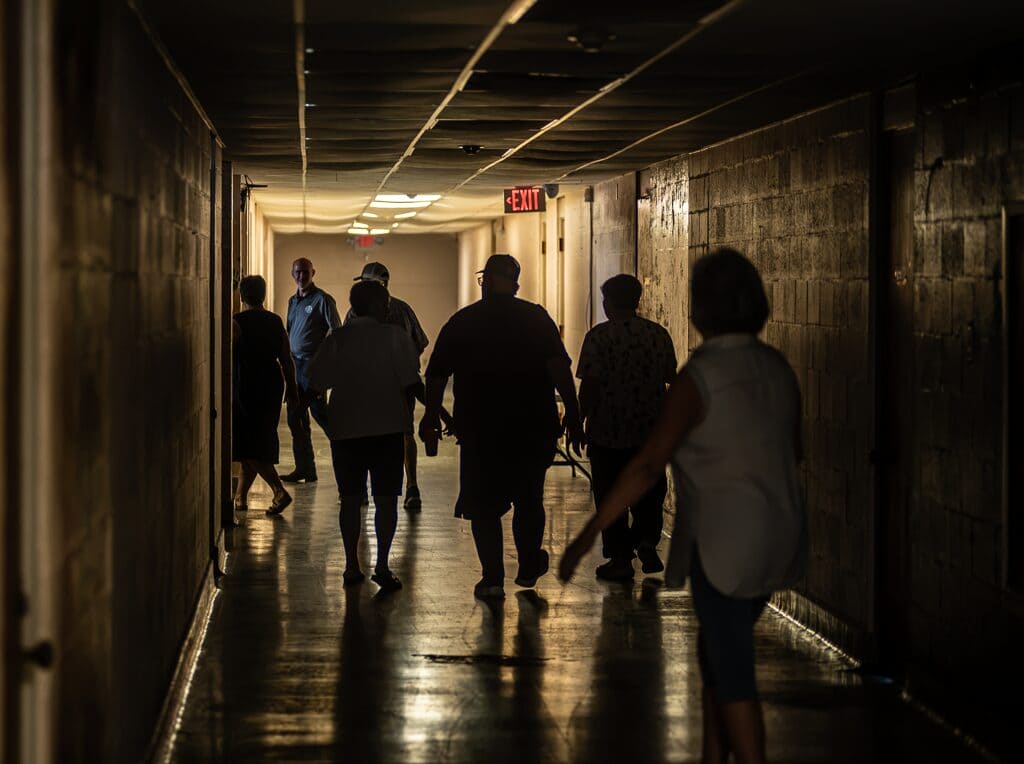
Residents leave the SpaceX meeting at Pecan Island School. Credit: Gus Bennett/The Lens
Girouard, like some others, left the meeting discouraged.
“I don’t think anyone was satisfied hearing that there would be an online complaint form instead of protections in the first place,” she told The Lens.
“I’m still in shock and I’m angry because of the way this deal was done,” said Brooke Broussard, a distant cousin of Lil Mark. She was especially frustrated by SpaceX’s insistence that the project wouldn’t harm wildlife. “They’re delusional. They know nothing about animals or nature. Or they do, and they’re just playing dumb,” she said. “It just all felt like such a farce.”
Broussard said members of her family “are in great despair.” The wetlands here are already damaged by the oil and gas industry.
“Can we learn from our mistakes, and maybe not pump concrete into that so-sensitive marsh that is absolutely teeming with life?” she said, her voice breaking. “Teeming with life.”
Audio articles are automated for accessibility. Humans wrote and edited the story; however, this audio has not been reviewed for accuracy and may contain errors. Read more about how we use AI to increase access to our reporting.
BILOXI – Ole Miss, Southern Miss and Mississippi State men’s golf teams will combine to host the Fallen Oak Collegiate Invitational this weekend for what has become one of the most prestigious autumn tournaments in college golf.
Rick Cleveland
Joining the three Mississippi teams at the highly acclaimed Tom Fazio-designed Fallen Oak course will be top-ranked Arkansas, No. 4 Alabama, Florida State, No. 14 Georgia, No. 12 Illinois, No. 20 Ohio State, Iowa, LSU, South Carolina, No. 9 Tennessee, Wake Forest and Wisconsin. Ole Miss coach Chris Malloy says there is a long waiting list of teams that want to get into the Fallen Oak field.
All 15 teams in the field are ranked in the top 100 in the NCAA Division I rankings. Mississippi State is No. 34, Ole Miss No. 37 and Southern Miss No. 57.
“You won’t find a better college golf field anywhere in the country this fall,” said Southern Miss golf coach Eddie Brescher, whose Golden Eagles qualified for the NCAA Tournament last spring for the first time in school history.
“This tournament just keeps growing in stature, This is a post-season quality field for a fall tournament.”
Árni Sveinsson
LSU and Alabama tied for the team title at Fallen Oak last fall, and LSU’s Gunnlaugur Arni Sveinsson, from Iceland, won the individual championship and returns to defend his title. Sveinsson, the world’s No. 8 ranked amateur golfer, shot rounds of 66, 70 and 67 for a 54-hole total of 13-under-par 203 for the victory, one shot better than Alabama’s William Jennings, who also will return to Fallen Oak.
Said Iowa coach Tyler Stith a year ago at Fallen Oak, “I have been coaching college golf for 15 years, and this is one of the best tournaments I’ve ever been a part of. The tournament operations and hospitality is first-class and the golf course itself is as good as any we play in college golf. This is our third year to play here, and I sure hope we get invited back.”
Championship play for the 54-hole event begins Saturday and continues through Monday. Admission is free to the public, and large-screen televisions will be strategically placed around the course so that football fans can keep up with their favorite teams on a big college football Saturday and with NFL games on Sunday.
Audio articles are automated for accessibility. Humans wrote and edited the story; however, this audio has not been reviewed for accuracy and may contain errors. Read more about how we use AI to increase access to our reporting.
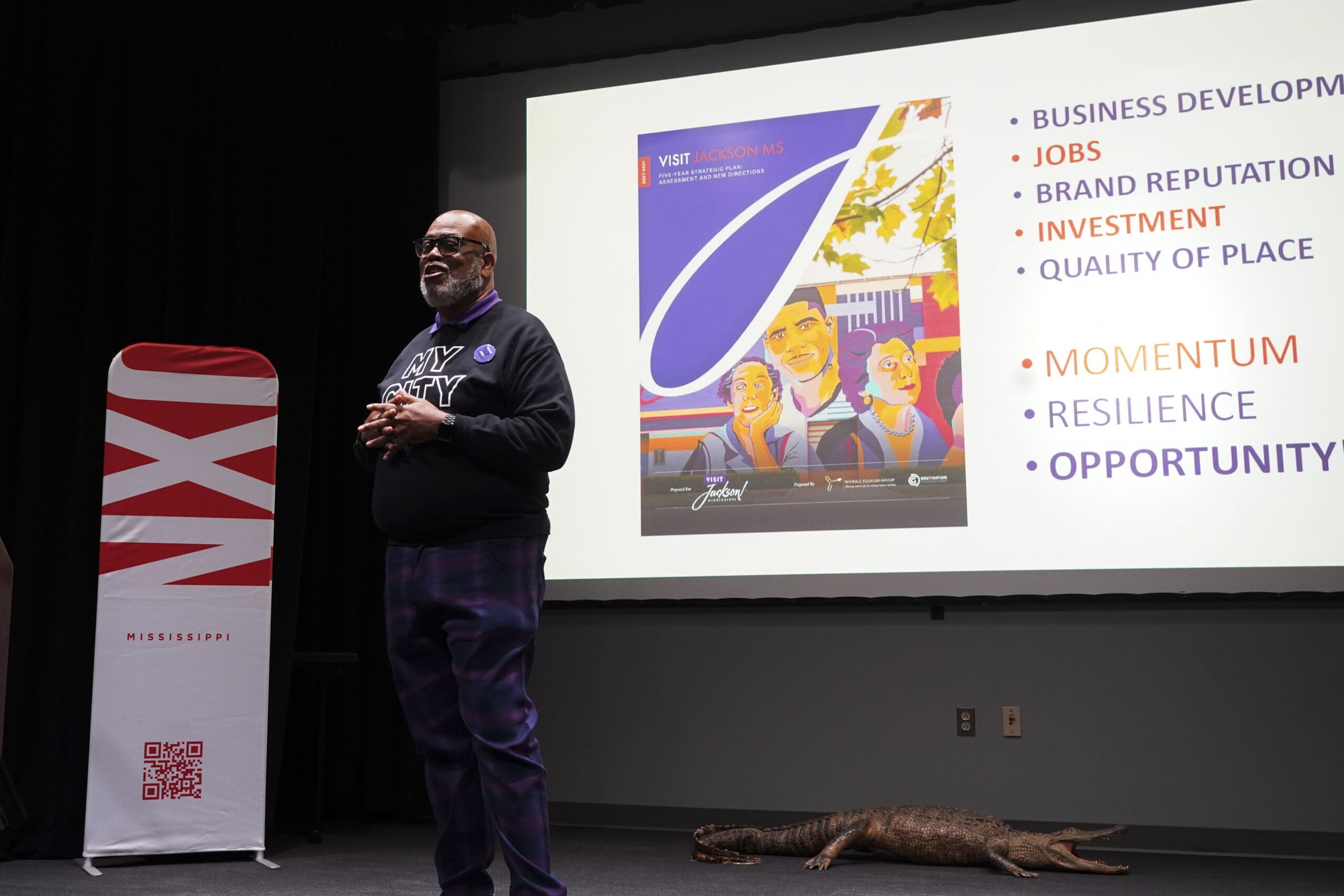
Visit Jackson has unveiled a five-year strategy aimed at attracting more visitors to Mississippi’s capital city, but the agency acknowledged serious obstacles: inadequate lodging, poor perceptions of the city’s attractions and uncertainty over funding.
Visit Jackson, which laid out the plan during a two-hour meeting earlier this week, has operated on a $5.4 million budget since October 2024 — but officials said $1.8 million of that came from federal pandemic relief funds that are no longer available.
To fill that gap, Visit Jackson hopes voters approve a financing measure on the Nov. 3 ballot that would increase taxes on restaurants by 0.5% and lodging by 1%.
Jackson saw over 1 million travelers in fiscal year 2025 and increased its overnight retention by 4% from 2024, according to Visit Jackson data. The city also brought in $80 million in tourism-driven revenue.
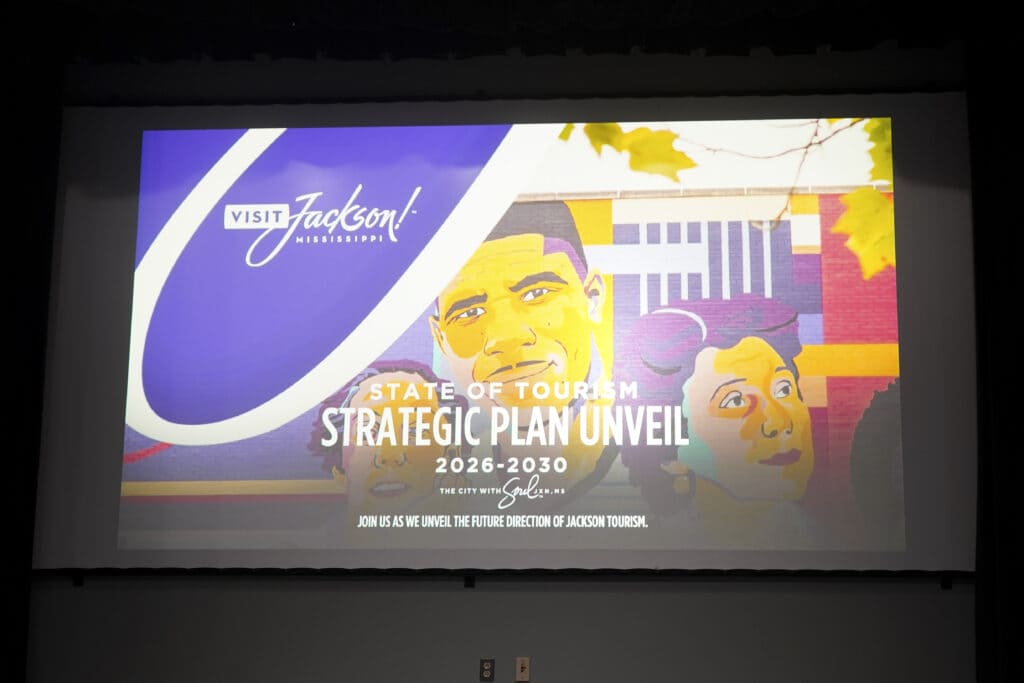
A sign welcomes in audience members during Visit Jackson’s State of Tourism address on Tuesday, Oct. 13, 2026. Credit: Aaron Lampley/Mississippi Today
The report highlights many positives, such as Jackson’s most popular attraction being the Mississippi Civil Rights Museum.
But a chief concern is Jackson’s lack of lodging.
The city of Jackson has 3,775 units within the city limits — including hotels and Airbnb rentals.
Tourism officials note that 60% of the city’s accommodations are motels and other budget-style facilities similar to Super 8 and OYO brands.
Other concerns voiced a large lack of knowledge about the city and its offerings. In a pool of 220 respondents who had not visited the city, 47% said they were disinclined to visit because of the lack of resources available to learn about the city’s recreational offerings.
“Our success will not be measured solely by how many people we bring to our city, but also by what their presence makes possible for the people who live here,” Visit Jackson spokesperson Yolanda Clay-Moore said.
Nichols Tourism Group and Destination Consultancy Group drafted the five-year blueprint that reflected information from surveys and tourism data.
The focus of the strategy is a five-step revitalization plan that advocates refer to as “RESET” – refine, enhance, strengthen, expand and thrive.
The proposal calls for the formation of a new tourism council, strengthening marketing strategies and working toward improving city facilities.
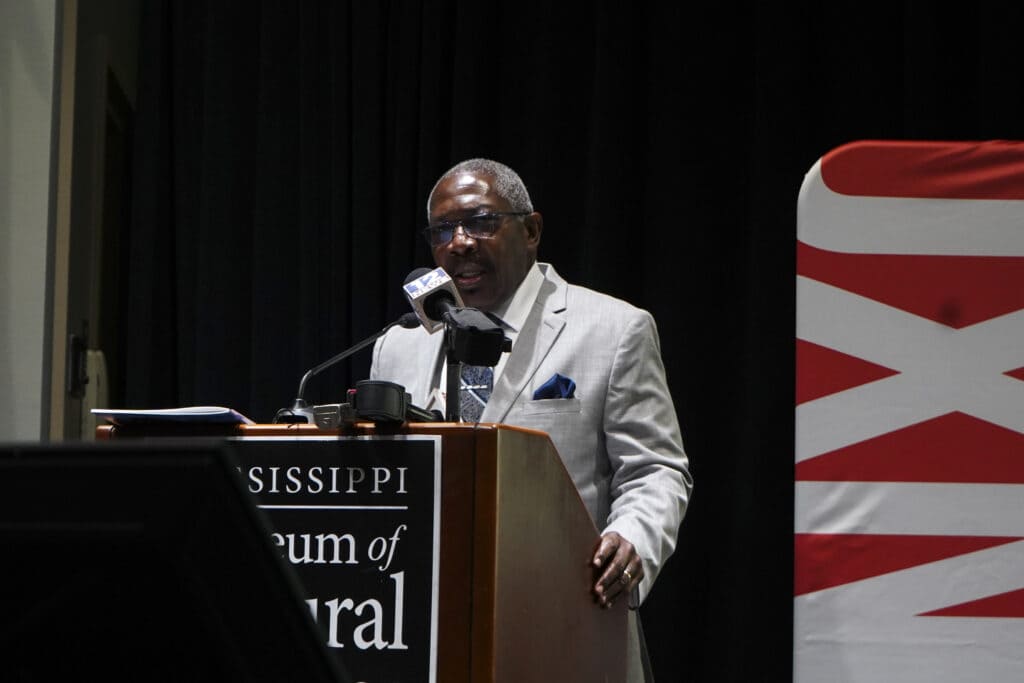
During the plan unveiling, Mayor John Horhn again floated the potential for a convention center hotel.
Jackson Mayor John Horhn gives a speech during Visit Jackson’s State of Tourism Address at the Mississippi Museum of Natural Science on Tuesday, Oct. 13, 2026. Credit: Aaron Lampley/Mississippi Today
The idea is not new. The long-discussed hotel project was at the center of a federal corruption case that ensnared former Mayor Chokwe Antar Lumumba, who is now awaiting sentencing along with two others after pleading guilty to a bribery charge.
Visit Jackson CEO Ricky Thigpen acknowledged that details were still being developed. A more comprehensive plan, which he jokingly said was contained in a thick three-ring binder, includes monthly goals, meetings and regular check-ins to keep the effort on track.
Audio articles are automated for accessibility. Humans wrote and edited the story; however, this audio has not been reviewed for accuracy and may contain errors. Read more about how we use AI to increase access to our reporting.
For yet another year, Mississippi’s charter schools posted a substandard performance on their Mississippi Department of Education report cards.
None of Mississippi’s charter schools scored a B or higher on the accountability grades this year. Only one was rated C — Ambition Preparatory Charter School in Jackson — while most of the others were rated D. The lowest rated charter school was Instant Impact Global Prep Charter School in Natchez, which received an F.
Three of the state’s 12 charter schools weren’t graded. One lacked complete data because of the limited grades it served this past school year, while the other two started operations this year.
State education leaders said they were “disappointed” with the continued lack of progress.
“I’m a little annoyed with some of the directions they’re going in,” said state Rep. Rob Roberson, a Republican from Starkville who chairs the House Education Committee. “I’m not going to say I’m not interested in having a conversation to make them better, but I’m having a lot of heartburn with how they’re set up and where they’re at right now.”
Rep. Rob Roberson, R-Starkville, listens as Teresa Jackson, former superintendent of the Winona-Montgomery Consolidated School District, speaks during a meeting of the House Select Committee on Consolidation at the Capitol in Jackson on Thursday, Aug. 6, 2026. Credit: Eric Shelton/Mississippi Today
According to state law, charter schools can only be established in areas where the local school district is rated C or above if the local school district’s board approves. There’s no appeal process, so if the school board denies the request, the process ends.
New charter schools can only be established without local school board approval in areas where the local district is failing or receives a D rating on the accountability model.
Mississippi charter school researchers and leaders have maintained that it’s difficult to perform under the strict rules the state has imposed, and that charter schools require flexibility and freedom to flourish. This past year, they lobbied lawmakers to loosen these restrictions, allowing charters to open in more places.
But state lawmakers — especially in the Senate — have been hesitant to grant the board more power as schools performance falters.
“It’s a hard one for me,” Roberson said. “I expect better.”
Lisa Karmacharya, executive director of the Mississippi Charter School Authorizer Board, listens during a hearing about SR1 on Thursday, May 14, 2026, in Jackson. Credit: Eric Shelton/Mississippi Today
Lisa Karmacharya, executive director of the Mississippi Charter School Authorizer Board, said on Tuesday that she understands Roberson’s frustration but highlighted the progress of Ambition Prep, calling it the charter board’s “flagship” school.
Since its first grade in 2023, Ambition has gained 30 points on the accountability scorecard, marking academic progress.
She recommended that instead of pushing for charter school growth during the new year, the board should focus on outcomes and go back to the original promise of charter schools in Mississippi: that they would be afforded more flexibility than traditional public schools in exchange for better outcomes.
Despite current standings, Karmacharya still believes the sector has an important place in Mississippi’s education system.
“Although the scores aren’t where we want them to be, we know that families choose these options and opportunities because they feel it’s what their child needs,” she said.
Audio articles are automated for accessibility. Humans wrote and edited the story; however, this audio has not been reviewed for accuracy and may contain errors. Read more about how we use AI to increase access to our reporting.
From prisoners suffering amputations due to diabetes to a mother taking desperate measures to help her incarcerated son treat his debilitating pain, Mississippi lawmakers on Thursday heard stunning testimony in a more than three-hour hearing about inadequate healthcare in state prisons.
Lawmakers presiding over a joint meeting of the House and Senate Public Health and Corrections committees peppered the CEO of Mississippi’s prison medical contractor, Kansas-based VitalCore Health Strategies, with questions about allegations of systemic failure to stop preventable deaths and illness. Their questions stemmed from stories that have poured in from their constituents, journalists and legislative watchdog reports.
Lawmakers also condemned the absence of the Mississippi Department of Corrections at the hearing, despite having sent the agency a letter urging its officials to attend.
Lawmakers, led by House Corrections Chairwoman Becky Currie, a Republican from Brookhaven, proposed several measures earlier this year to improve prison healthcare and create stronger safeguards against the denial of care, but most of the proposed reforms died.
The Thursday hearing centered on some of the problems the bills sought to correct as lawmakers expect to propose more reforms for the state’s troubled and expensive prison healthcare system next year.
Lawmakers on Thursday heard about:
Alarming delays in cancer diagnosis and treatment
Dr. Jacob Graham, an oncologist at South Central Regional Medical Center in Laurel, said he has been alarmed by the significant delays in diagnosis and treatment faced by his patients who are incarcerated in MDOC facilities.
One patient he described did not receive a prostate cancer diagnosis until the disease spread to his bones and caused permanent paralysis of his lower body due to compression of the spinal cord.
Another waited nearly a year to receive prostate cancer treatment after a blood test showed dangerously high levels of a protein measured to screen for the disease. The test in fall of 2025 showed a prostate-specific antigen of 60 — significantly higher than the normal range of zero to four — but he did not receive a biopsy until April 2026, and did not begin treatment until August. Graham said it was “miraculous” the cancer had not metastasized in spite of the significant treatment delay.
Yet another patient with lung cancer that had spread throughout his body received treatment at the University of Mississippi Medical Center and a dire prognosis of weeks to a few months to live. But prison medical staff did not arrange for him to visit a local oncologist within a week as ordered, leaving him to languish for over a month before receiving follow-up care as his condition deteriorated. He was then hospitalized again due to complications associated with the delays in care.
Limb amputations and trip to a Motel 6
Multiple state lawmakers relayed stories of constituents who suffered amputations due to untreated diabetes in prison.
Limb amputations are a serious complication of diabetes, though a majority of diabetes-related amputations are preventable, according to the Centers for Disease Control and Prevention.
Rep. Elliot Burch, a Republican from Lucedale, testified that he received a call a year and a half ago informing him that a constituent with serious medical concerns had been released from prison to a Motel 6 on I-55 in Jackson, even though MDOC staff previously told his family they planned to refer him to long-term care.
Burch, initially skeptical of the story, decided to investigate himself. He traveled to the motel, and after he knocked on the man’s door, he found him with both legs amputated, unable to get out of bed himself to unlock the door. At least one of the amputations occurred while the man was in MDOC custody due to uncontrolled diabetes.
The man had been dropped off with insulin, but no blood glucose monitor. And the only food he had to eat was a bag packed with carbohydrate-rich foods, including crackers and sandwiches. The man ultimately had to seek emergency care for another issue and was discharged to long-term care from the hospital.
Rep. Steve Lott, a Republican from Lucedale, said he received a call from a constituent set to be released from South Mississippi Correctional Institution in Leakesville with serious health issues, including diabetes. Three days after the man was paroled from prison, his leg was amputated.
A mother takes desperate measures to help treat her son’s chronic pain
Pearly White said she almost lost her home from sending money to the prison where her son was incarcerated after he lost access to critical medication.
She went on to tell lawmakers about a scheme where fellow prisoners, under the watch of guards, coerced her to pay them an ever-increasing sum of money for illegal drugs to help her son manage pain medical officials failed to manage.
“She’s been extorted,” Currie said.
White’s son was an amputee when he went to prison, spending time at the Mississippi State Penitentiary at Parchman and Marshall County Correctional Facility after multiple DUI charges. He had spinal cord damage, a condition he managed with gabapentin, a prescription nerve-pain medication. The problems began when prison officials told him they couldn’t provide him with the drug.
He couldn’t function, she said, and desperate to manage the debilitating pain, he turned to marijuana. In a plea to help her son, White transferred money to people inside the prison through an app. She could afford the payments at first, but they eventually ratcheted up the price to over $1,000, threatening to cut off her son.
“They know what they’re doing,” White said. “They have help. The officers, they know.”
White, a veteran who works as a surgical technician in Oxford, said she has plunged into debt trying to get her son treatment he should have received through the state’s prison medical contractor.
“I stand up on this bad back and these bad knees every day so that I can pay the bills that I acquired from the inmates, because VitalCore didn’t think it was necessary that he have gabapentin,” White said.
White’s son was eventually released from prison and now lives with her.
White said she reported the scheme to MDOC’s Corrections Investigation Division and the FBI. She’s received no word from either entity about whether they investigated her case or the illicit flow of money into prisons.
VitalCore responds: ‘I think it’s time to tell our story’
After over an hour of testimony from speakers outlining a wide range of prison healthcare woes, VitalCore’s leader spoke for the first time to lawmakers.
Beth Clay, VitalCore’s lobbyist in Mississippi, introduced her client in soaring terms.
“I’m telling you, the people I’m bringing you today have hearts of gold when it comes to medical care,” Clay said.
Viola Riggin, the company’s founder and CEO, said she doesn’t like the limelight, but feels her company’s work has been misrepresented.
“I think it’s time to tell our story,” she said.
Before addressing the issues raised by those who testified, Riggin described her humble beginnings in Kansas, where she began her career working in correctional facilities when she was 19. She and Dr. Lorelei Ammons founded VitalCore in 2018, and the company developed a reputation for providing medical care to places in crisis, she said.
Riggin then extolled her company’s management of prison healthcare, distributing a packet with statistics she said show VitalCore has made progress improving outcomes inside state prisons.
She said she was met with a “dire” state of care in 2020 when VitalCore was awarded an emergency contract to provide medical care in Mississippi prisons after the previous company terminated its contract. VitalCore was awarded over $315 million in emergency, no-bid state contracts from 2020 to 2024. The state selected the company for a three-year contract worth over $357 million in 2024.
She described a dearth of medical staff, patients not receiving annual physicals, HIV going untreated and six years in which patients did not receive mammograms to detect breast cancer.
“The care was not appropriate, and it was not OK,” she said.
She claimed that many of the current challenges facing medical care are residual effects of previous contractors’ impropriety.
For example, Riggin said, reaching contractually obligated staffing levels took time, though the company is now better meeting the requirements. And as for allegations that VitalCore has delayed payments to vendors are vestiges of past contractors’ behavior — she said the company pays bills within 90 days.
Dispute over hepatitis C treatment
VitalCore has drawn criticism for treating only a handful of the hundreds of people in MDOC diagnosed with hepatitis C.
Brian Collier, VitalCore’s executive operations advisor and former executive director of the Texas Department of Criminal Justice, said the company is treating 50 patients diagnosed with hepatitis C each quarter.
At this rate, he said the company will by 2029 cure over 700 patients identified with the disease in 2024. This does not include new people who enter the facility or contract the contagious illness while incarcerated.
Currie questioned those numbers, citing conversations she had with Corrections Commissioner Burl Cain and Dr. Raman Singh, VitalCore’s chief medical officer, where they purported many more people incarcerated in MDOC facilities had tested positive for the illness.
“When I first became chair, when Burl and I actually got along, we had many, many discussions, and he told me that over 5,000 inmates had hep C,” Currie said. “Somebody is not telling the truth.”
Hepatitis C is a blood-borne infection that can be cured in more than 95% of cases with an eight- to 12-week course of medication, though it is costly.
State Health Officer Dr. Dan Edney said treating a fixed amount of hepatitis C patients a year is “unacceptable,” noting that the standard of care is to universally screen for the highly contagious infection and treat it immediately.
“If you don’t, with a confined population, you will have reinfection,” said Edney.
Edney said he could help the company access medication at lower cost through a federal program. Mississippi Today reported in 2025 that the Department of Health provided MDOC information about how to access the discounted prices, but the agency did not take steps to do so.
A notable no-show
Even as they probed VitalCore’s leaders and questioned some of their assertions, lawmakers commended the company for at least showing up.
The same could not be said for the agency that hired them: MDOC. On Monday afternoon, lawmakers learned that MDOC officials, most notably Cain, planned to skip the hearing over the problems that have unfolded on their watch.
On Tuesday, the chairs of the Public Health and Corrections committees sent Cain a letter urging him to reconsider. But their overtures apparently fell on deaf ears, as Cain and agency leaders didn’t show up.
MDOC did not provide lawmakers with an explanation for their absence, and the agency did not respond to a request for comment from Mississippi Today.
“So they just didn’t want to stop to sit and talk to legislators, I guess,” said Sen. Jeremy England, a Republican from Vancleave. “It sounds like they’ll be OK with whatever we do then if they don’t care to be here to listen.”
Rep. Chris Bell, a Democrat from Jackson, said he believes the joint committee should demand Cain come before it to answer questions.
“To hear the testimony of all the individuals that we’ve heard today and for him to have the audacity not to show, not to designate someone to come is totally disrespectful,” Bell said. “This is unacceptable.”